

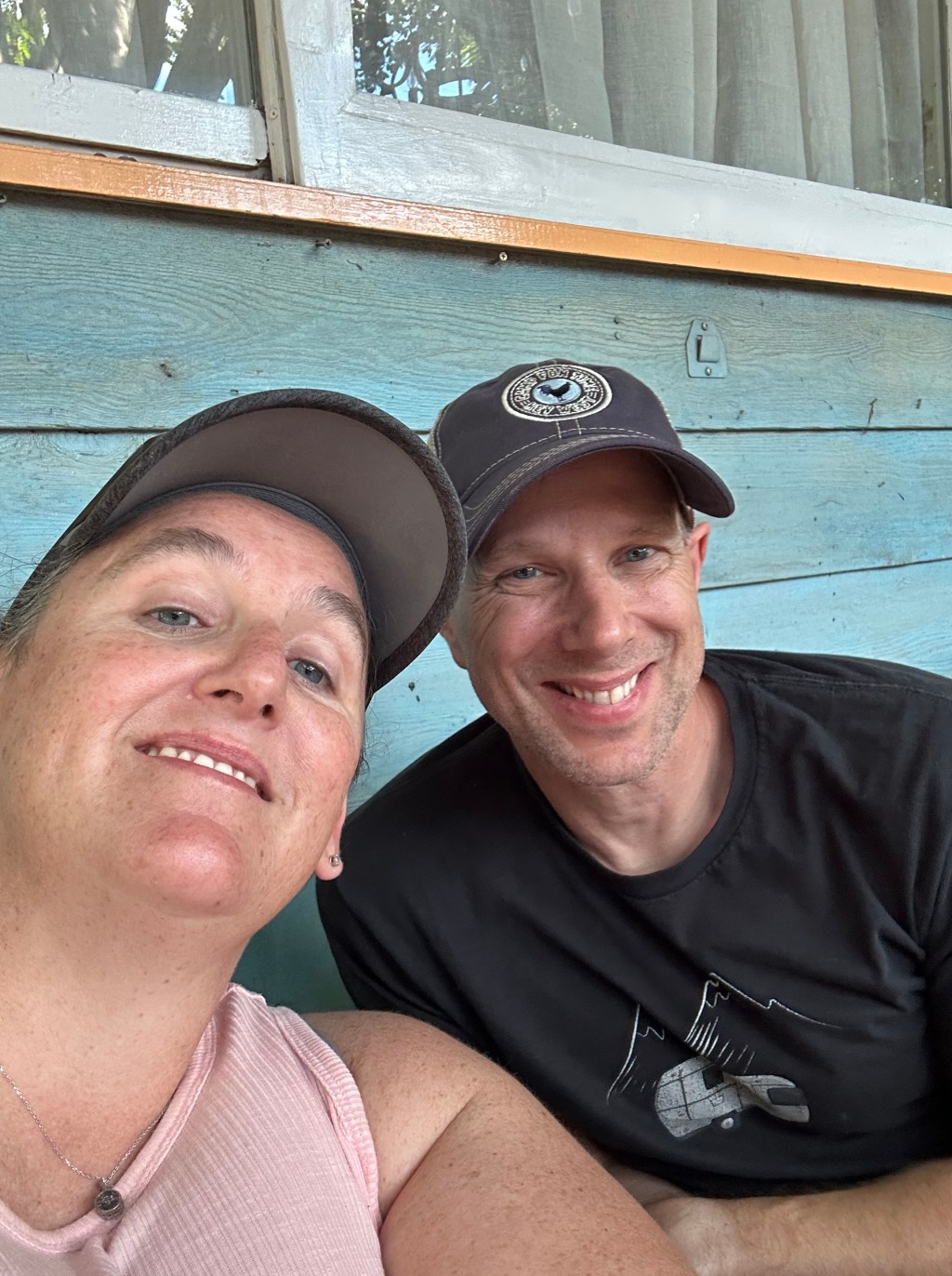
One week has passed living in the keys, working on the weekdays, and exploring on the weekends. Most of our time during the week is spent in the trailer with both AC units running, meaning I’m wearing a hoodie to stay warm. Emails, phone calls, Zoom meetings, and written work product all have a very similar feel to working from the office in Portland.
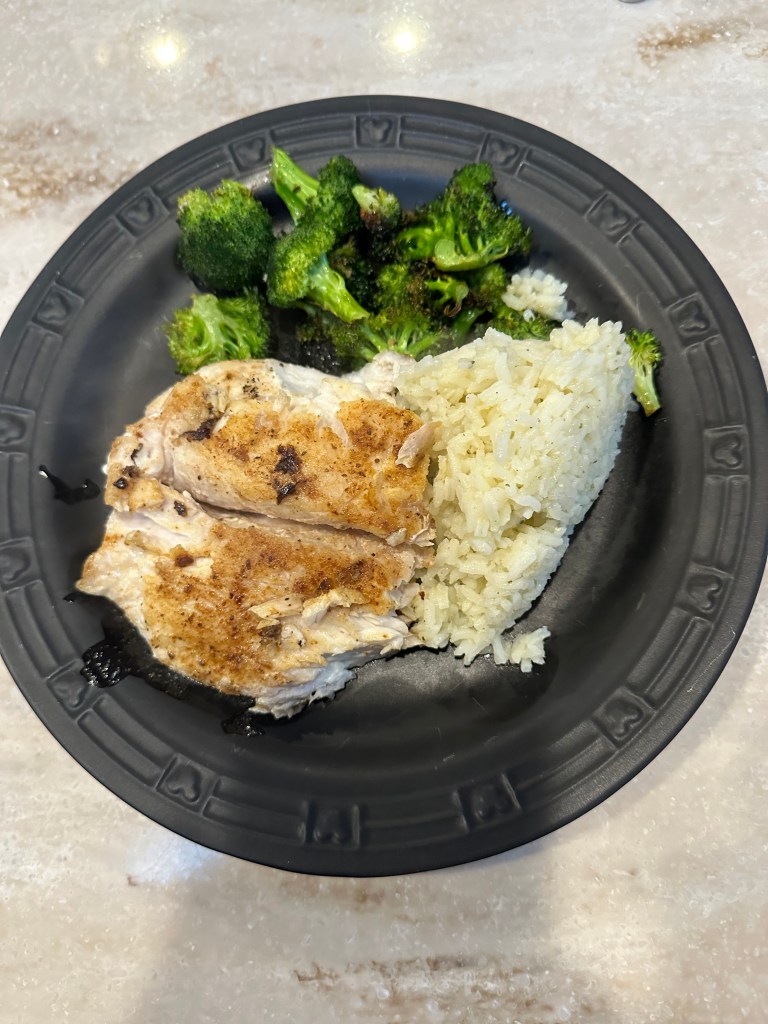
The mundane chores remain. We clean, make beds, wash the trailer, walk the dogs, monitor tank levels, and do laundry as part of necessary life routines. Micki cooks our breakfast, lunch, and dinner inside the trailer, and we run to the grocery store as needed.
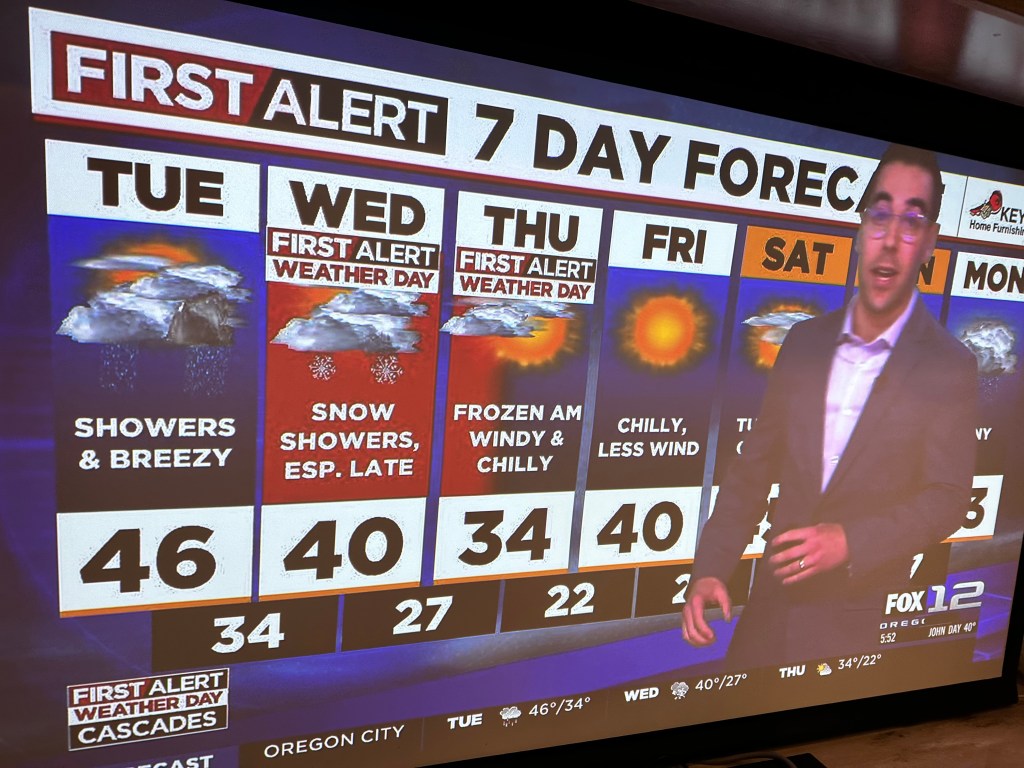
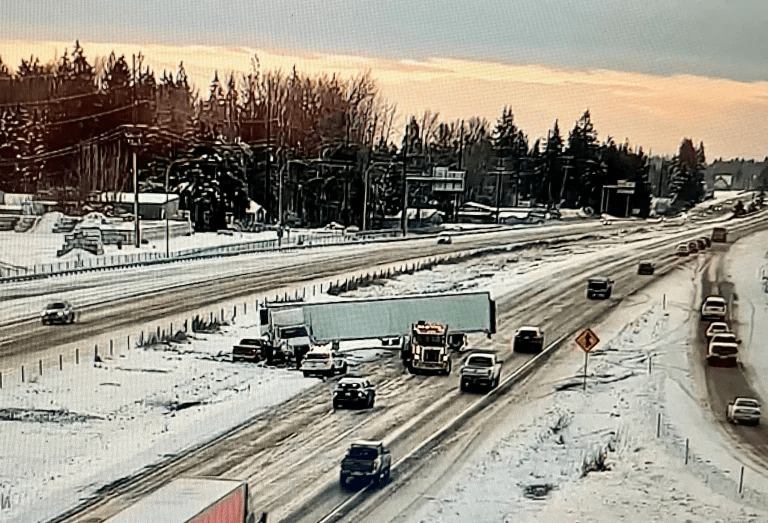
But step outside and the world changes. Sunshine warmth greet you just outside the door, tempered by the occasional breeze. The neighbors are all happy to be there living in an RV just as we do. The setting is surreal, and we’ve tried very hard to soak in extra enjoyment for the mundanity of life’s everyday tasks. This was particularly true this week because Portland got hit with a weather storm that dumped 10″ of snow and gridlocked traffic for hours.
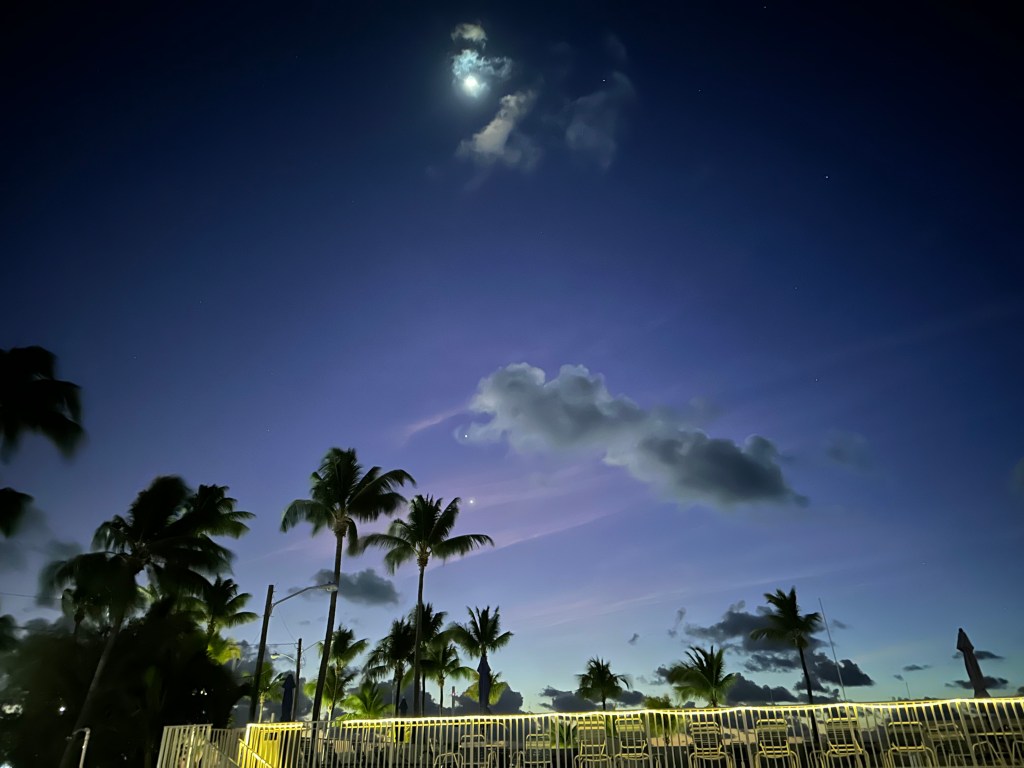
We feel lucky enough to have avoided that mess, but extra lucky because the time spent here included paddle boarding near mangroves, biking on the Overseas Highway, sitting by the pool during lunch breaks, chaperoning the local senior citizens acting like children, watching the local wildlife, and soaking in the amazing sunsets.
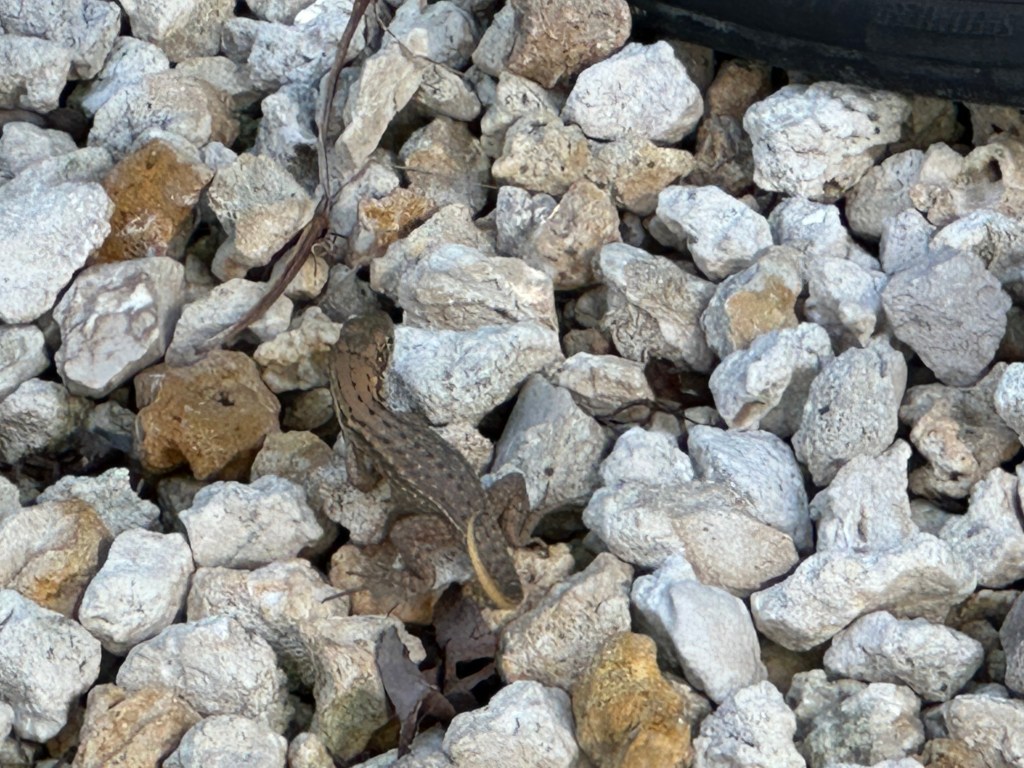
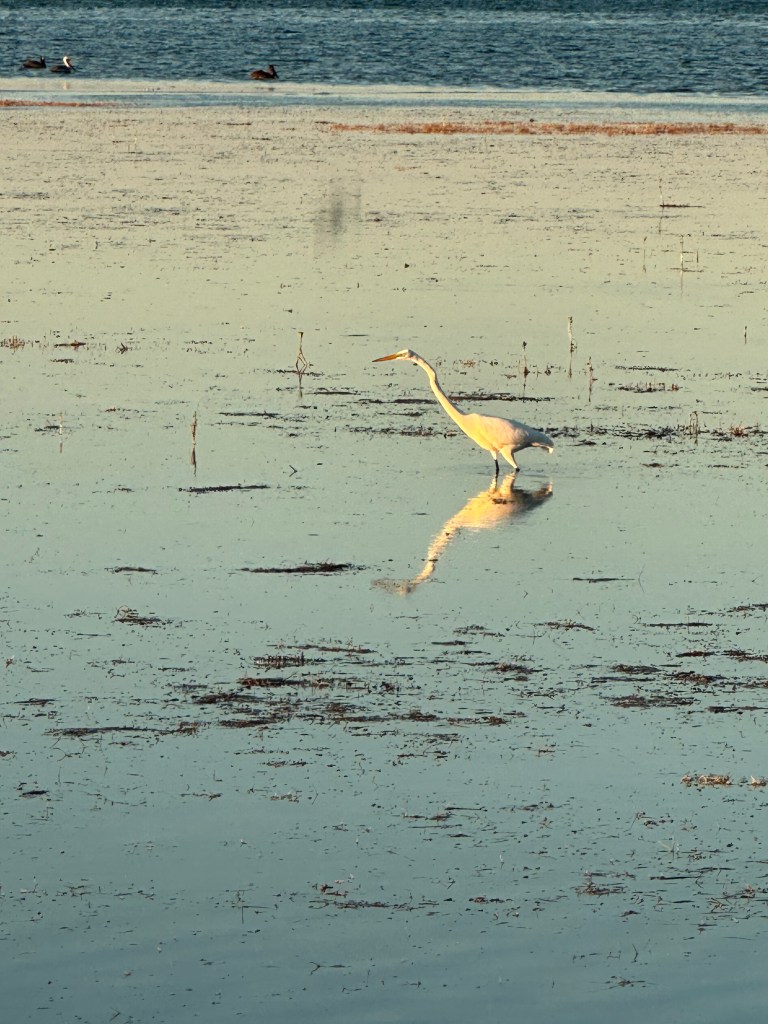
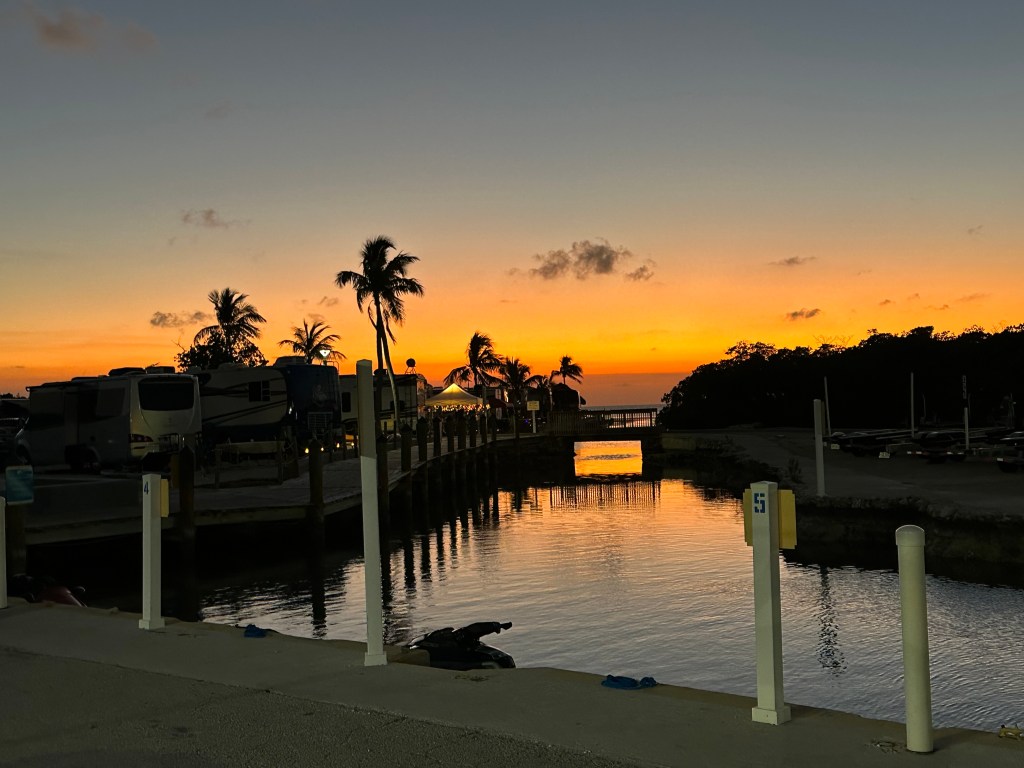
The dogs have really appreciated the time at the little dog park and the simple walks around the resort, although they did not necessarily love getting bathed in the kitchen sink.

Aside from the day-to-day living in a warm climate, what are the Keys like generally? Mesmerizing, in a myriad of ways.
The entirety of the keys lies just above sea level, nearly every bit of land being within 10 feet of the water. Here you’ll find no cliffs, hills, rises, or outcroppings. If sea level rose ten feet, most of these thousands of islands would simply disappear, leaving only water-logged rooftops as evidence of inhabitance. Even the tide appears to threaten the dry land. But thus far the Keys remain, meaning the tide has been narrow and predictable for the most part.
But we’ve all heard stories of the hurricanes, and the Keys themselves offer remembrances along the way. New bridges parallel the old ones, which are left to weather and rot in place. Boulders on the shoreline guard against tidal surges. New homes rest on 10-foot columns, leaving room for the sea to wash underneath when necessary. Nobody seems overly worried, but I see contingency planning all around.
Construction materials and methods differ here. Instead of wood framing, the homes and buildings are mostly built from cinder blocks filled with concrete. All of the rock appears to have been quarried from the seabed itself. The boulders lining the sea, the gravel pads for parking lots and RV pads (1” minus) and the driveway gravel (3/4” minus) all have the same color and texture. I’ve seen this color and texture along the sea floor while paddle boarding; slightly tan with a rough texture beyond pumice.
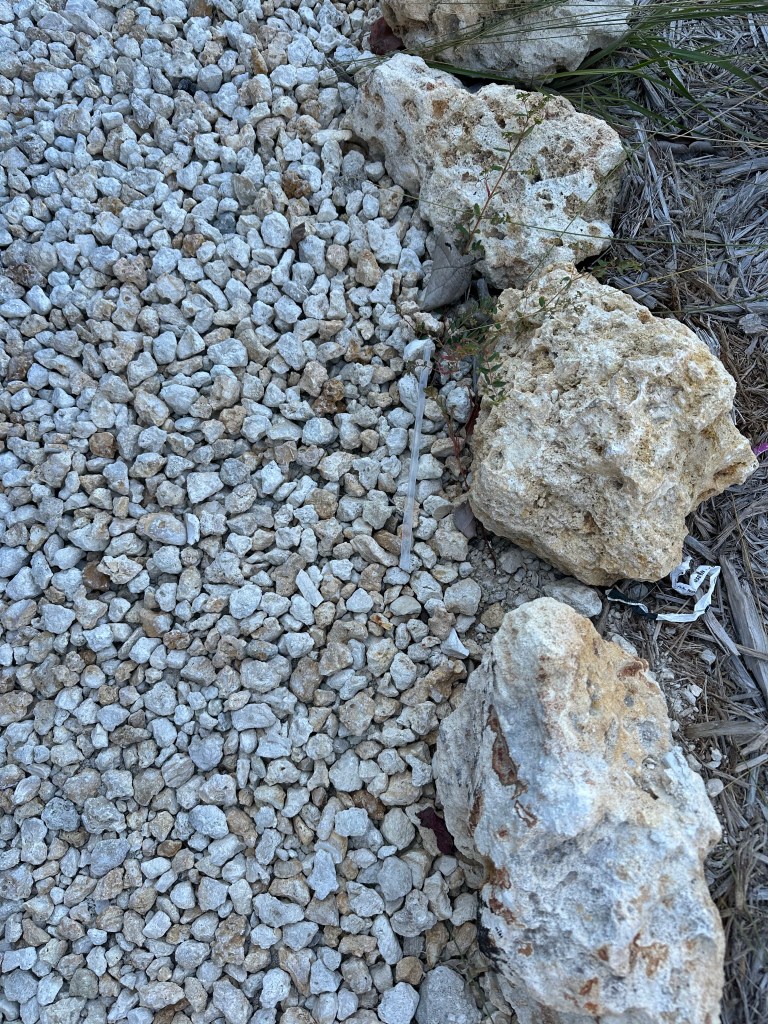
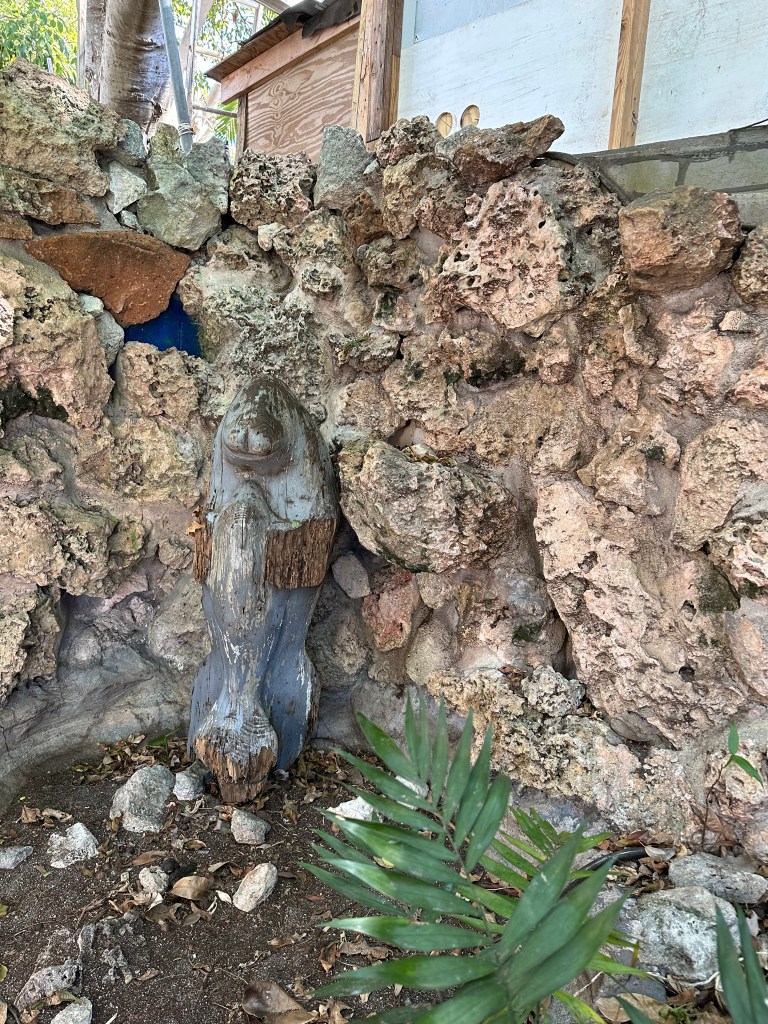
It makes sense that this would be the most abundant source of rock, but the pervasiveness is nonetheless remarkable. Even the roadways have a tinge of the same color, as if the sand or aggregate for the concrete is also quarried from the sea bed.
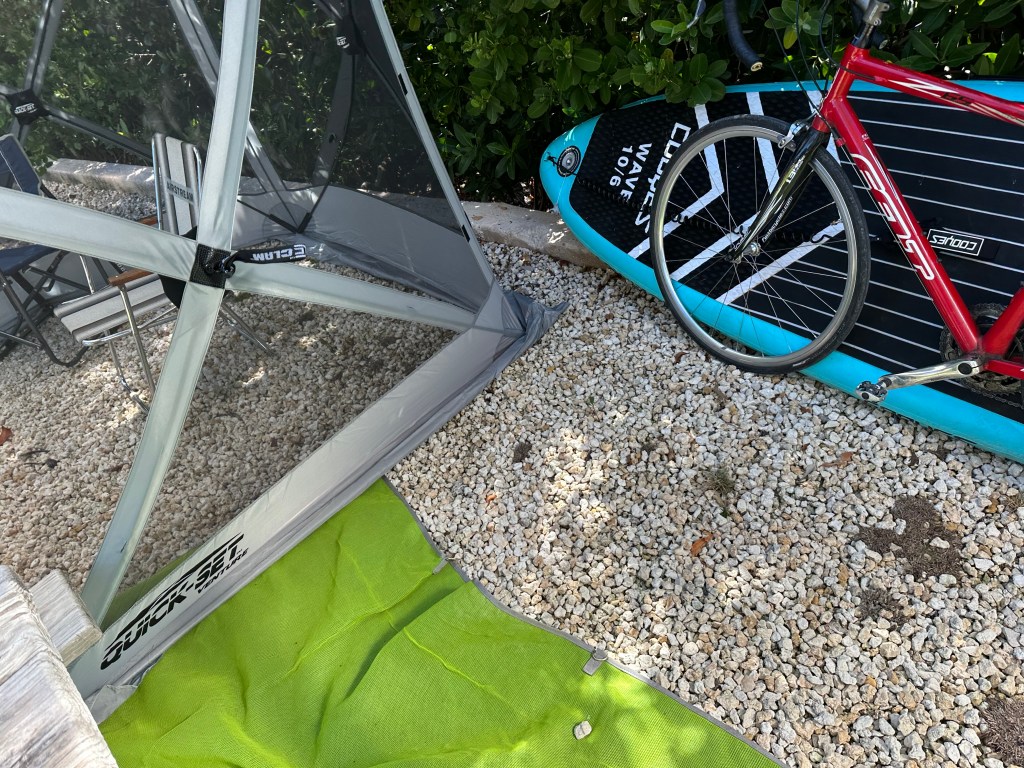
This gravel is everywhere in the RV Park. At Fiesta Key, every site is 100% gravel, with only the roadways having actual pavement. Grass adorns only the community center, and turf adorns the dog park, but otherwise everything is this rough gravel. Outside the trailer, shoes are required.
Although we only have one week of exposure, it occurs to me that the Keys have no true central identity. Millions visit, some for months are a time, then leave. Most of the homes (even the fact ones) appear to be part-time vacation homes or outright rentals. The economy itself appears nearly entirely focused on fishing and tourism.
In this way, the Keys are far more inviting than other vacation destinations. We’ve been to Mexico – which we’ve very much enjoyed – but we understood our place as outsiders being accepted by the host culture. We didn’t speak the language or understand the customs, which often made for a grange feeling of not belonging. Even a visit to our local coastal towns will sometimes invite a feeling of being the outsider from the perspective of the locals.
But the Keys lack any true singular host culture. Those who live here are intentionally here to enjoy the sun and the tourism, whether as vacation or vocation. Everyone stands equal, and there is no feeling of being an outsider.
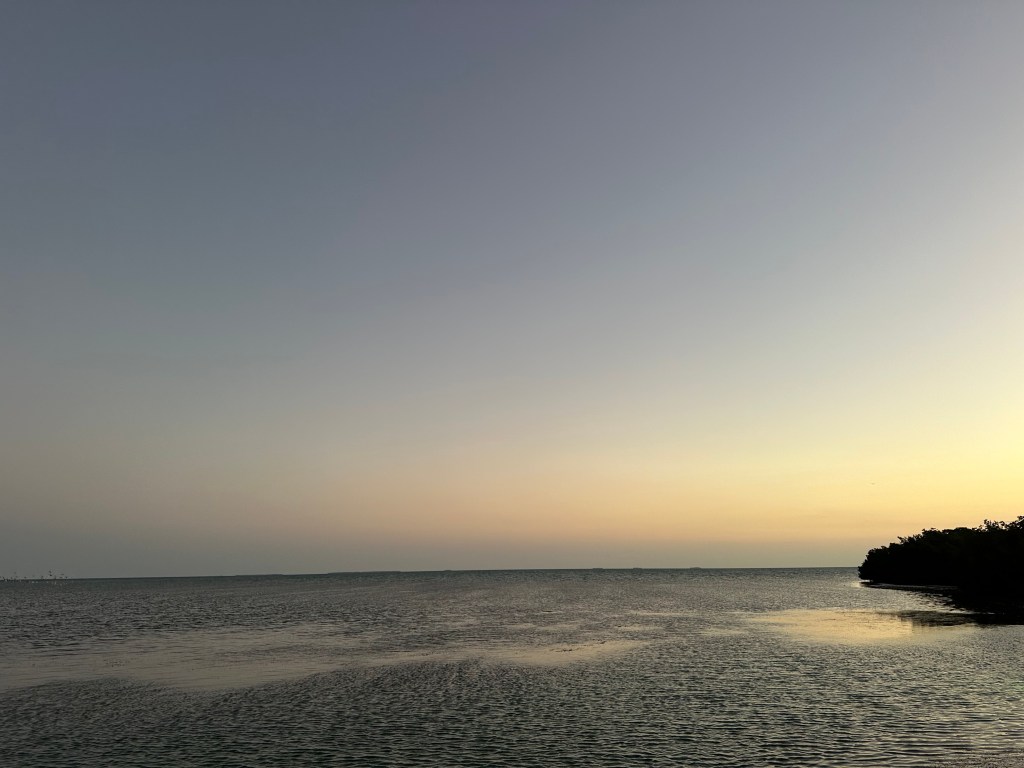
The one possible exception is Key West, which we visited yesterday. We took a day trip from Fiesta Key down to Key West on a beautiful Sunday, and the drive took about 90 minutes. Along the way we saw boats, shacks, mansions, gift shops, and ocean, ocean, ocean. Crossing the numerous bridges, the views on both sides feature shades of blue for a dozen miles to the horizon.
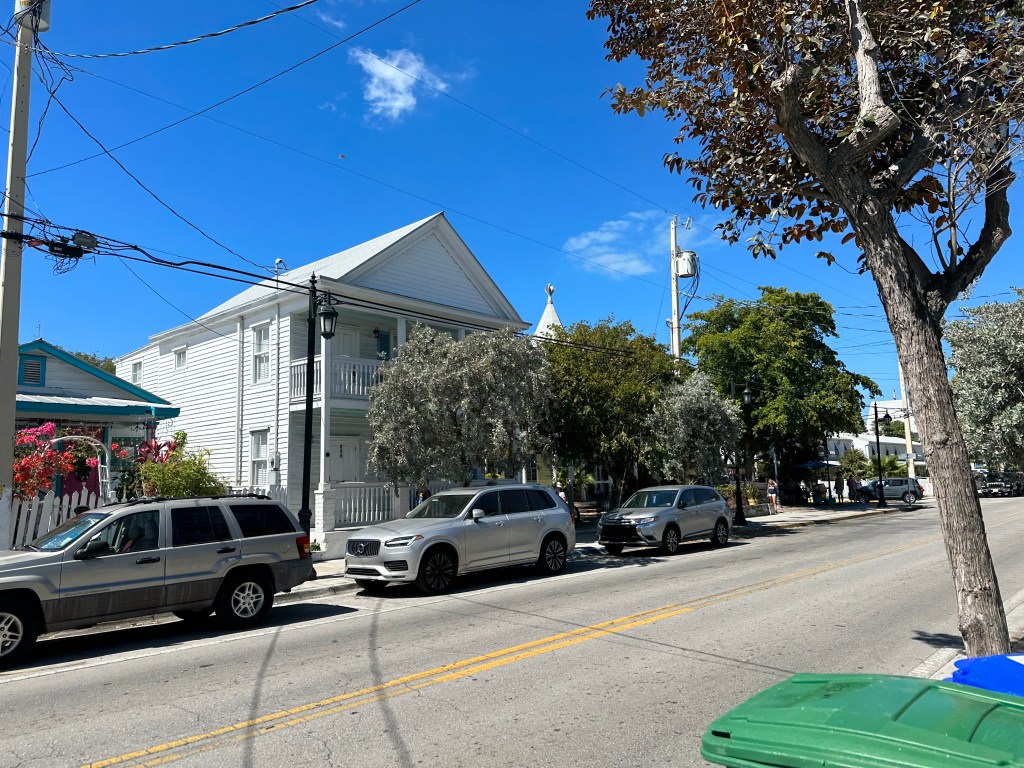
Key West is an actual city, with typical trappings of a city, including traffic, homeless, and chain restaurants. Much of the city is functional but otherwise unremarkable. The Key West you’ve heard about appears mostly confined to the old district in the southernmost part of the City, and it is worth visiting if you’re in the Keys.
One of the things that caught my eye early was the architecture, which was instantly reminiscent of the French Quarter in Louisiana. Many of the home featured these front column-supported galleries/balconies.
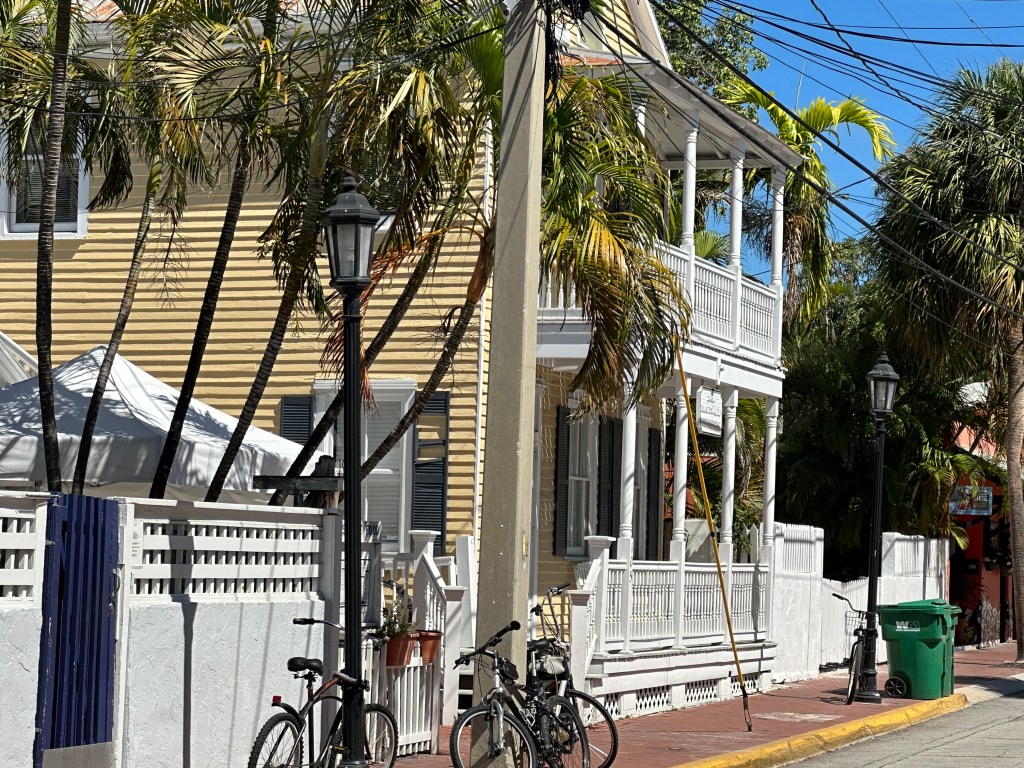
They were not nearly as prevalent as in the French Quarter where these features are nearly universal, but they were unmistakably the same type of structure.
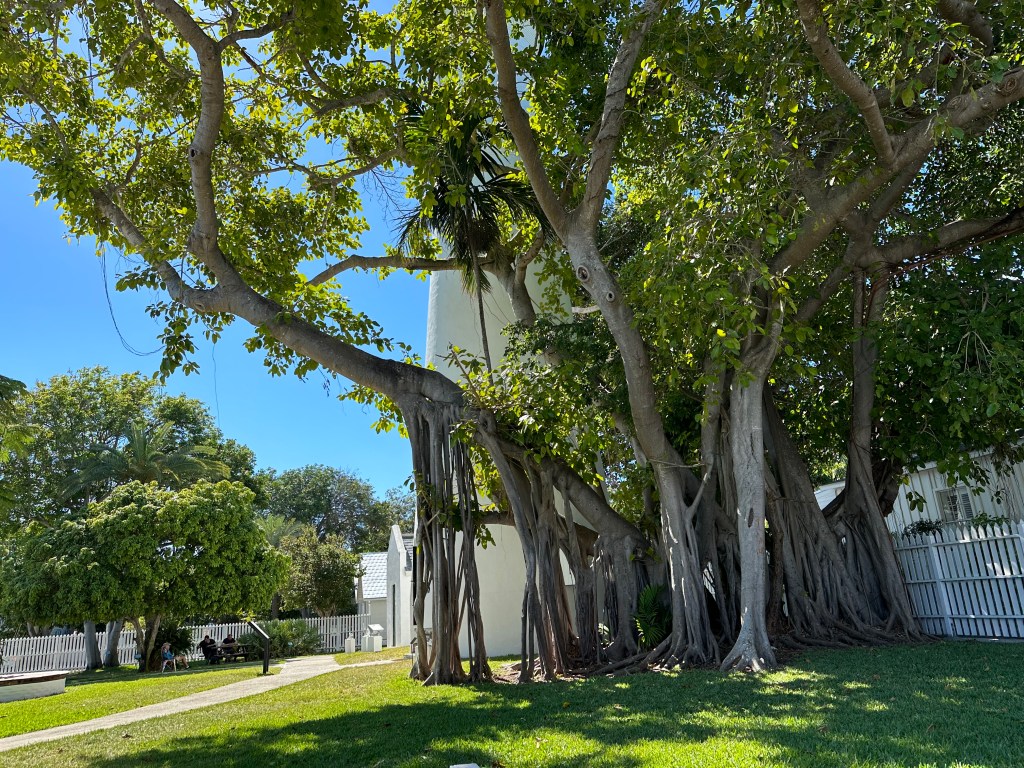
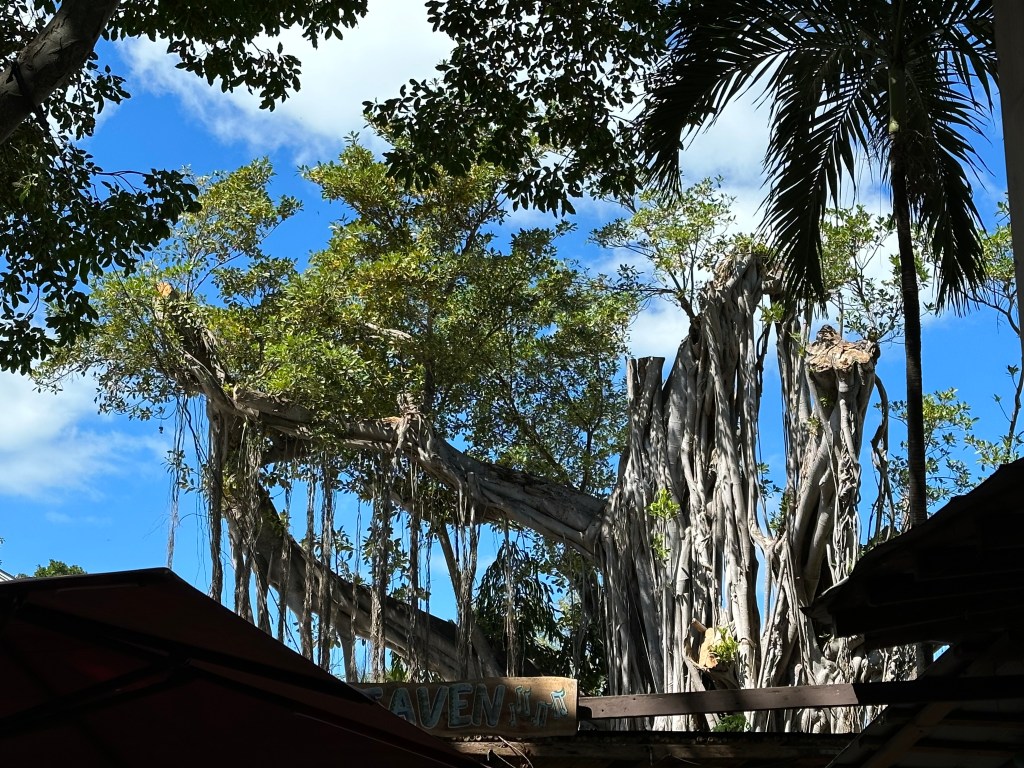
We were also struck by these trees with roots that run high into the air.
The wild roosters have become something of a mascot for the island, to the point that many local designers have incorporated the rooster into apparel logos. We saw these mascots in several places.
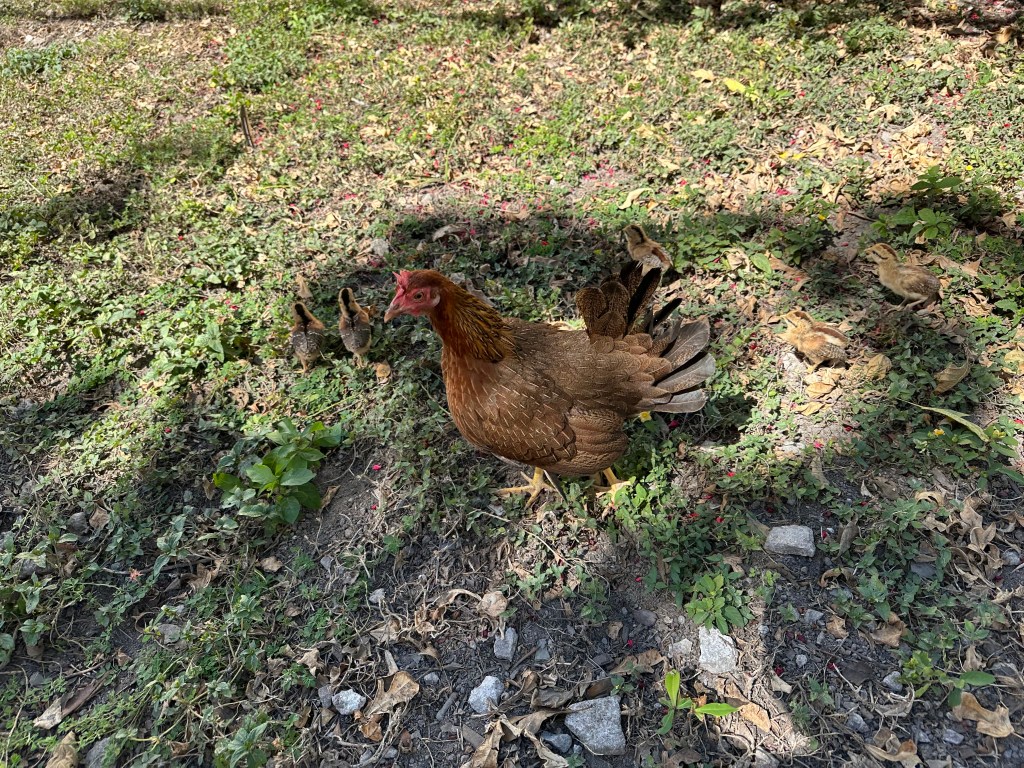
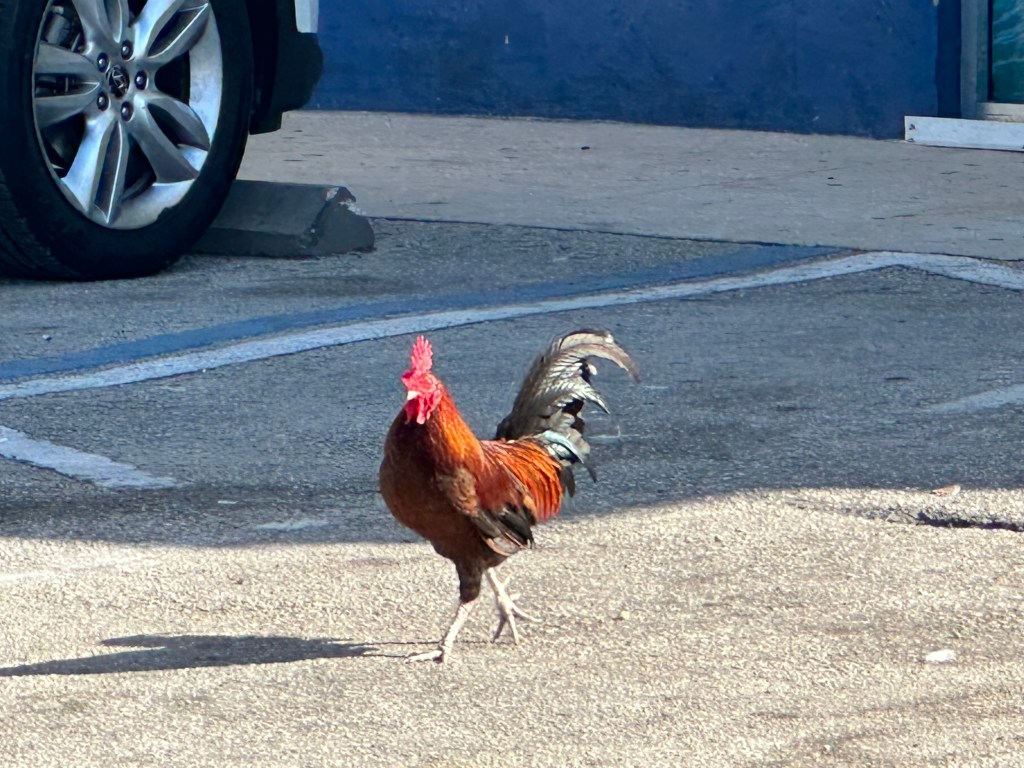
While we were there, we visited the Hemingway Home, which was Earnest Hemingway’s actual house while he lived in Key West in the late 1920s and most of the 1930s, and the visit was very interesting. Fortunately they allow dogs inside, but unfortunately they require that you physically carry the dogs while on the premises because of the 57 – yes 57 – cats that live there. Hemingway loved his cats.
So, because we were carrying our little doggies in addition to a bag and a bottle of water, we didn’t have free hands to take pictures. But the house was really cool, existing in essentially the same state it was when Hemingway moved away in the late 1930s and still showing off antique furniture and decorations Hemingway acquired during his travels.
We explored some of the local shops, and like in New Orleans we found a shop that designs and creates their own logos and apparel called Red Bike Brand. Although shops like this are inevitably more expensive than the typical gift shop selling mass-produced items, the look and feel are usually far superior, and I feel much better patronizing those who live and work in the place their products represent.
We also decided to have lunch at Blue Heaven which is a spot in the old town neighborhood that came highly recommended. It was exceptional, and again very much worth the visit. Micki had Shrimp & Grits and I had Bruschetta toast with avocado and egg whites. Fancier than average, but very delicious.
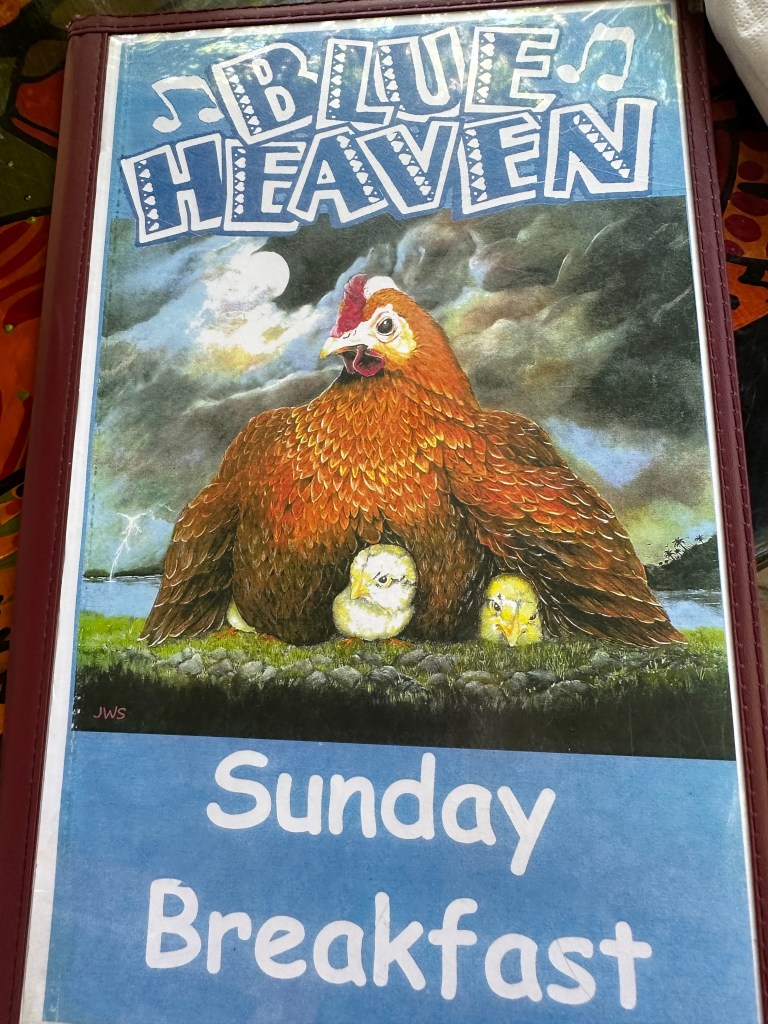
The setting was very nice, being almost exclusively outdoor tables under a variety of different shade covers and with an outdoor bar in the center of the courtyard area. The dogs were tired after all the sidewalk exploring, so they eventually settled in for a rest during lunch.
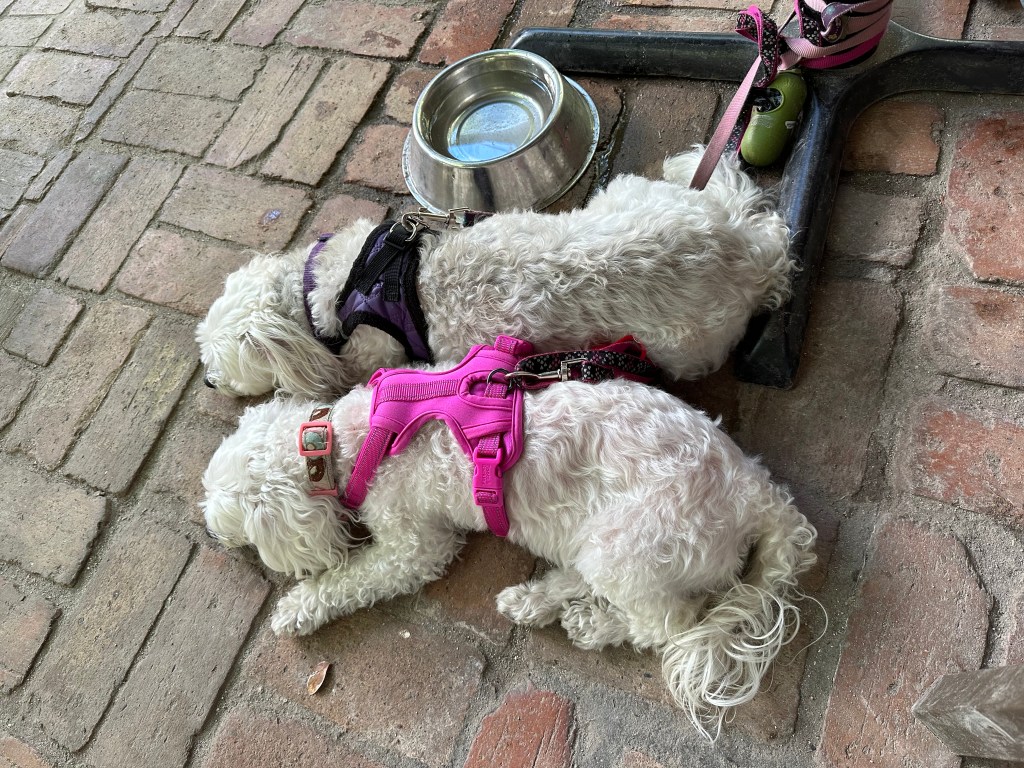
We’ll do some more exploring in Key West next weekend, and we’ll share our adventures of course. But in the meantime, another week of working in the trailer lies ahead, with the daily chores of living in a trailer and also the flashes of beauty and fun of being in the Keys. This experience will end at some point, but until then, we intend to appreciate every moment.
 Mouse House Adventures
Leave a comment