-
Rapid City, SD
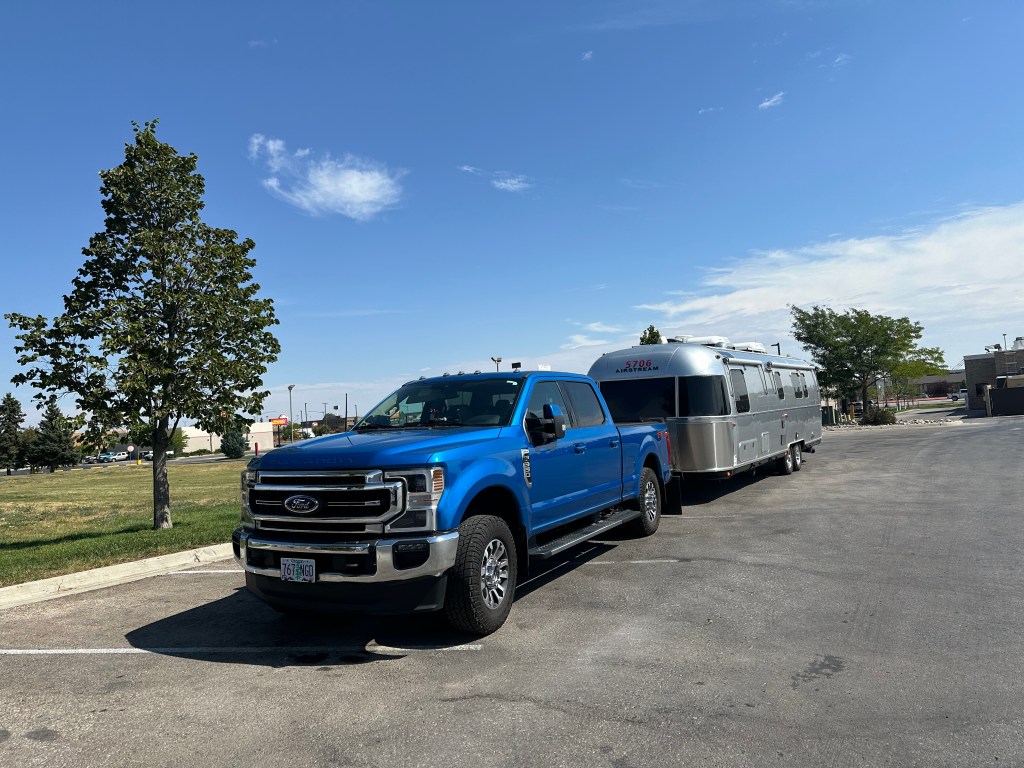
Leaving Devils Tower, we headed east toward Rapid City, which lies at the far west end of South Dakota where the western mountainous region of the state gives way to the eastern grassy prairie areas that dominate the remainder of the state. Turns out, Rapid City is the perfect home base for a thousand different adventures.
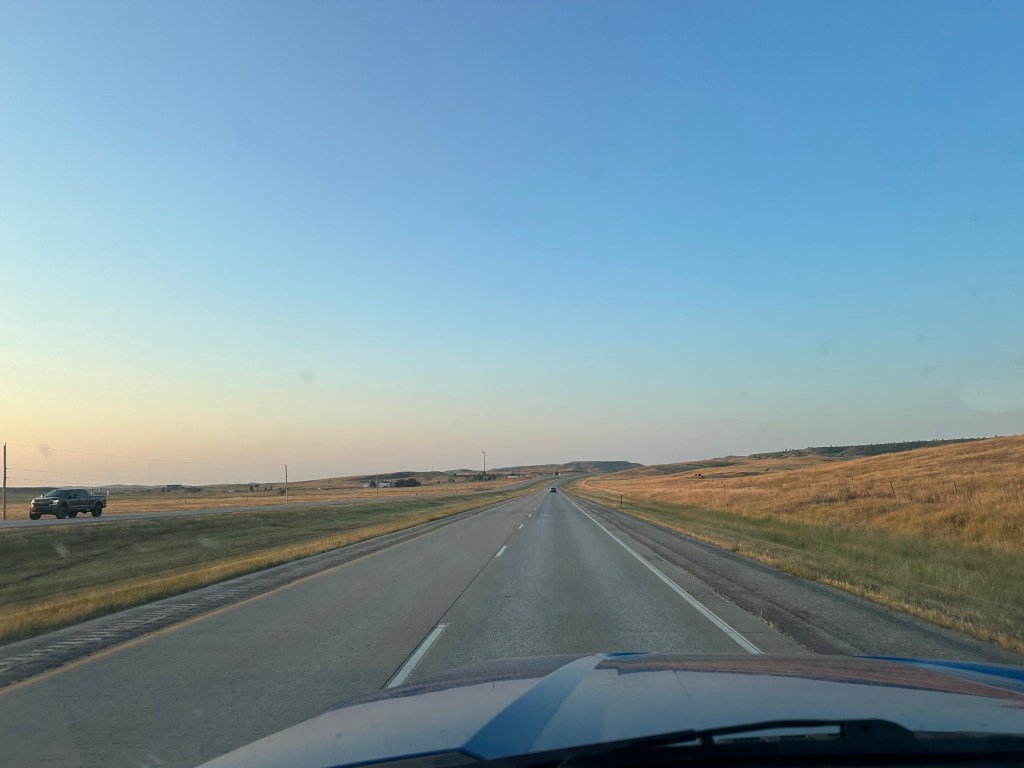
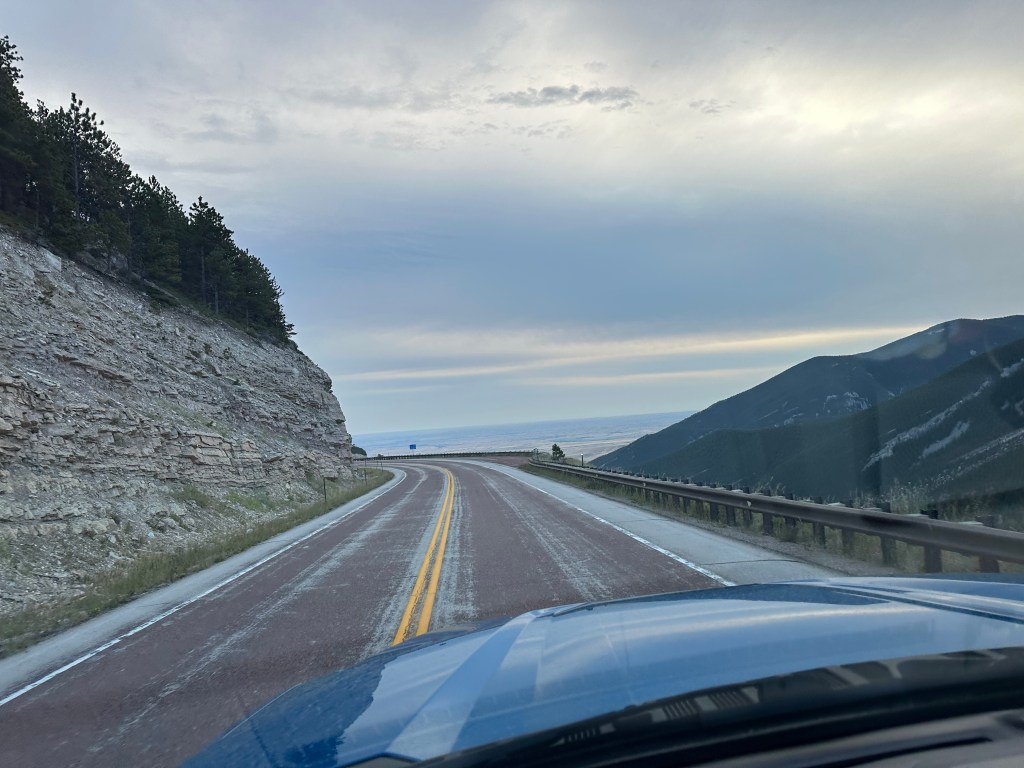
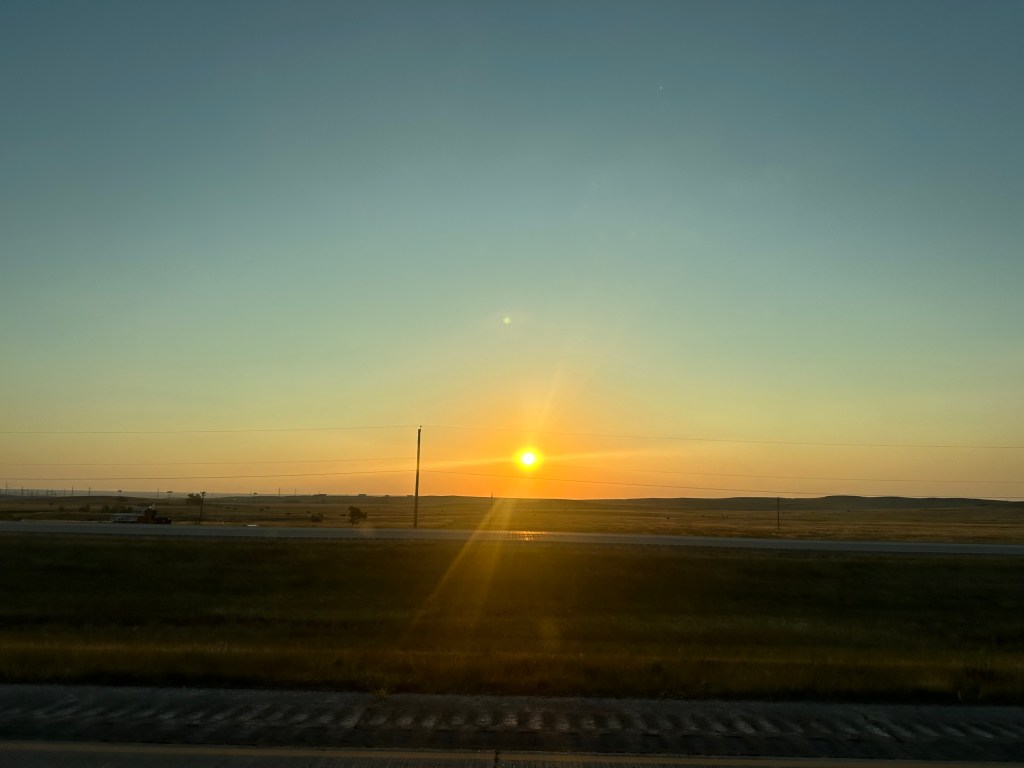
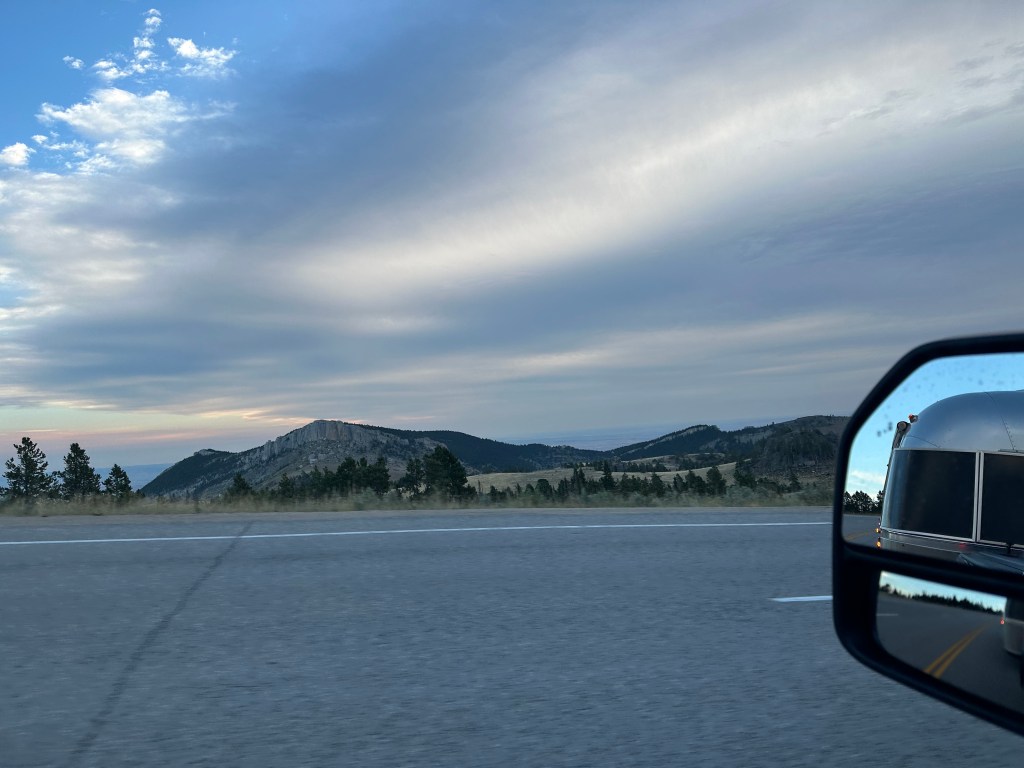
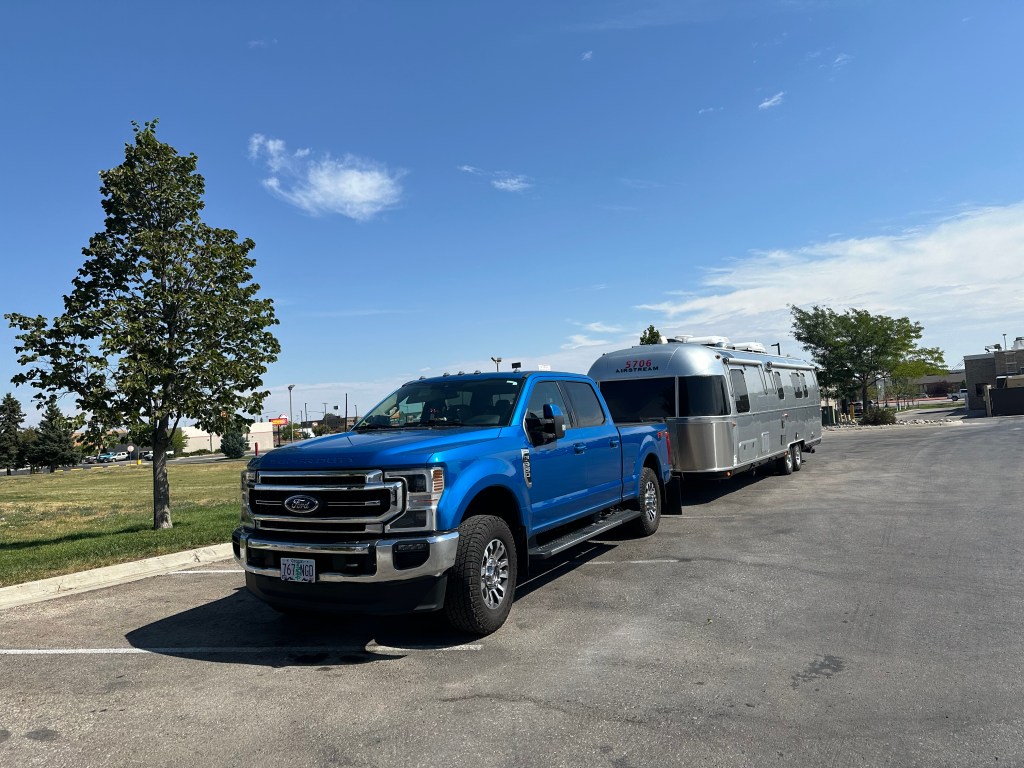
The morning drive from Wyoming into South Dakota was pleasant and shorter than usual. Scenery, wildlife, and sunrises tend to light up our morning drives. As usual, we found a Walmart parking lot to set up for work until lunchtime when we were allowed to check into our site.

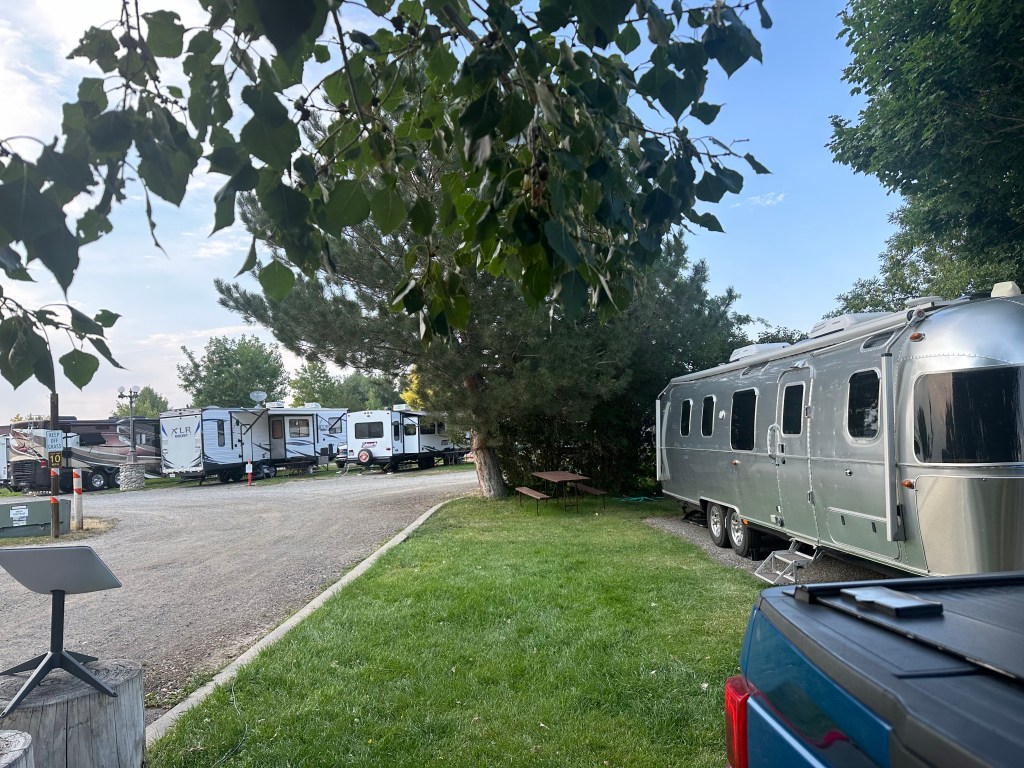
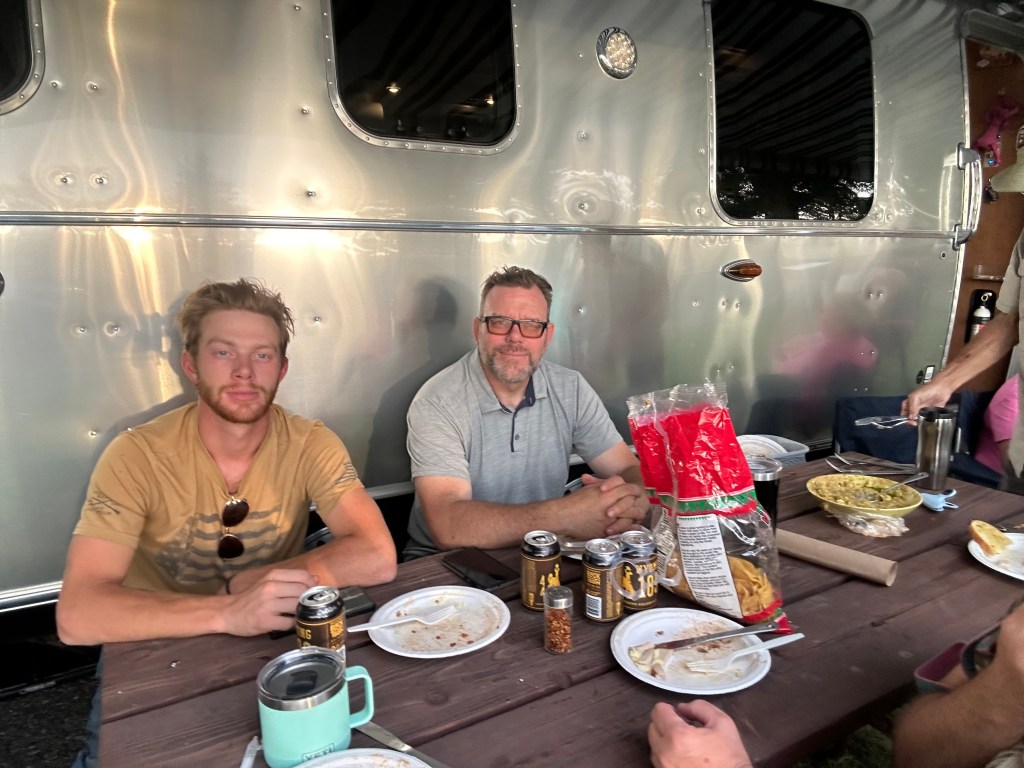
At lunchtime, we checked in at the KOA, set up in our spot, and finished the workday, looking forward to another longer stay in one location without travel days. The longer stay in Rapid City was intentional, because the list of planned attractions was long, and also because we wanted to spend time with friends in Rapid City.
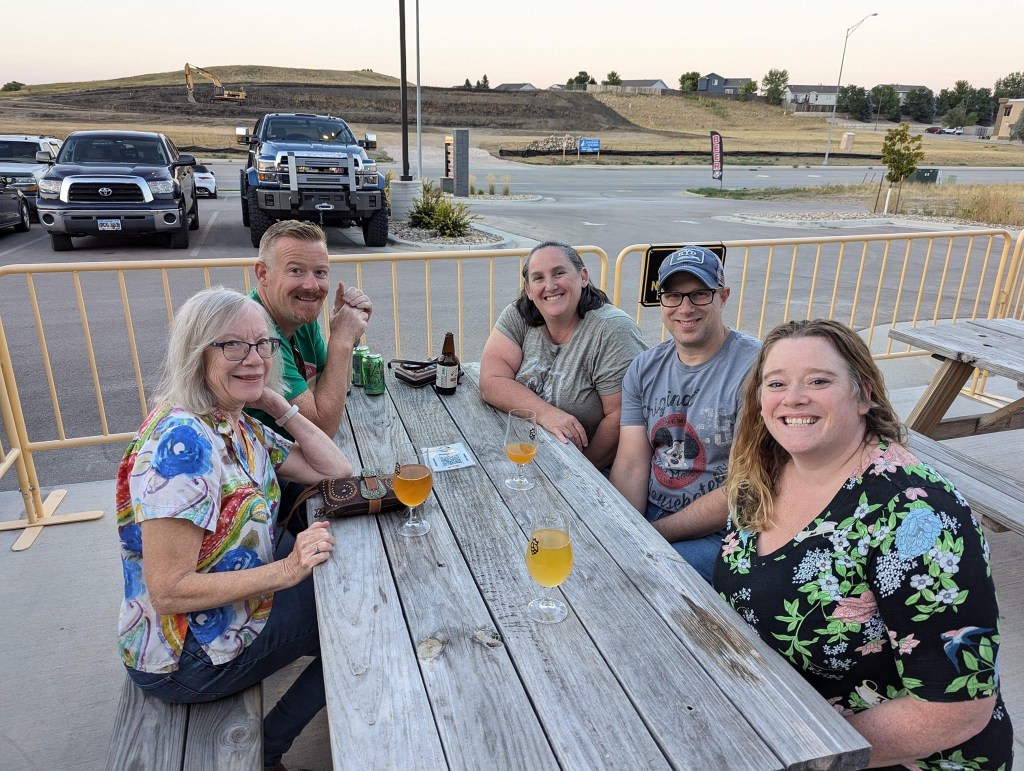
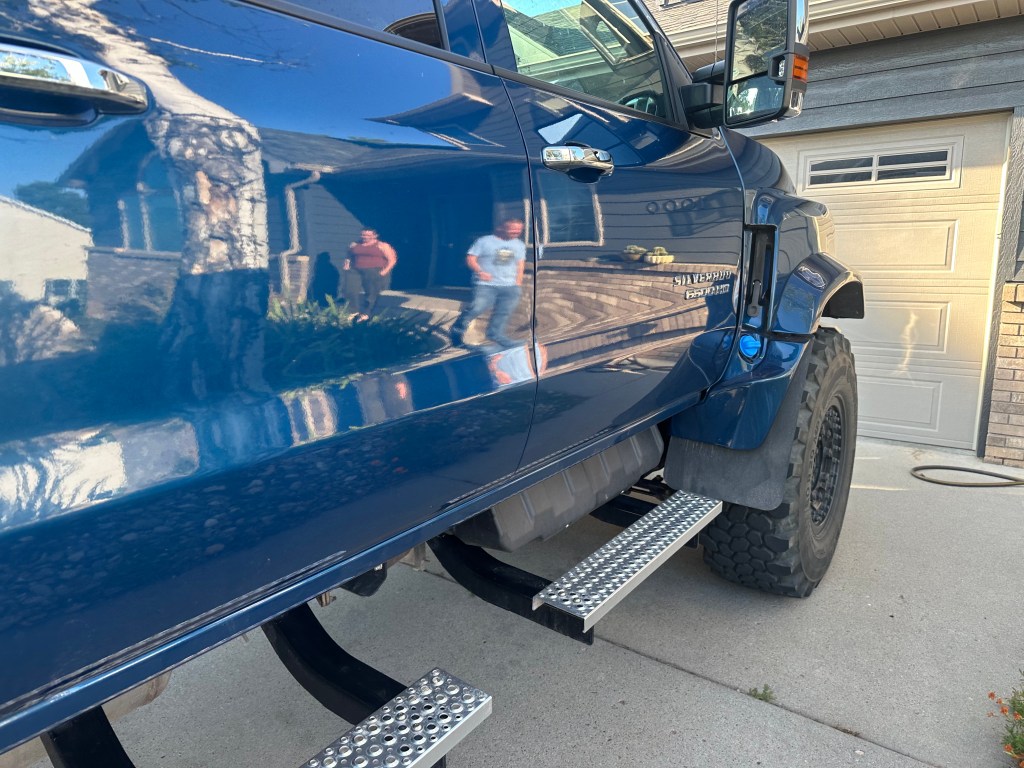
My buddy’s truck was incredible. A custom build based upon a 6500HD chassis, sporting 44″ tires and a variety of cool customizations.
Western South Dakota area offers a staggering assortment of significant points of interest, including Mt. Rushmore, Crazy Horse, Badlands NP, Custer SP, Wind Cave NP, Jewel Cave NM, Deadwood, Sturgis, the Black Hills National Forest, and many more. We took in as much as we could.
Note that this post is actually four posts. We packed so many experiences into these 10 days that a single post would have been too long. Therefore, the posts for Rushmore, Badlands, and Custer are separate. Here are the links to those posts:
Mount Rushmore National Memorial – Mouse House Adventures
Custer State Park – Mouse House Adventures
Badlands National Park – Mouse House Adventures
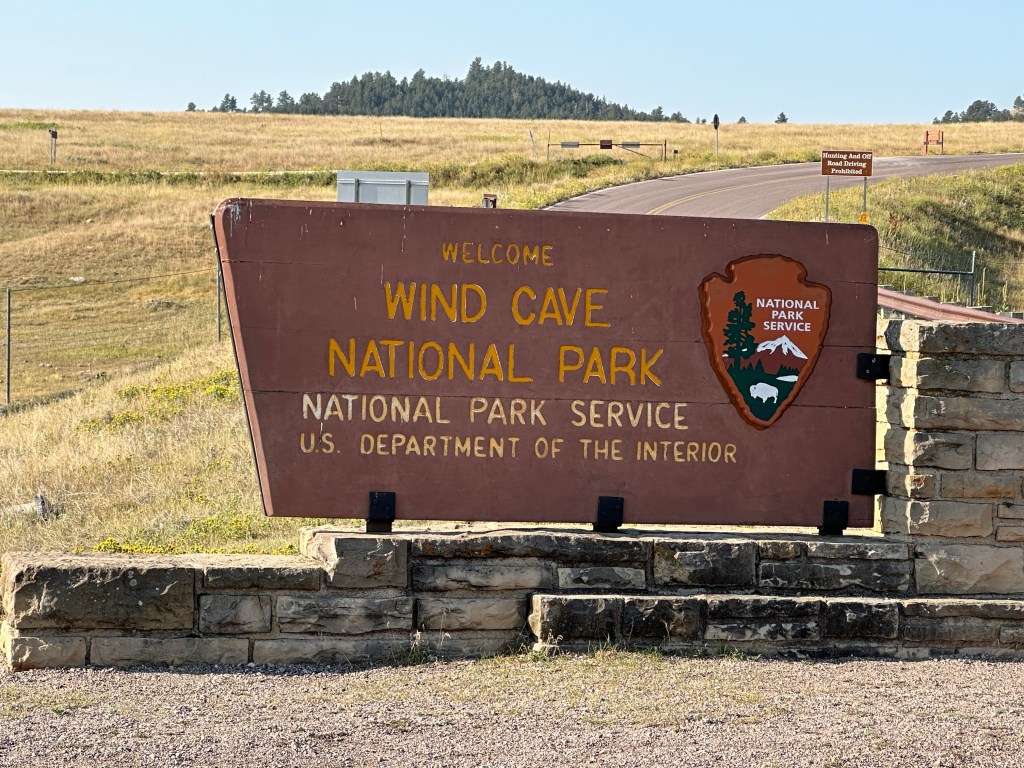
We visited Wind Cave National Park but unfortunately the cave itself was closed for the season due to elevator repairs. At least we visited and collected the Passport Stamp, even if we didn’t get to see the star attraction.
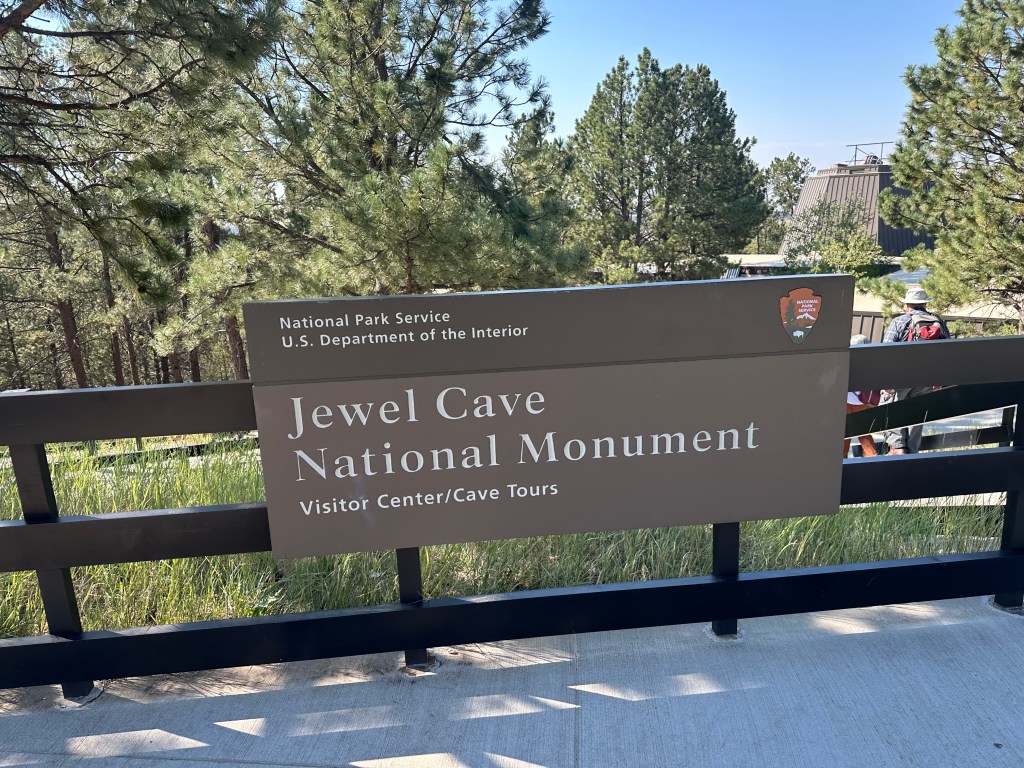
We also visited Jewel Cave National Monument, hoping for better luck on the cave front. Unfortunately, cave tours are by appointment only, which book out well in advance. They open up additional same-day appointments each morning, but the available times would have forced us to come back later, sacrificing some other adventure for the return trip. You might be tempted to think 10 days is more than enough, but most of those days were workdays, leaving 3.5 weekend days to cram in all of the good stuff, so we needed to be choosy.
We took the time to visit the inimitable Wall Drug, where we enjoyed the kitschy charm as well as the donuts, but otherwise it wasn’t too much more than an overhyped gift shop.


In addition to Mount Rushmore, we visited Crazy Horse, which is absolutely massive, but pretty far away from the visitor center. You could pay extra for a bus trip closer to the base of the carving, but we lacked the time or the interest. I will be excited to visit in 20 or 30 years when it’s done or close to it.


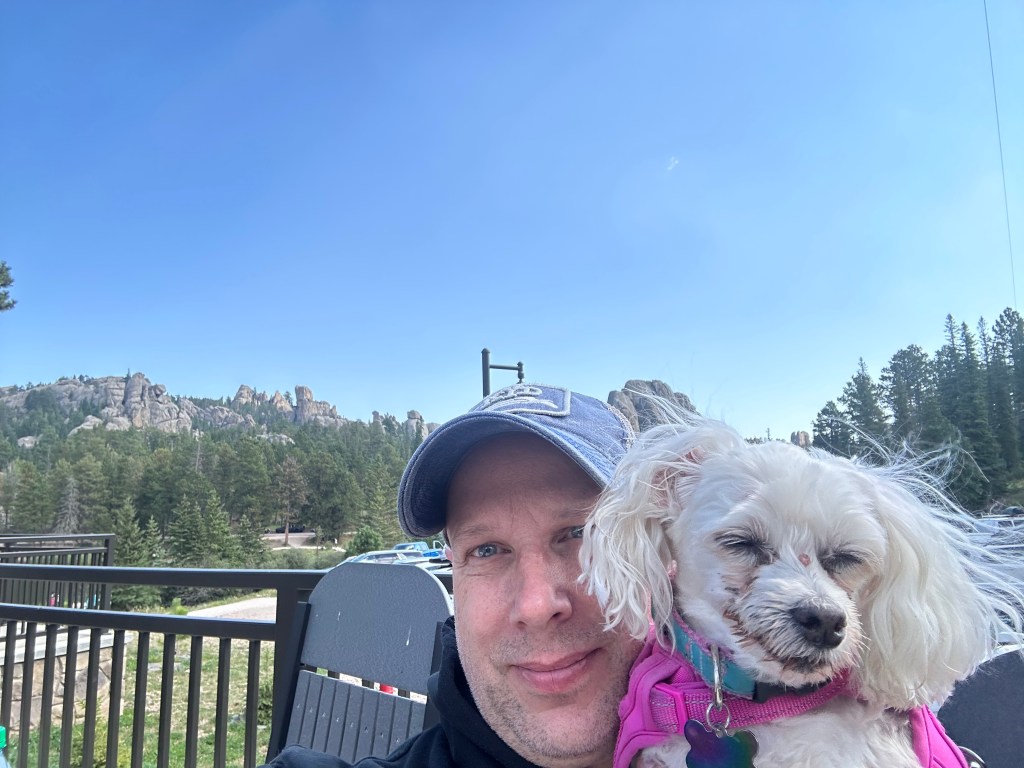
Also past Mount Rushmore, we stopped at Sylvan Lake, which was a beautiful spot to walk Bella and grab some lunch.

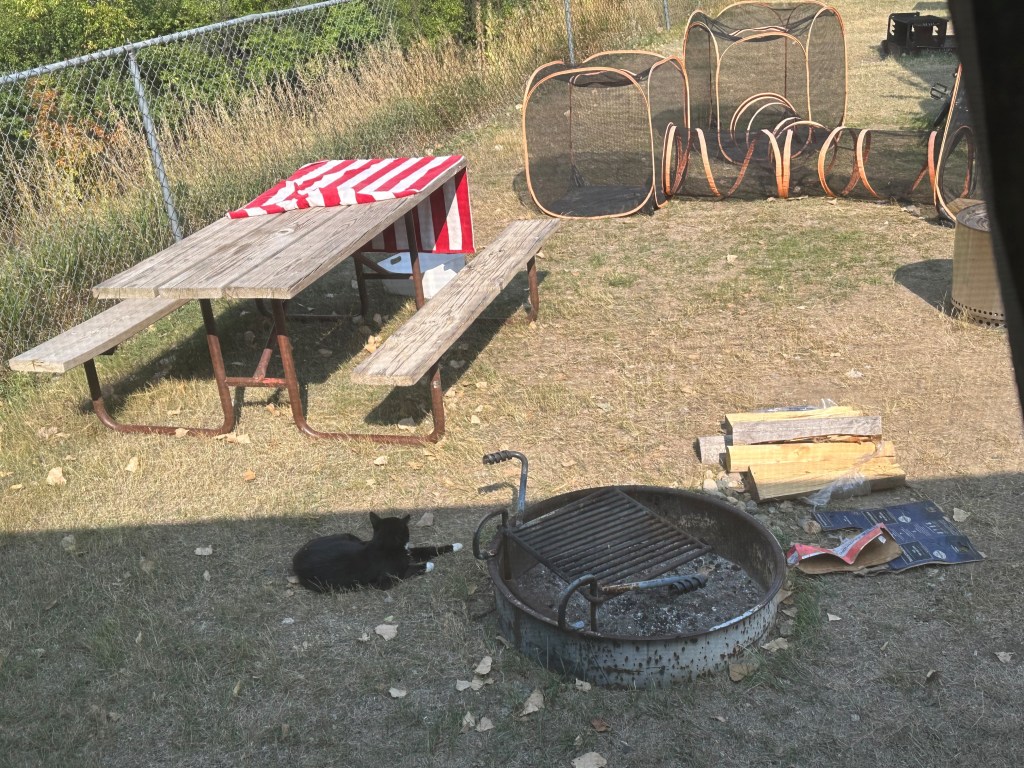
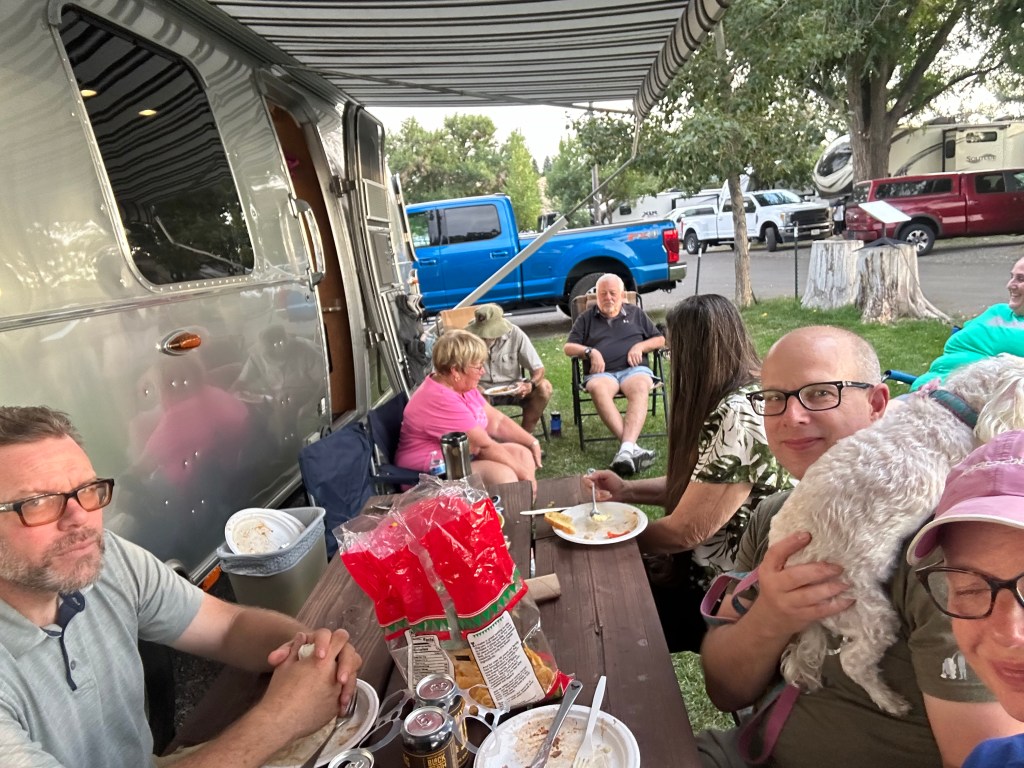
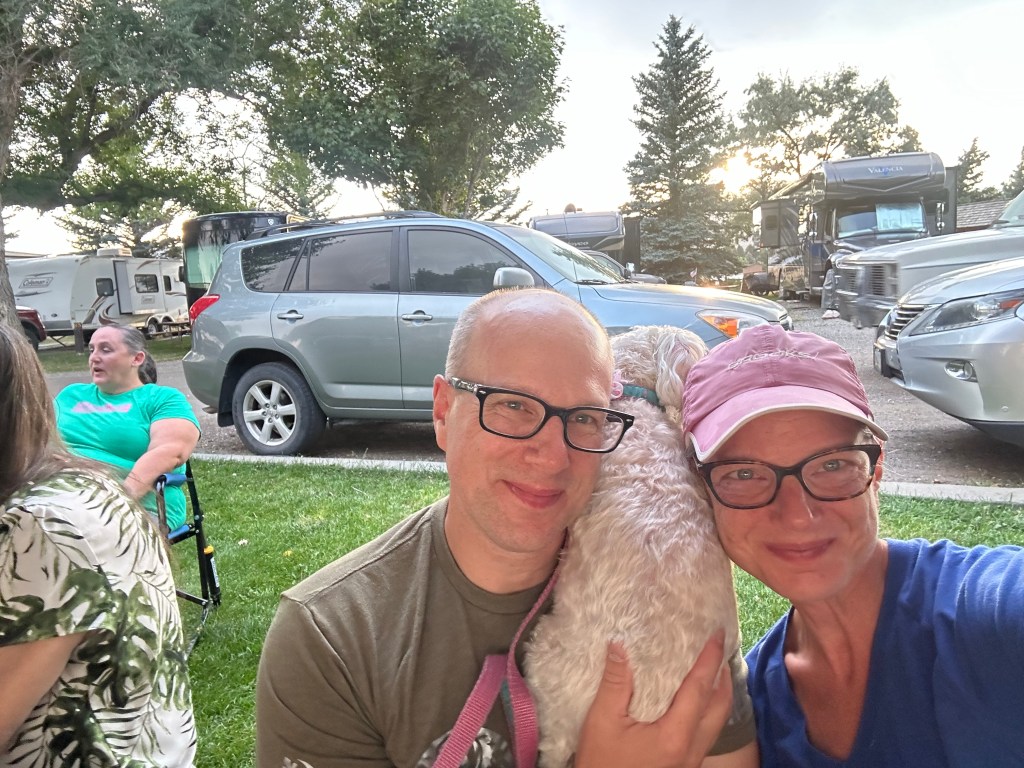
While staying in the Rapid City KOA, we met neighbors who had been full-timing for three years with two cats, traveling with portable outside habitrails and cat harnesses for walks on leashes. However, they also attracted the interest of a local kitty who appeared homeless. They fed and loved the kitty, ultimately contacting a rescue service to help. After someone mentioned they had seen a missing cat posting that might’ve matched the description of this cat, they scrolled back almost a year and found a matching post. Long story short, they reunited this lost kitty with her owner after a long time of being on her own, which was fantastic to watch happen.
While we were in the Rapid City KOA, a lightning storm passe overhead, which lasted almost an hour. It was incredible.
Despite being there for 10 days and 9 nights, we wish we could have spent more time in and around Rapid City. With more time and/or fewer workdays, we would have hiked Jewel Cave, hiked a couple Badlands trails, visited Deadwood, and enjoyed more of Rapid City itself. Maybe next time.
-
Badlands National Park
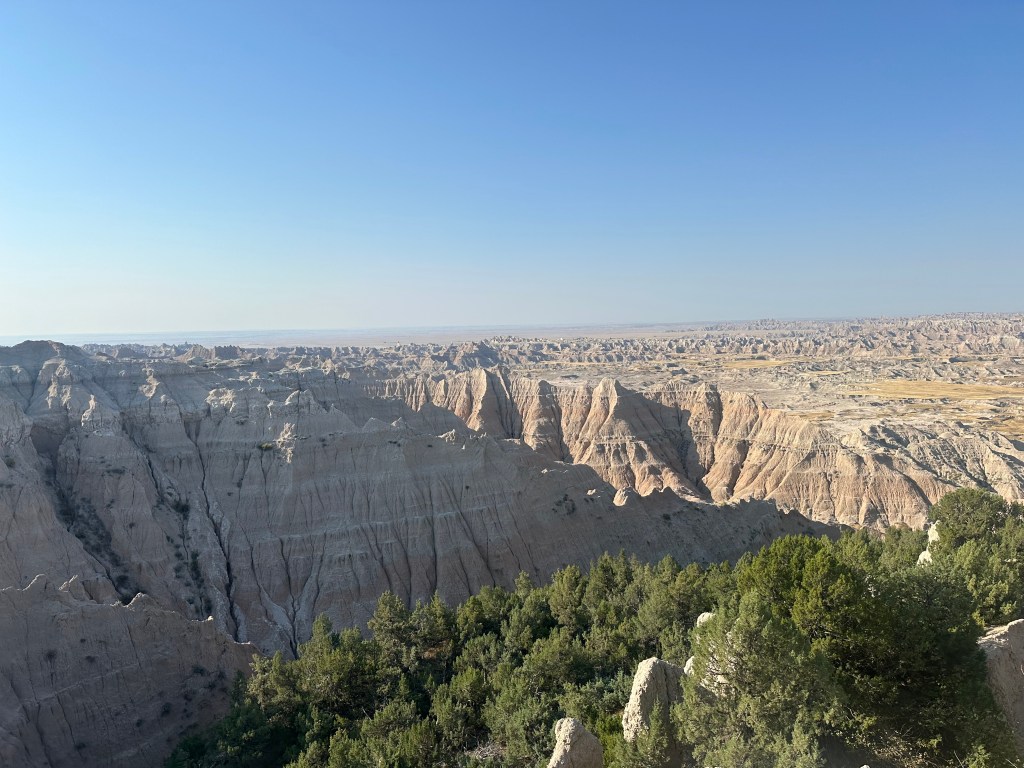
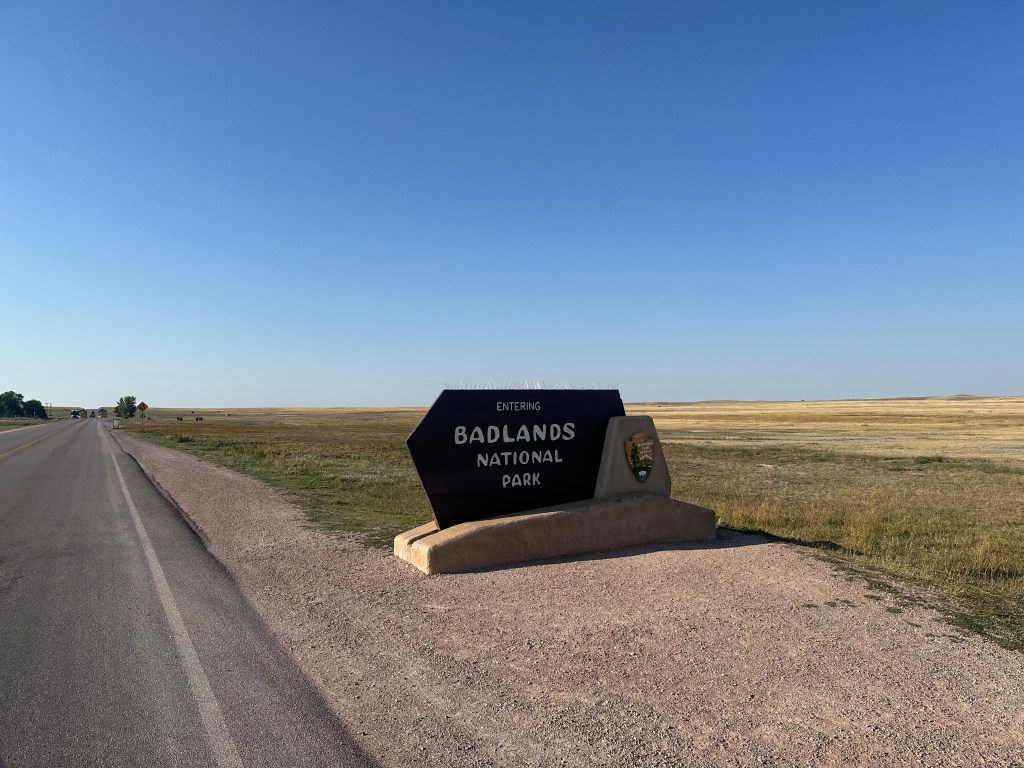
Badlands is a unique and oddly-shaped national park. Most of the experience is simply driving from one end to the other, although it offers a couple of decent hiking opportunities as well.
The odd shape and driving-focused experience are owing to the harsh stretch of jagged rocks that separate the lower prairie from the upper prairie. This area gained notoriety during the white expansion west in the early 1800s, because the covered wagons used by the settlers could not traverse this terrain, and the seemingly impassable rocks stretch for more than 60 miles.
Ultimately, two different passes were carved through the rocks, allowing for easier passage. The area became known colloquially as the “wall,” and the town resting just past the top of the wall became known as Wall, South Dakota, home of the kitschy tourist attraction Wall Drug.
The history and stories behind this area enhanced the experience, but the positively insane rock structures were the star attractions to be sure.
Interestingly, the very first things we saw as we entered Badlands were more bison and prairie dogs, which we have come to love.
From there, we proceeded along the road, which offered a shifting variety of vantage points along the top of the wall, then through a pass to the bottom of the wall, then back through another pass up to the top of the wall.

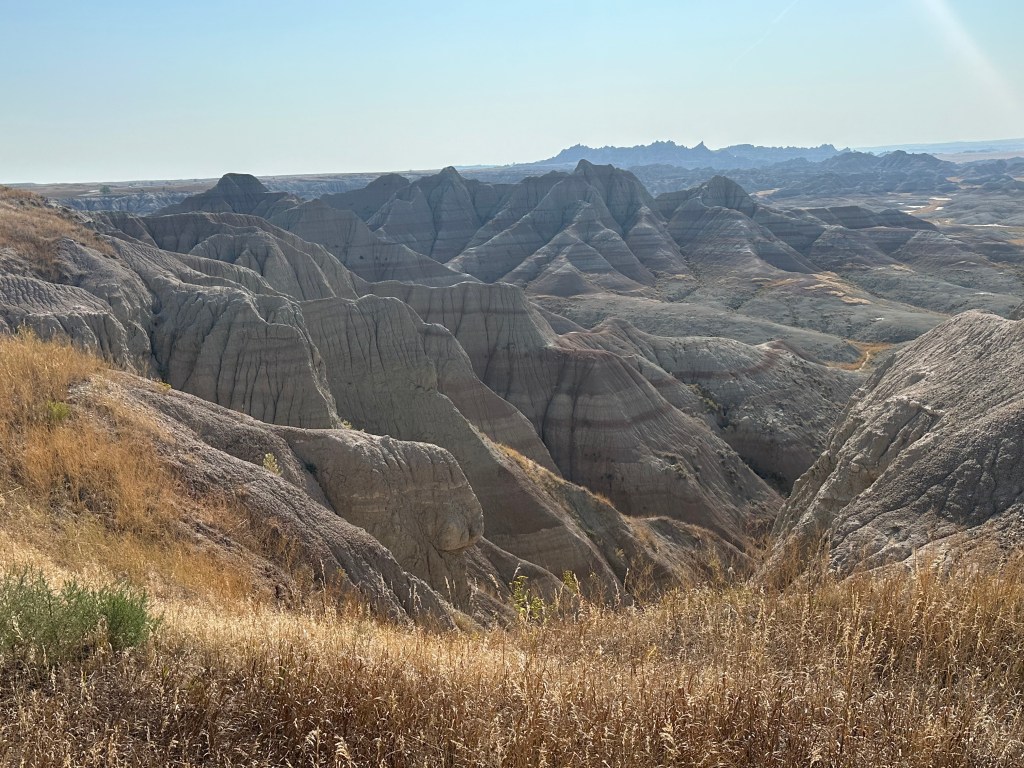
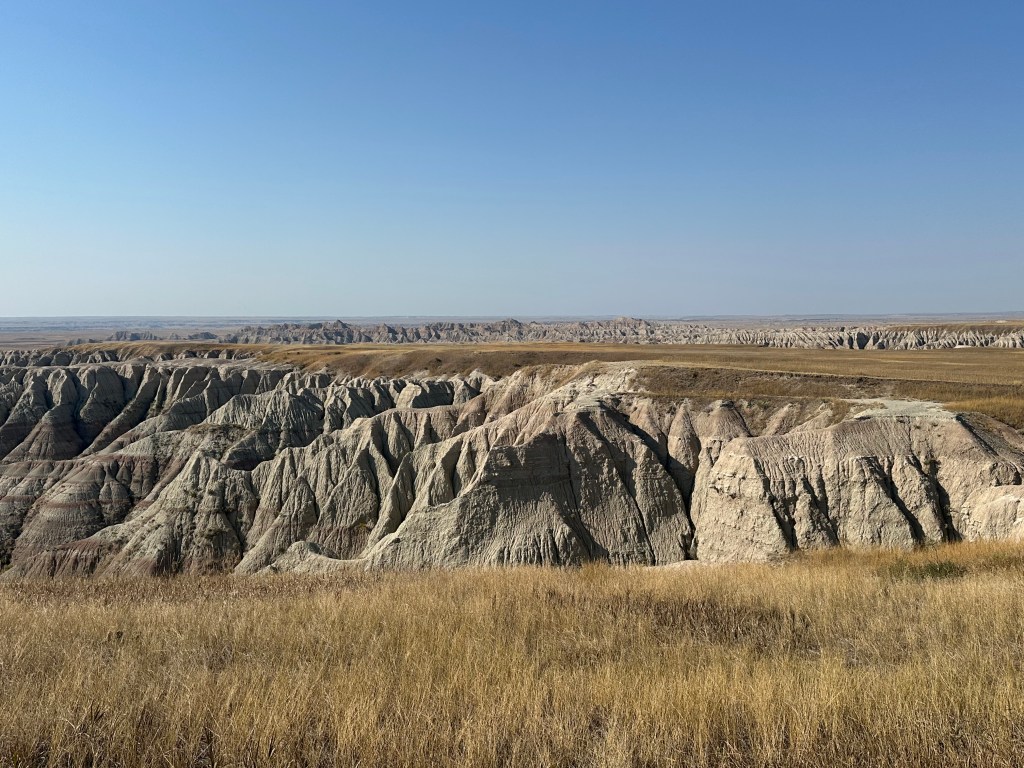
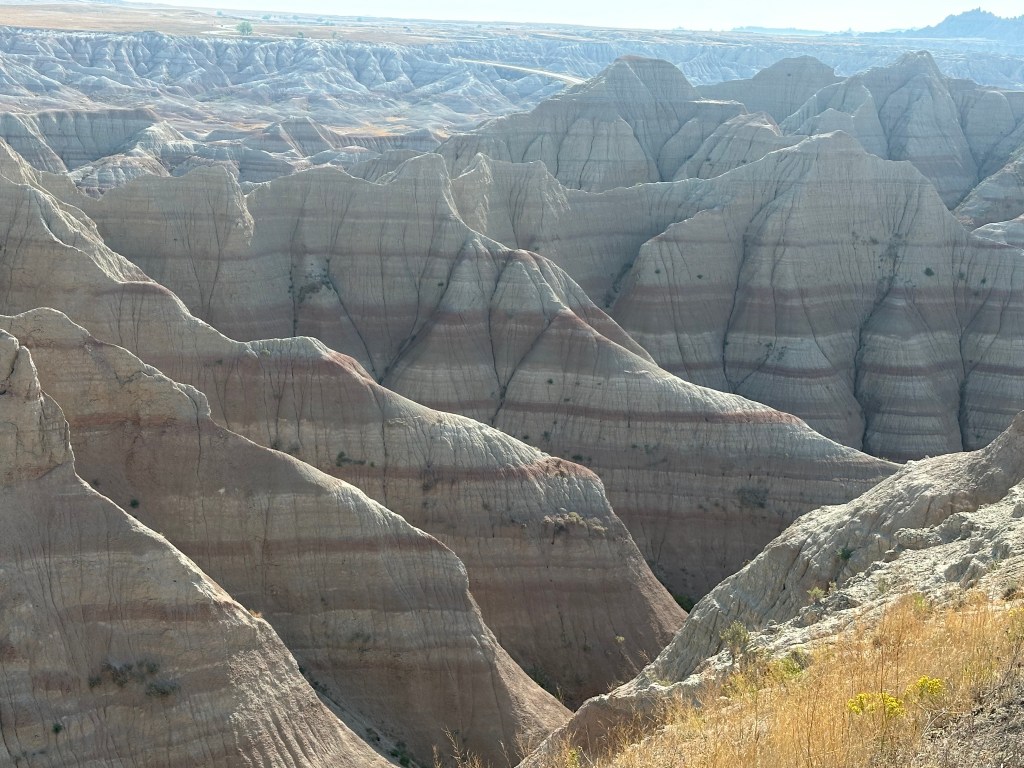


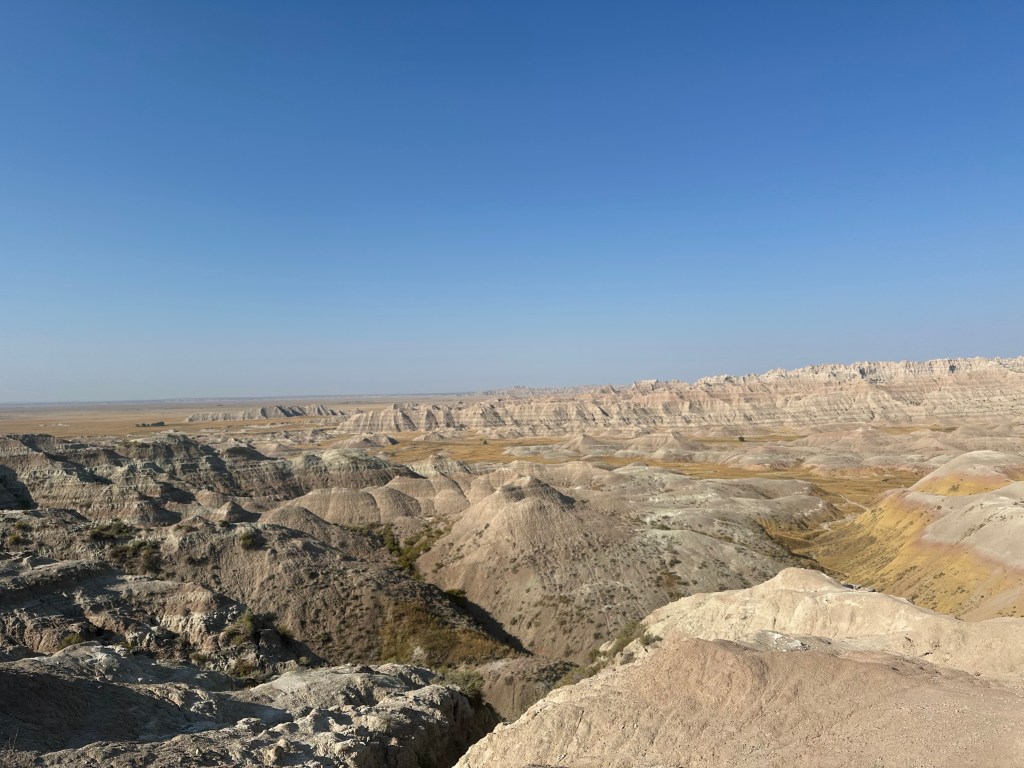
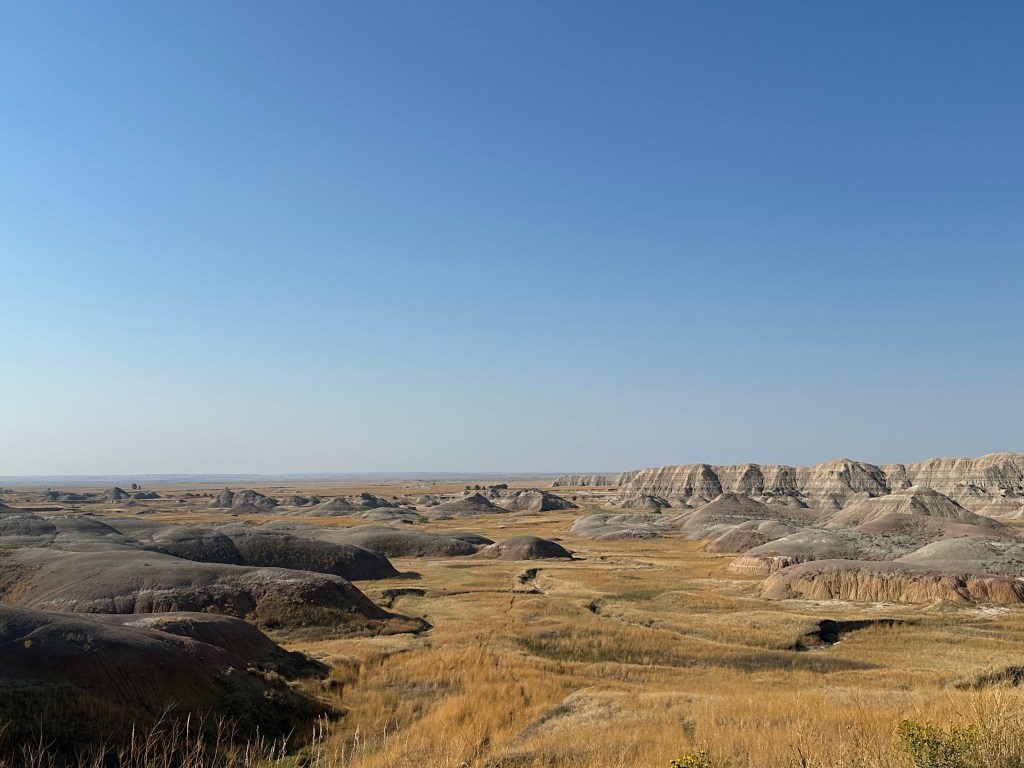
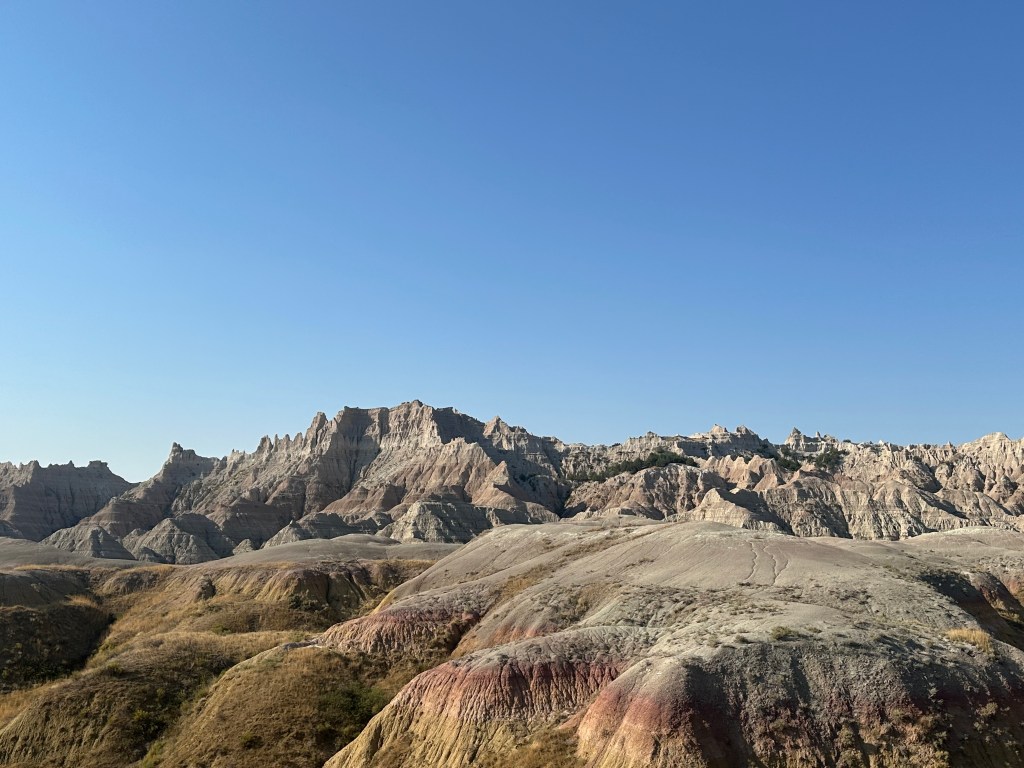
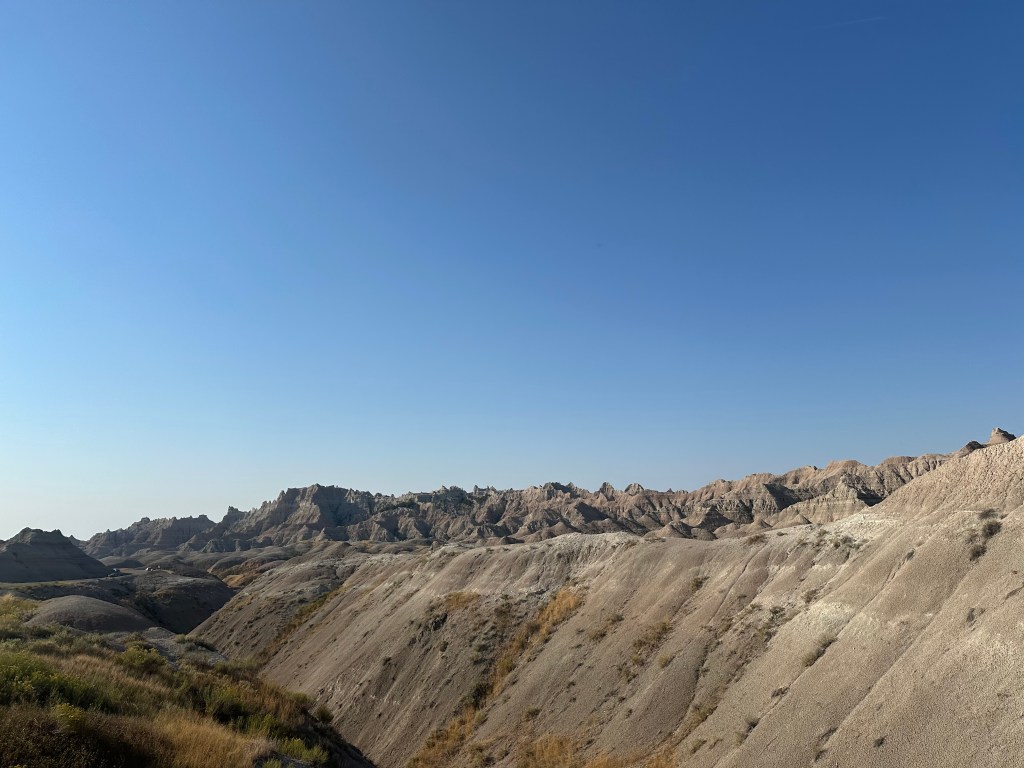
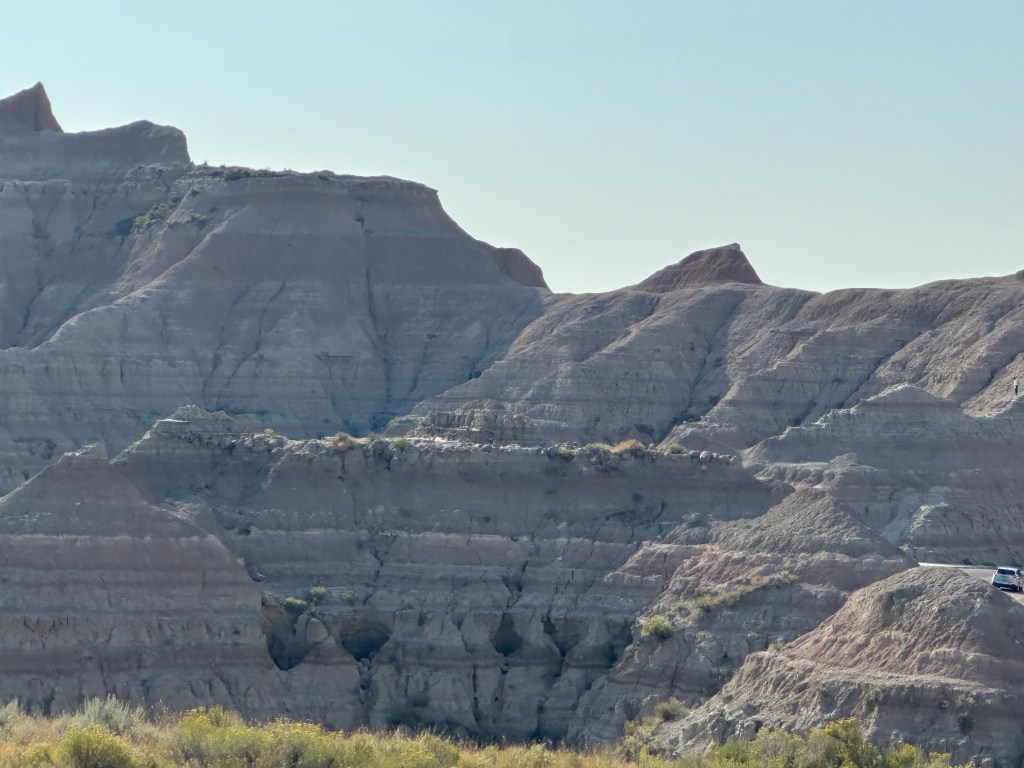
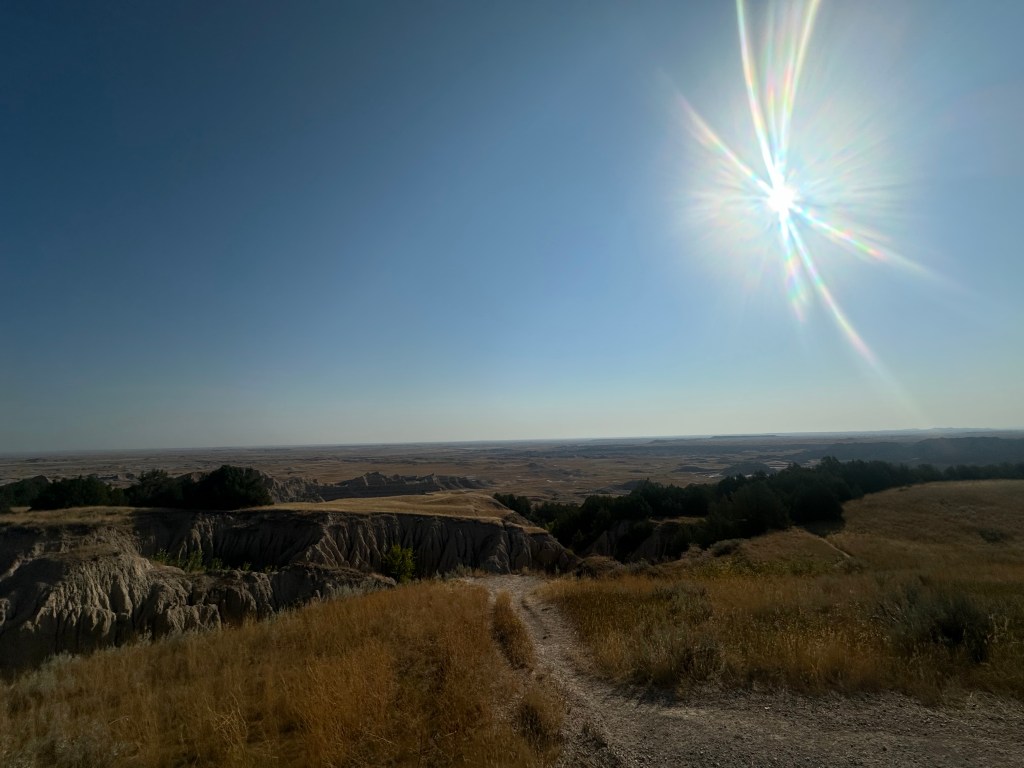
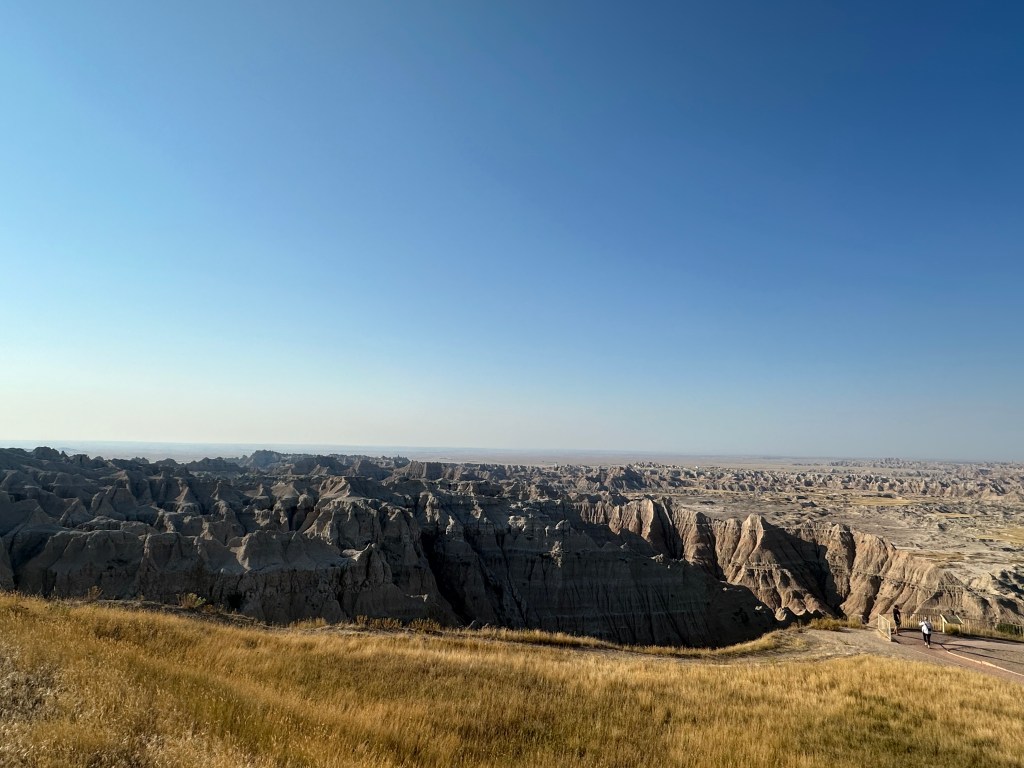
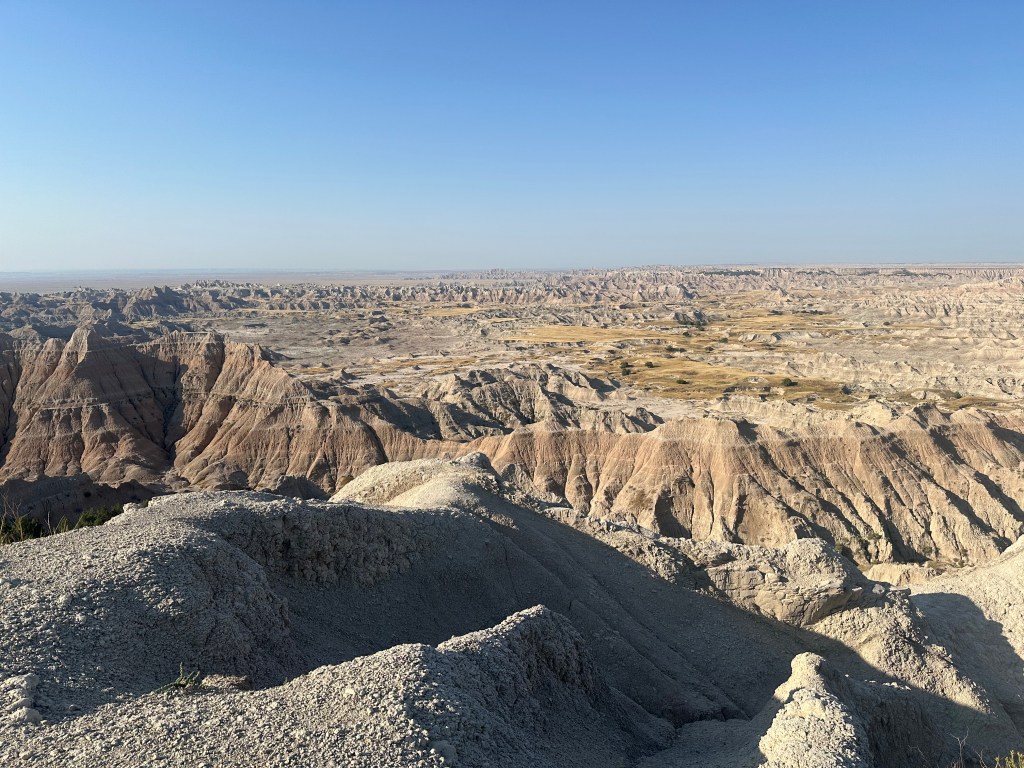
One roadside pull-out offered an opportunity to walk out onto the rocks and get a more personal look at the truly alien nature of this place.
Of course, Bella got to enjoy Badlands too.

-
Custer State Park

The size of a national park, and with some of the features of a national park, Custer State Park in South Dakota is pretty incredible for a not-a-national-park destination. Mostly because of the animals. Ok it’s entirely because of the animals.
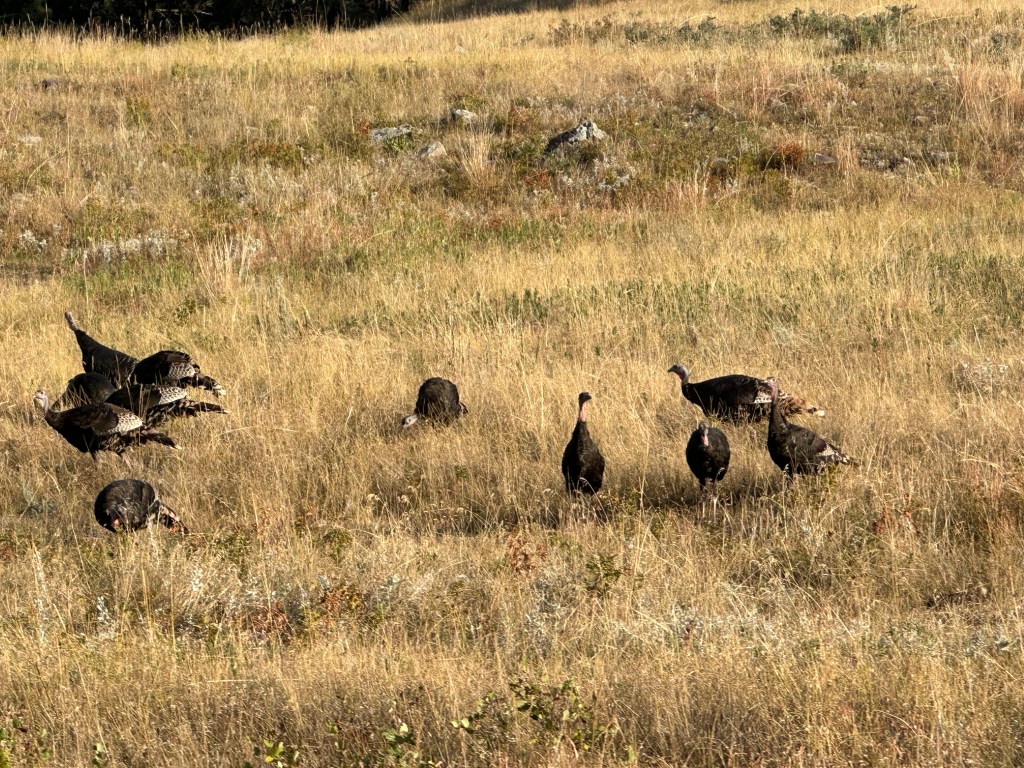
This park has an 18-mile loop road that is dedicated to animal viewing and is even called “Wildlife Loop Road.” We enjoyed the first visit so much, we visited again one morning later in the week at sunrise, so these pictures are a combination of both trips.
Let’s start with the Prairie Dogs. Recall from our visit to Devil’s Tower that we were surprised by our first encounter with these little chirpers congregating in communities called Prairie Dog Towns and uttering a strange sound somewhere between a squeak and a bark that I liked to call a “squark.” Custer also had several Prairie Dog Towns, so we took advantage of the chance to see these little cuties again, and captured some video along the way.
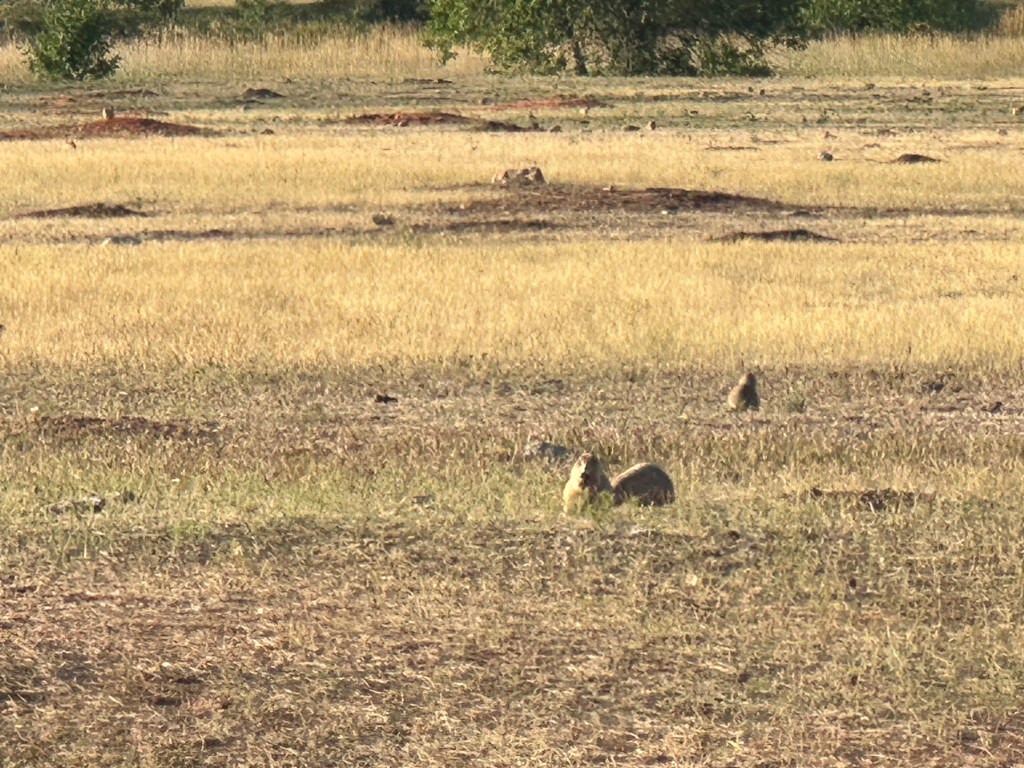
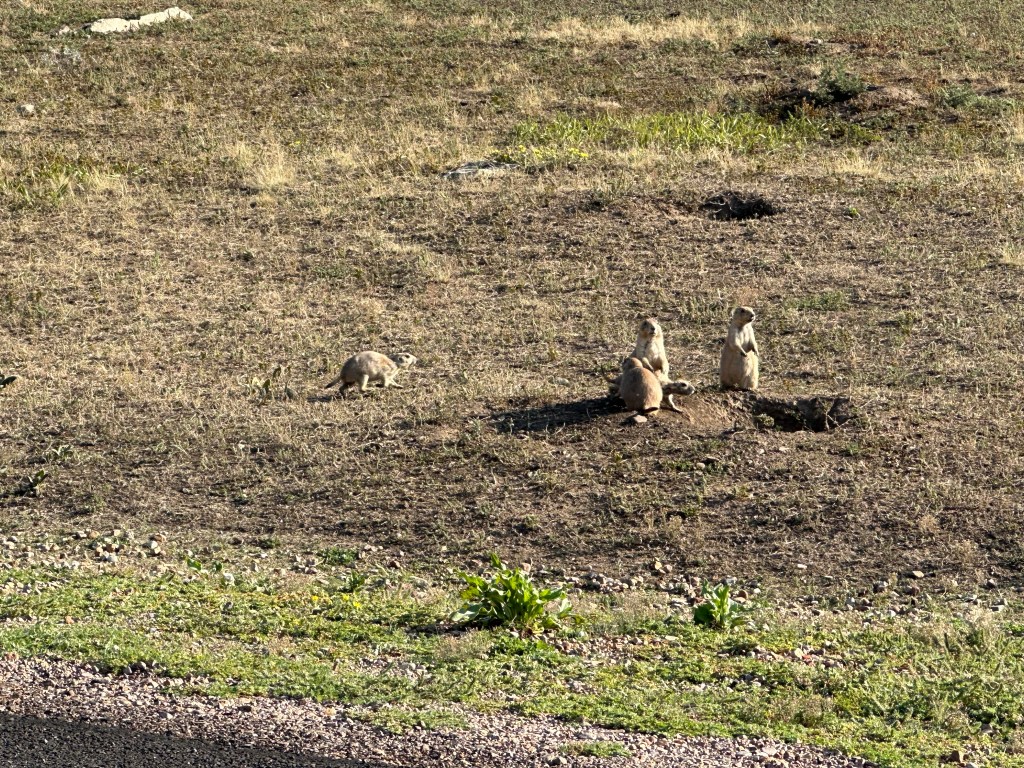
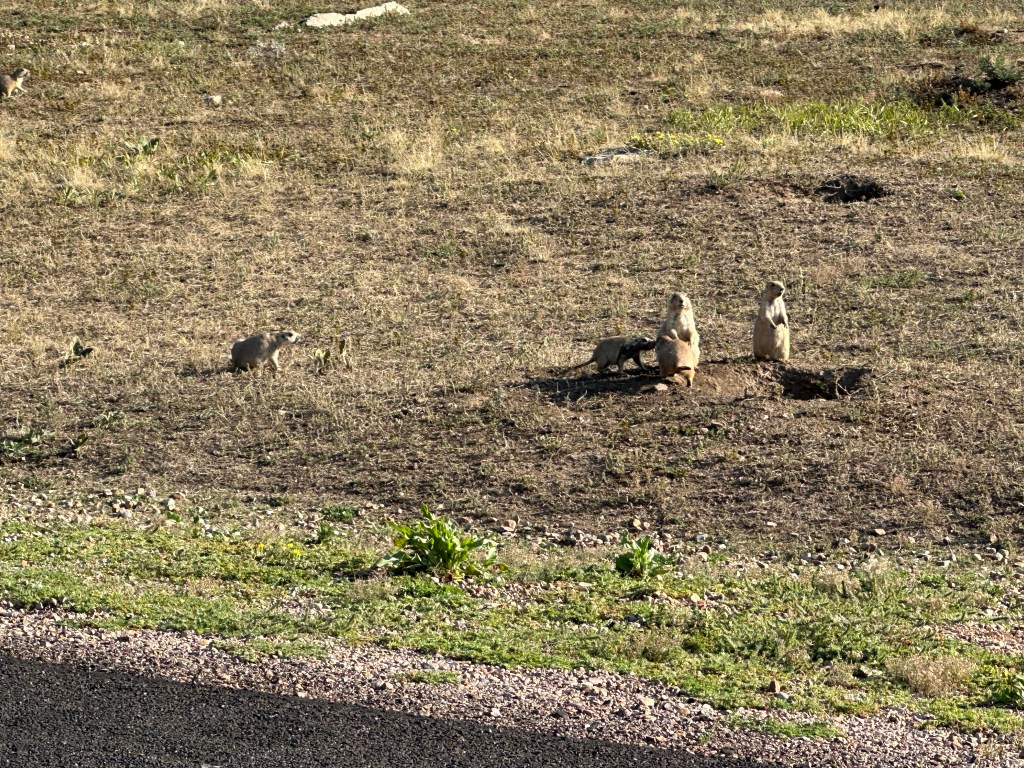
Next on the list, in no particular order, were the unexpected wild donkeys. No we don’t mean the uninvited relatives who ruin family gatherings; we mean actual wild burrows.
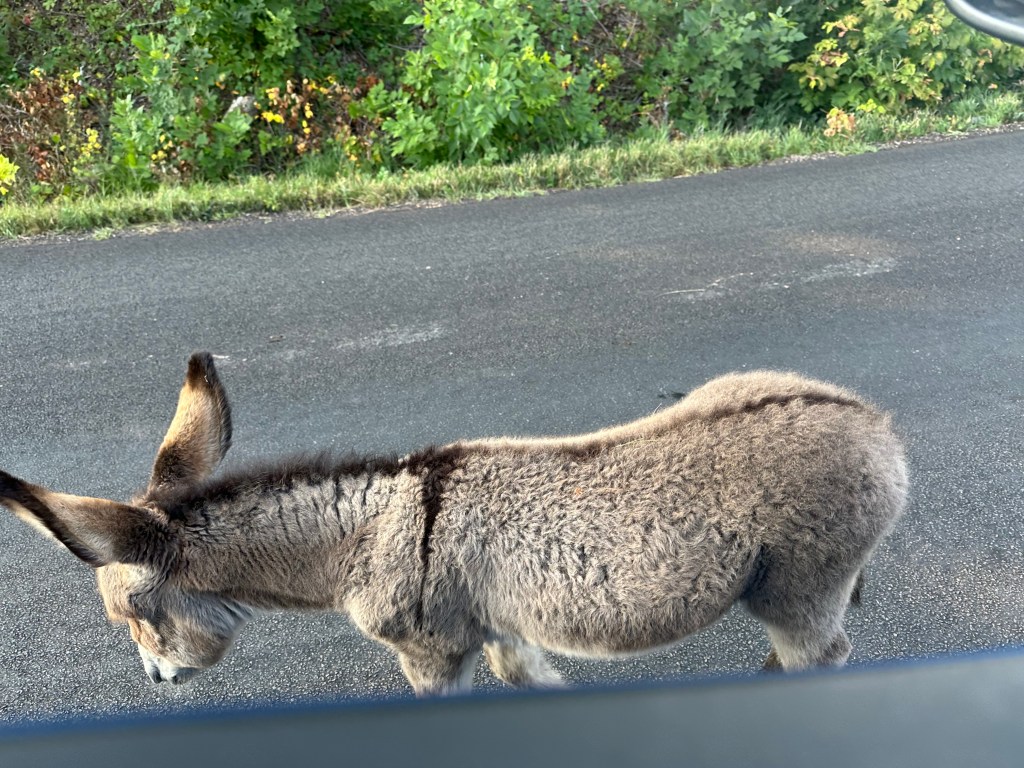

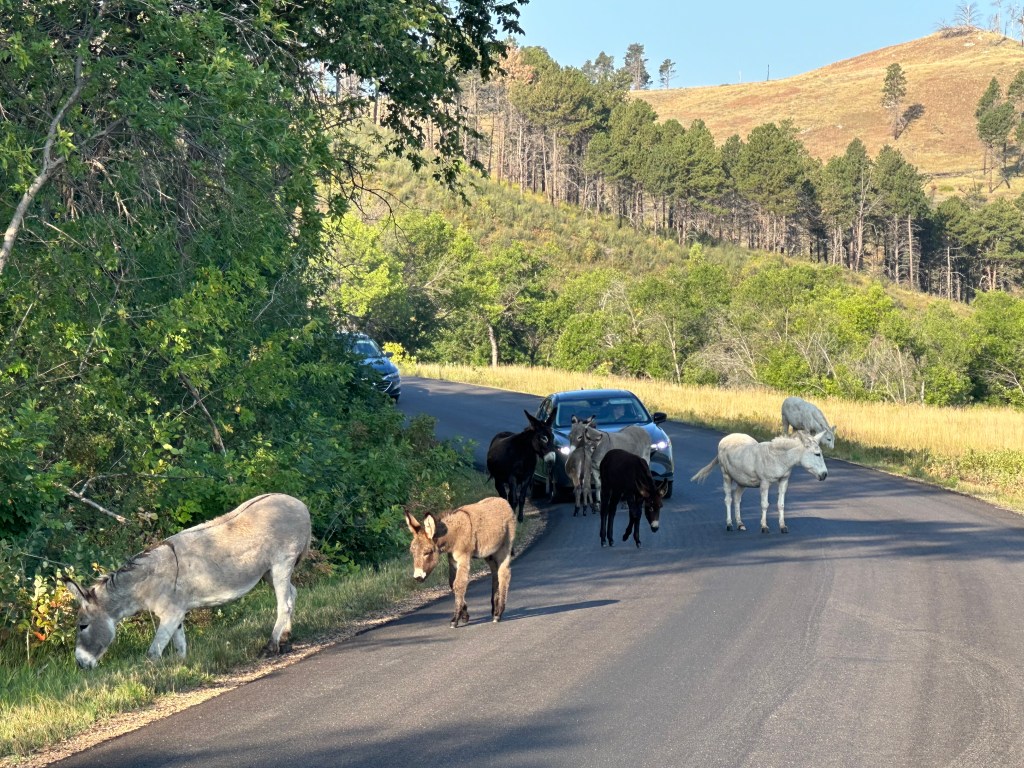
Perhaps most interesting at Custer were the bison. On our visit to Yellowstone – where bison are usually ubiquitous – the bison were at some distance this time. However, whatever bison cravings might have remained were satisfied at Custer, because the herd was out in force and occupying the road.
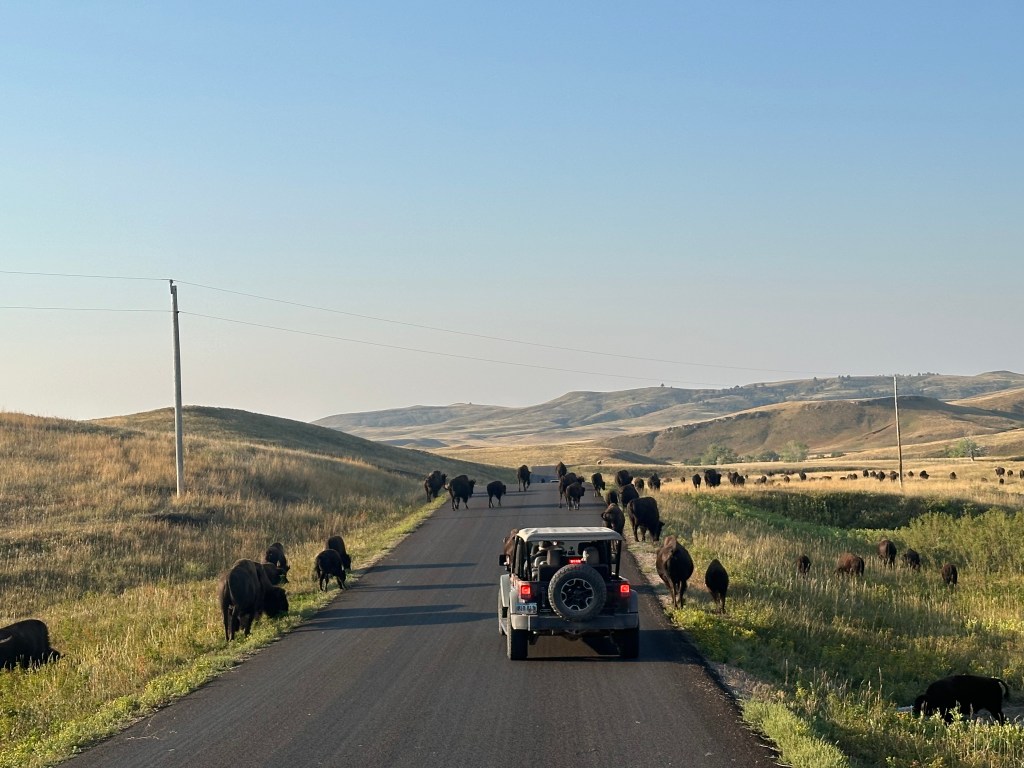
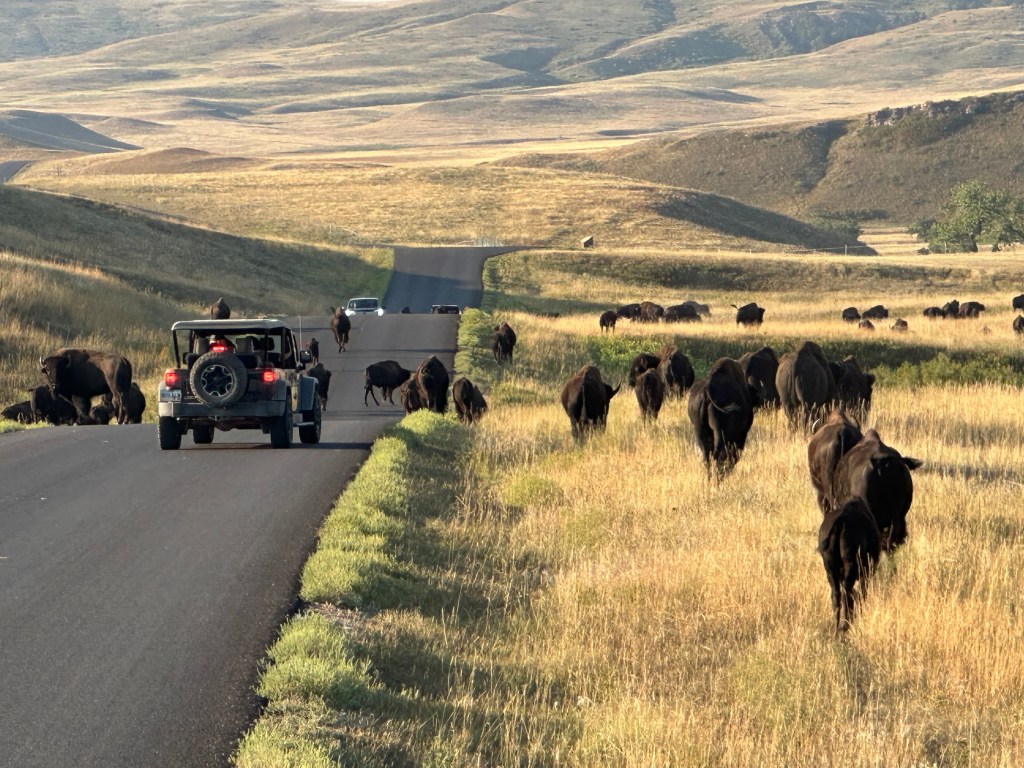
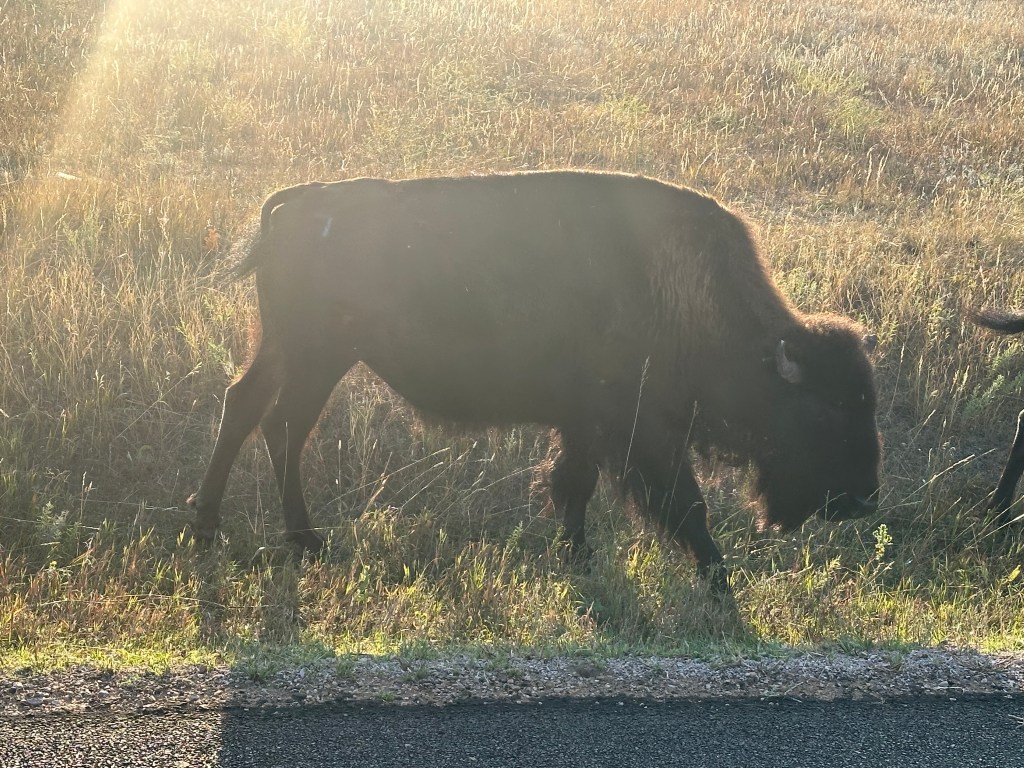

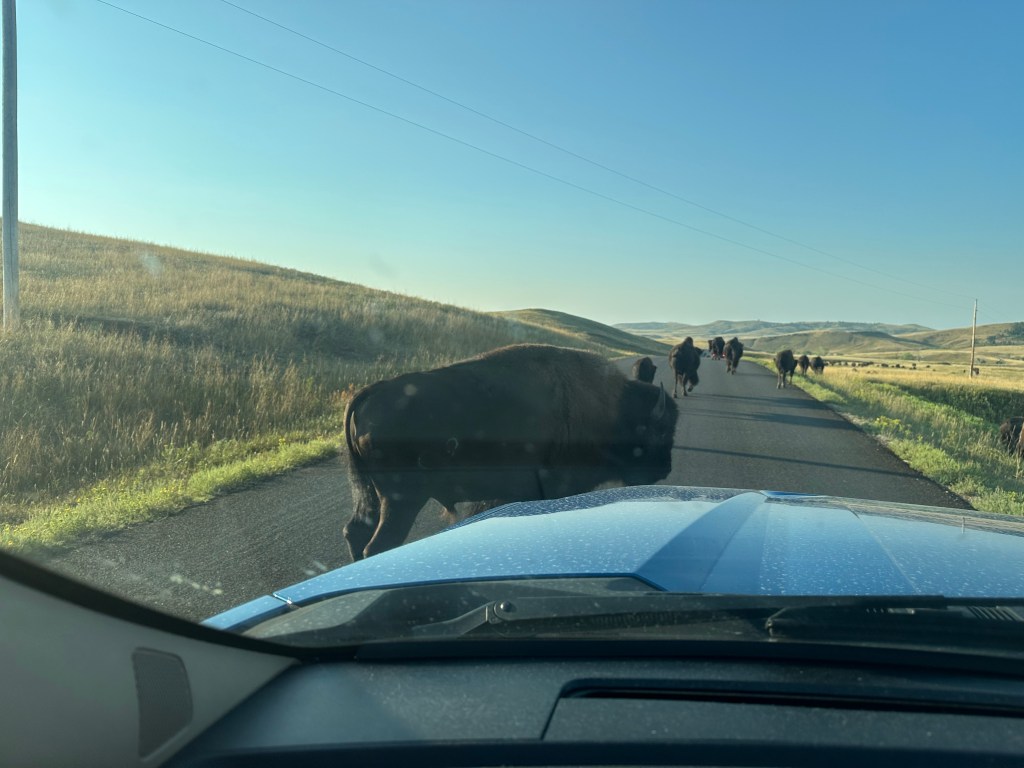
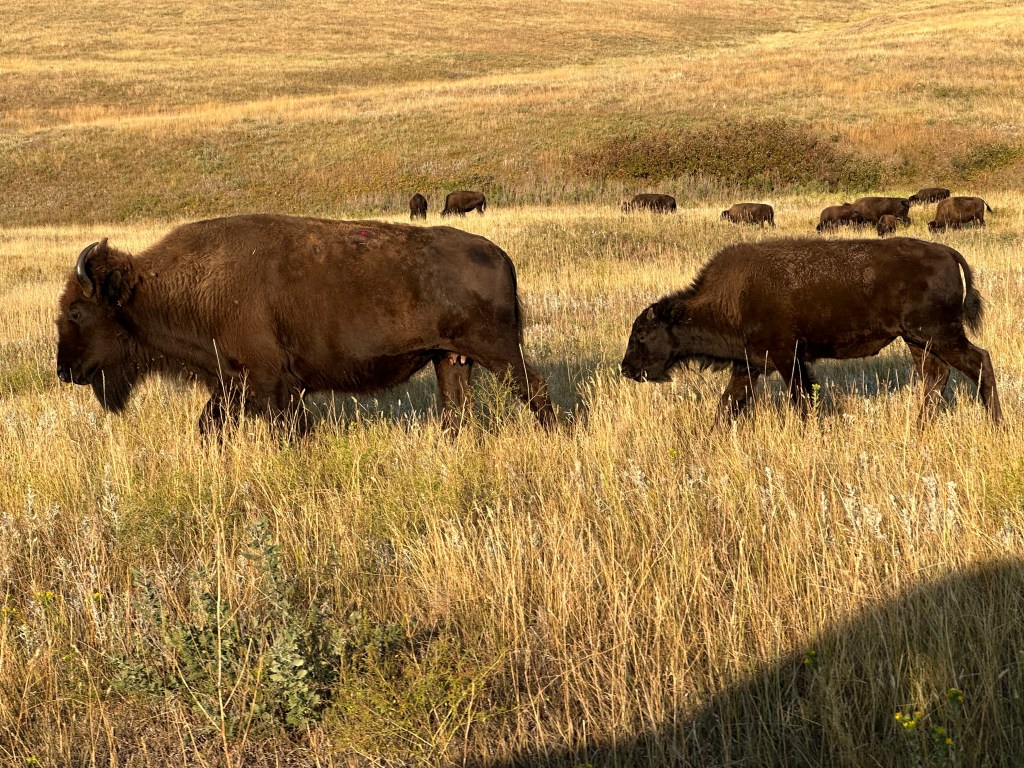
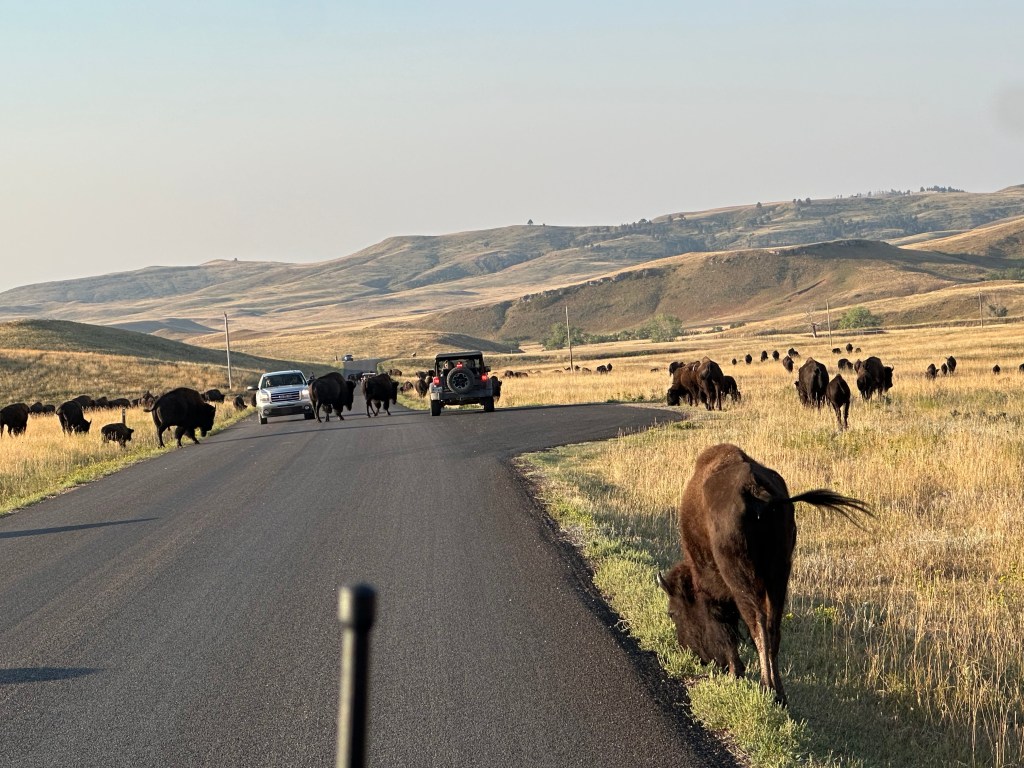
We also saw many pronghorn antelope along the way. We hadn’t seen many of these guys before, although I know they are prevalent in this part of the Country.

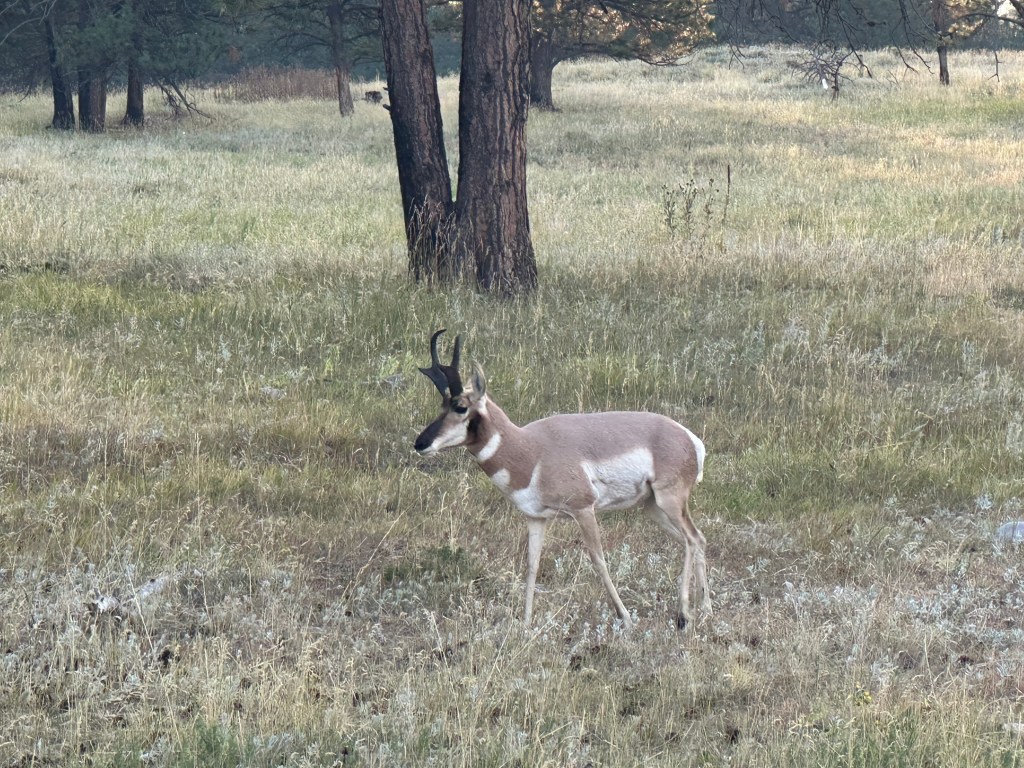
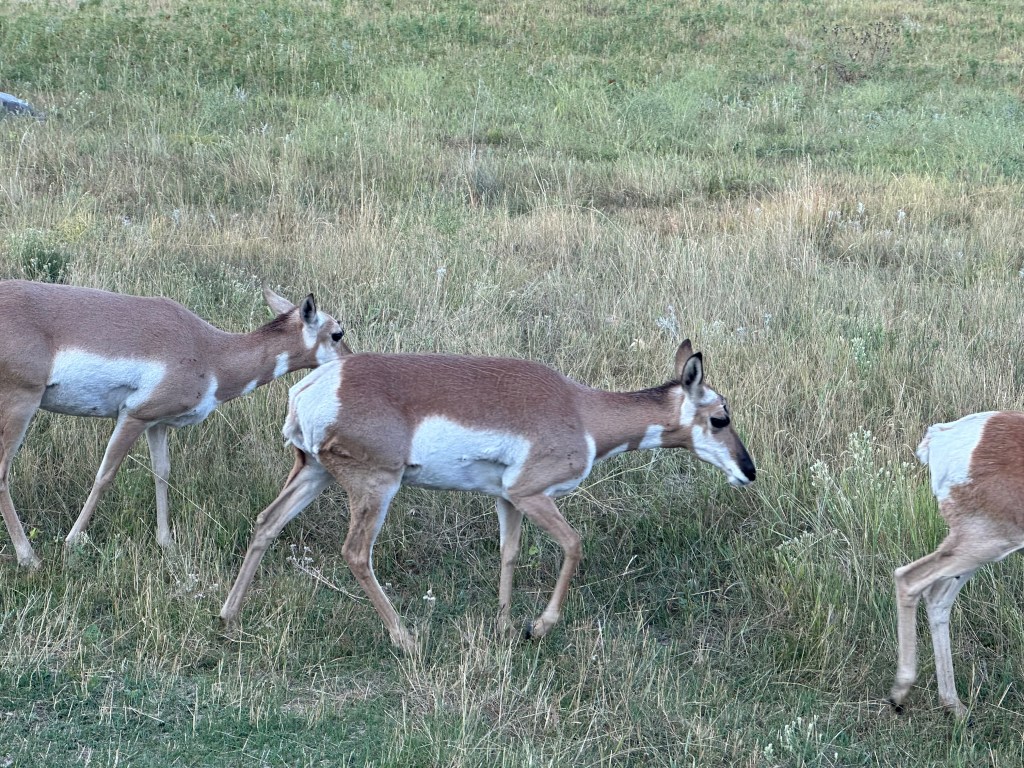

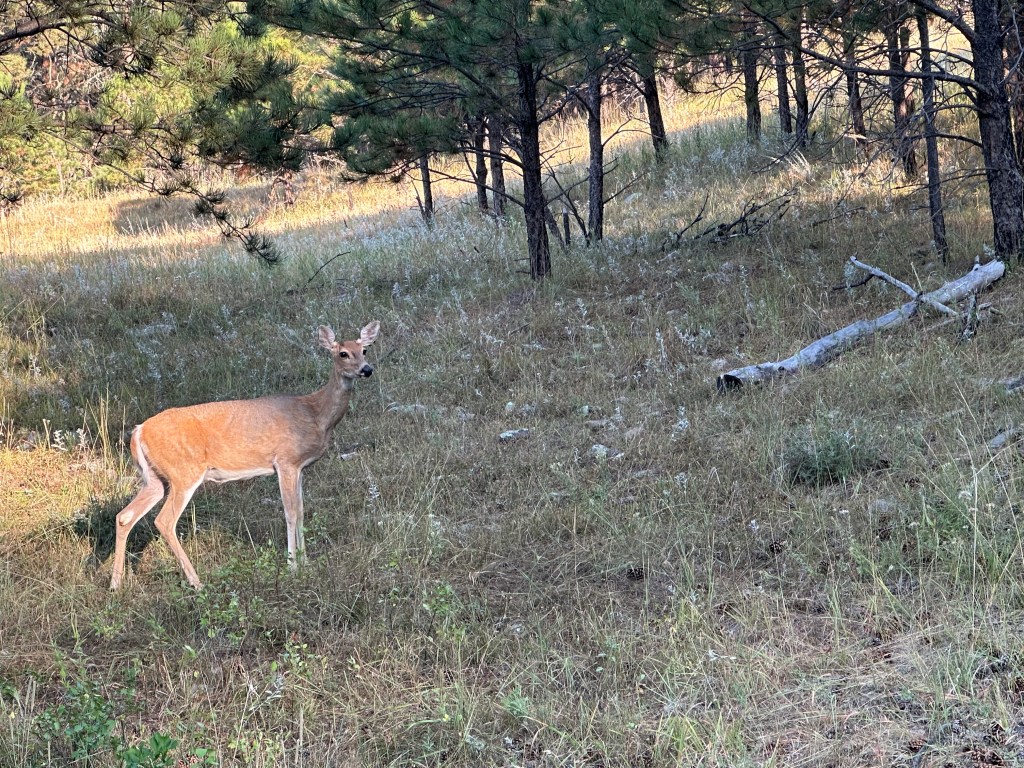
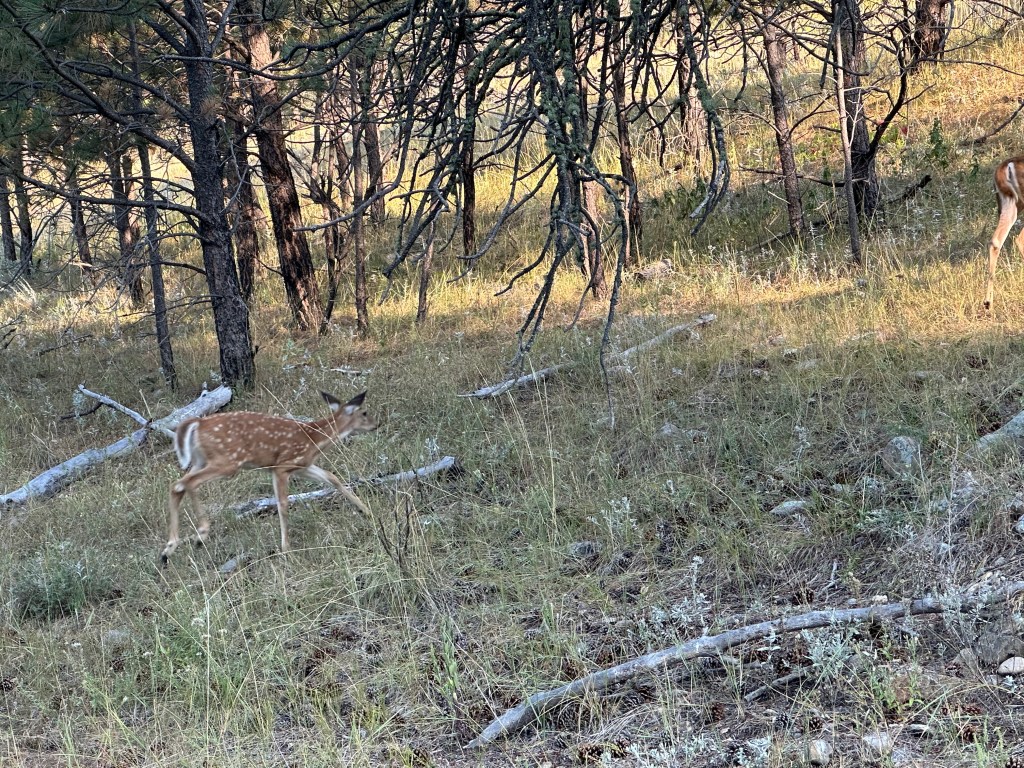
The geese were not a unique sight for us, but merit mention regardless.

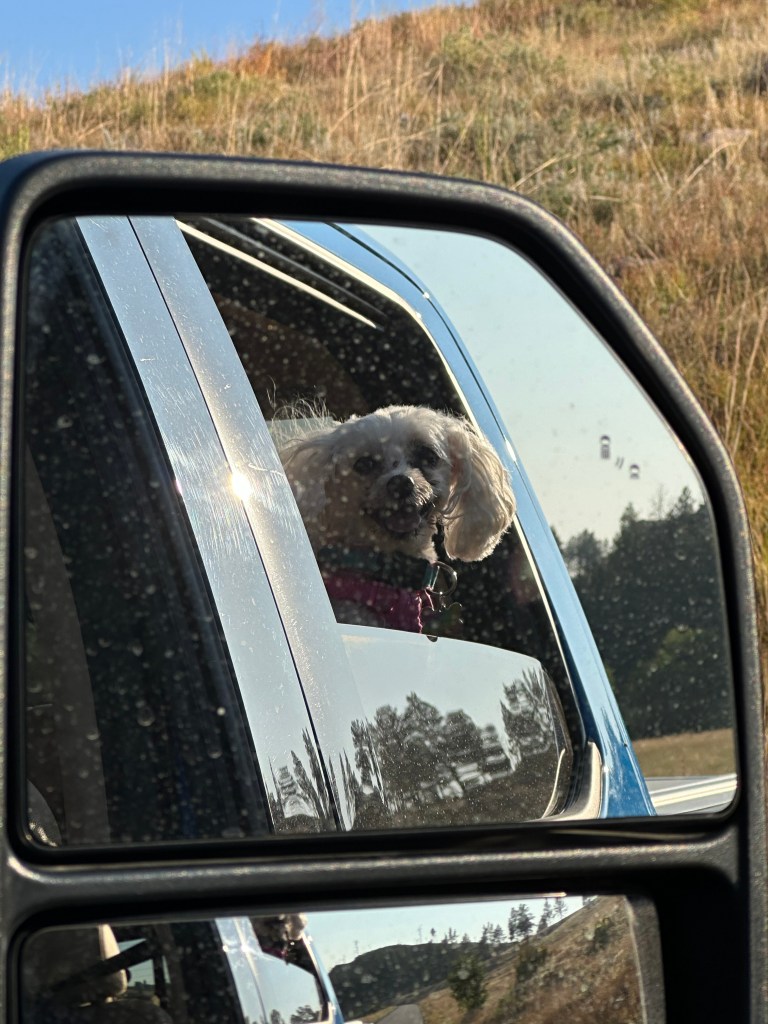
And perhaps the wildest animal of them all: Bella!
-
Mount Rushmore National Memorial

Everybody knows Rushmore. No explanation or description required. It’s a bunch of old dudes carved in rock on the side of a hill, so let’s check this box and move on, right? Wrong. It was one of the best experience’s we’ve had on this trip.
The overall impact, the history, and the presentation itself were all fascinating, starting with the surrounding highway drives. The Needles Highway is a scenic narrow drive toward and through a series of tall rocky spires, which are beautiful in their way, and are popular with rock climbers for obvious reasons.
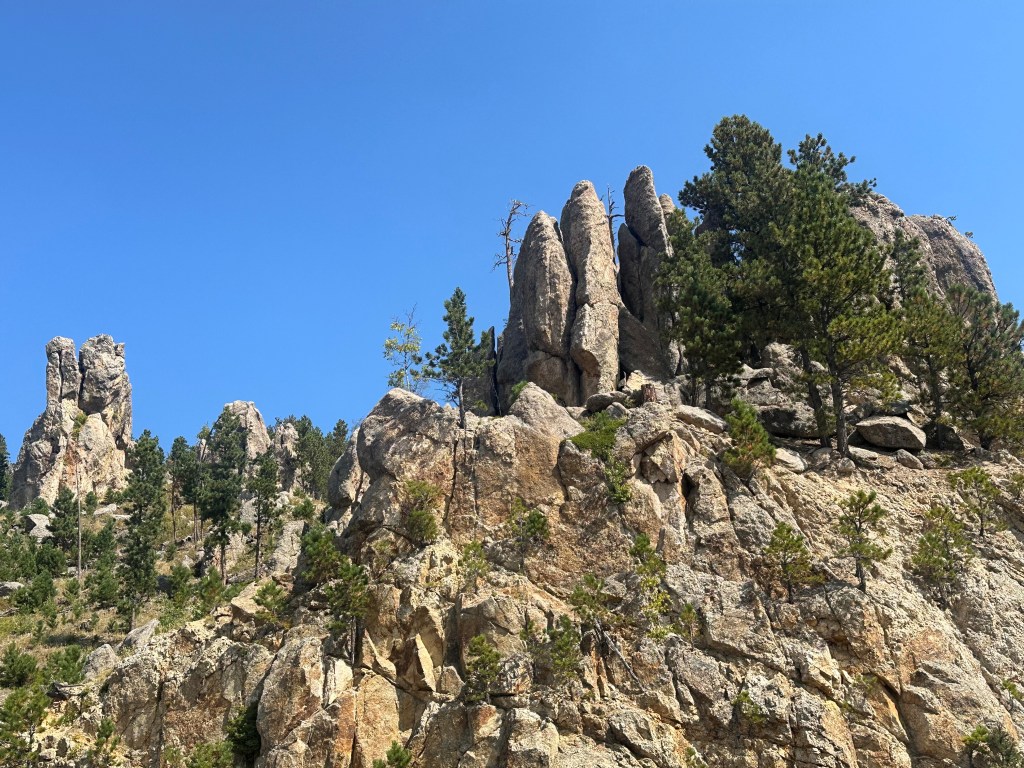
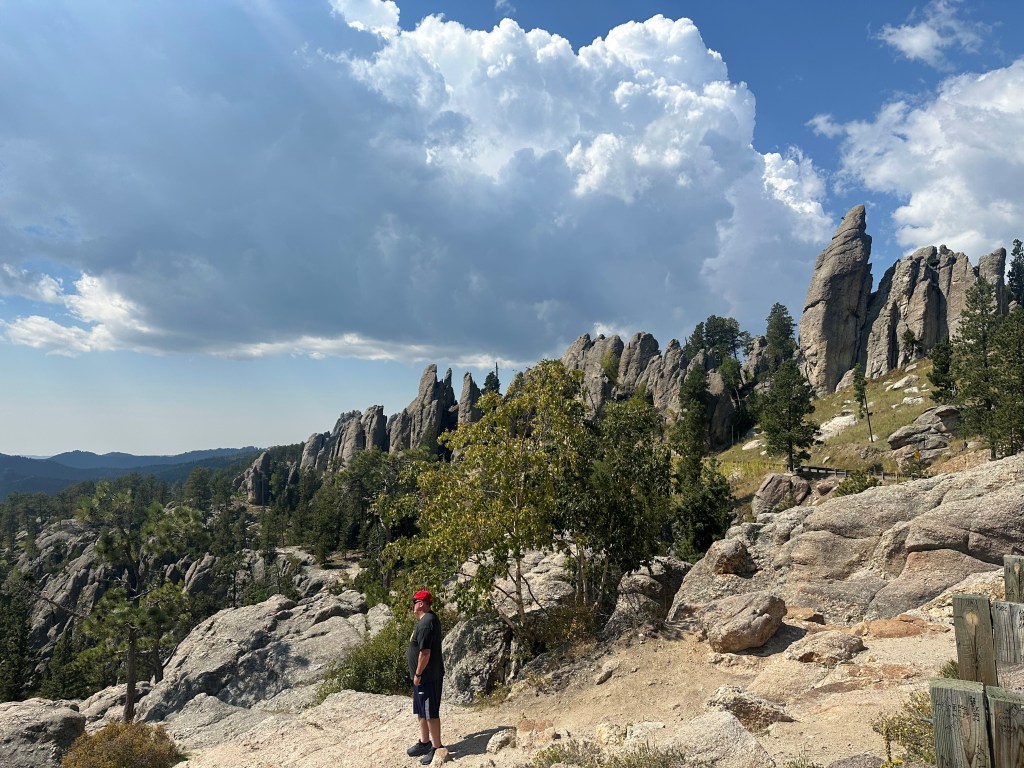
Along the highway are a few tight one-vehicle tunnels. We expected this, because signs at the start of the road warn that RVs and wider trucks are prohibited. With good reason. Here’s Minnie passing through one the more interesting tunnels.
Technically, the Needles Highway has little to do with Rushmore itself, but apparently the story of Rushmore starts here. As the story goes, in the early 1900s a local artist wanted to carve the images of western legends into the faces of the spires along the Needles Highway. Such carvings might have included Wild Bill Cody and the duo of Lewis and Clark, with the express goal of attracting tourists to the area.
That plan never gained traction, but after changing the site to the current location of Rushmore and changing the images to past iconic Presidents, the project was given a green light. The finished product took 14 years from 1927 to 1941, starting during the good times of the 20s, but stretching through the stock market crash, the Great Depression, and the first part of World War II, and toward the end of which the lead artist passed away, never having seen the final touches.
In addition to the Needles Highway, the area offers another narrow winding scenic road with tight tunnels: The Iron Mountain Road, which leads directly to Rushmore, affording some interesting highlights along the way.
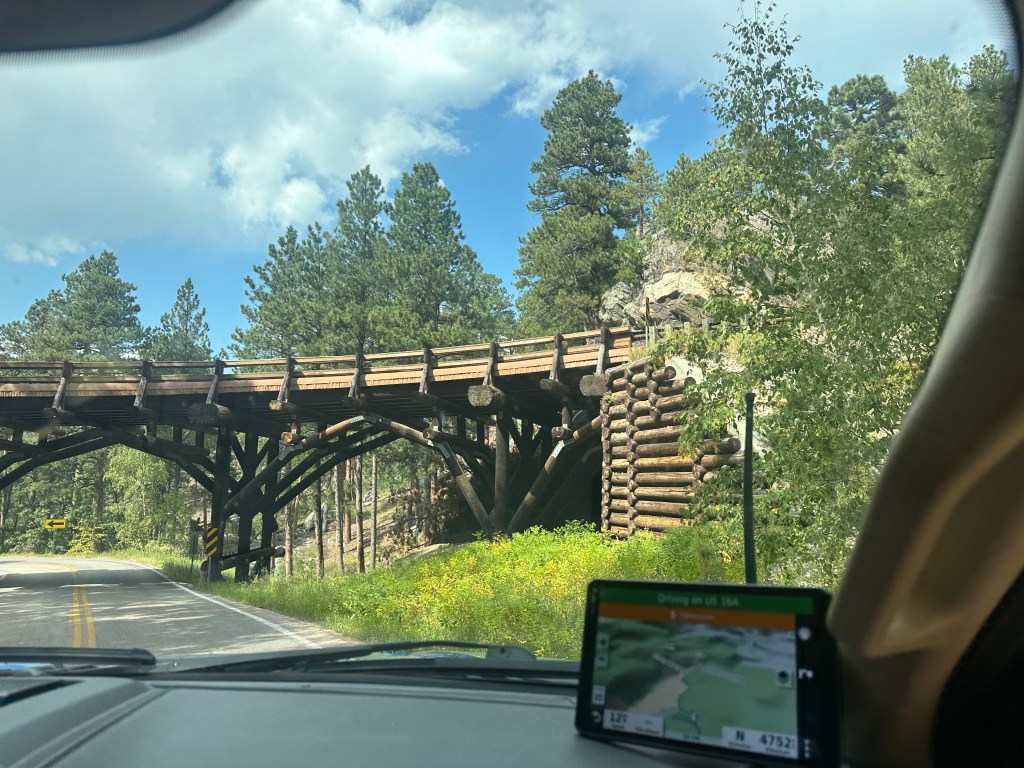
First are these wooden spiral bridges, which are fairly unique. They allow the highway to travel downhill in a tight space, using a 360-degree spiral under/overpass originally made from raw timber (now reinforced in places with steel).

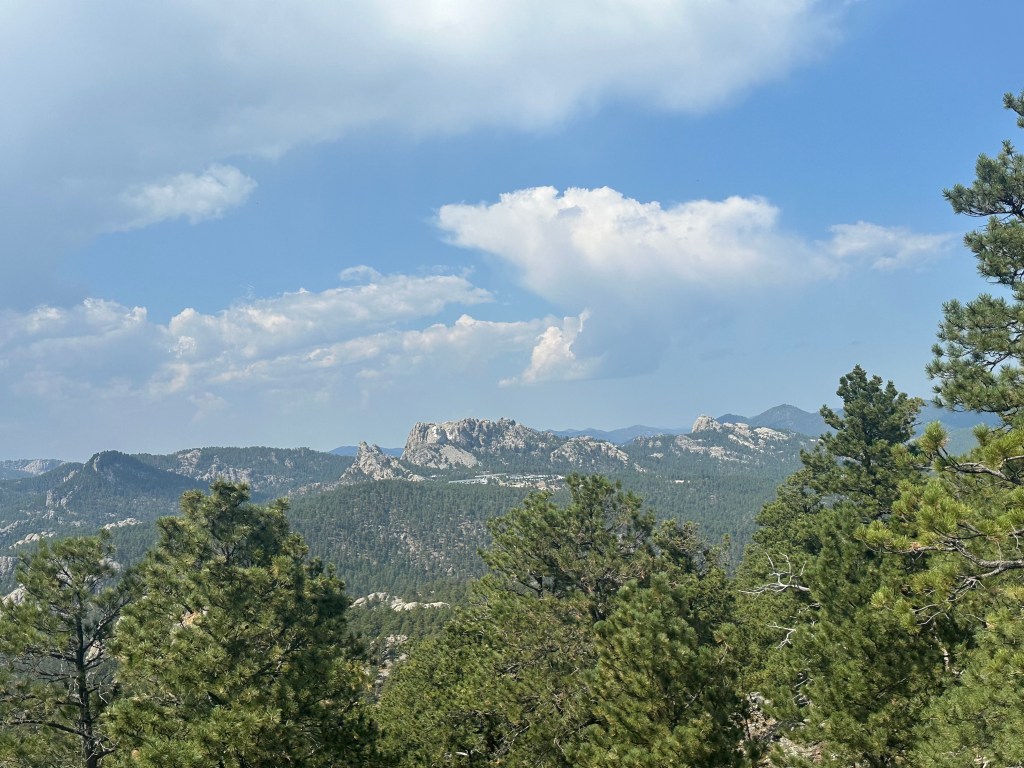
Also along this highway are the first glimpses of Rushmore from a distance.

But perhaps the most memorable aspect of the Iron Mountain Road is the clever narrow tunnel that was intentionally aligned and hewn to afford a dramatic reveal of Rushmore toward the far end of the tunnel.
At the end of the Iron Mountain Road, we finally arrived at Rushmore itself. We were excited that we had already purchased our annual National Parks pass, so we could use it once more. As it happens, admission to the Mount Rushmore National Memorial is free, so we did not need our pass. However, parking is $10, and the National Parks pass does not apply. Because, of course. At least the parking garages were relatively spacious and well-organized, so the $10 surprise afforded some convenience.
Within the Mount Rushmore National Monument itself, we were surprised by the overall impact. This is especially true considering everybody knows Rushmore. We had seen images of Rushmore our whole lives – posters, commercials, cartoons, movies, etc. – so we knew what to expect. In addition, we have known family and friends who expressed a nonplussed “meh” about the Rushmore experience, commenting that the actual carvings were a bit distant, so the impact did not live up to the hype.
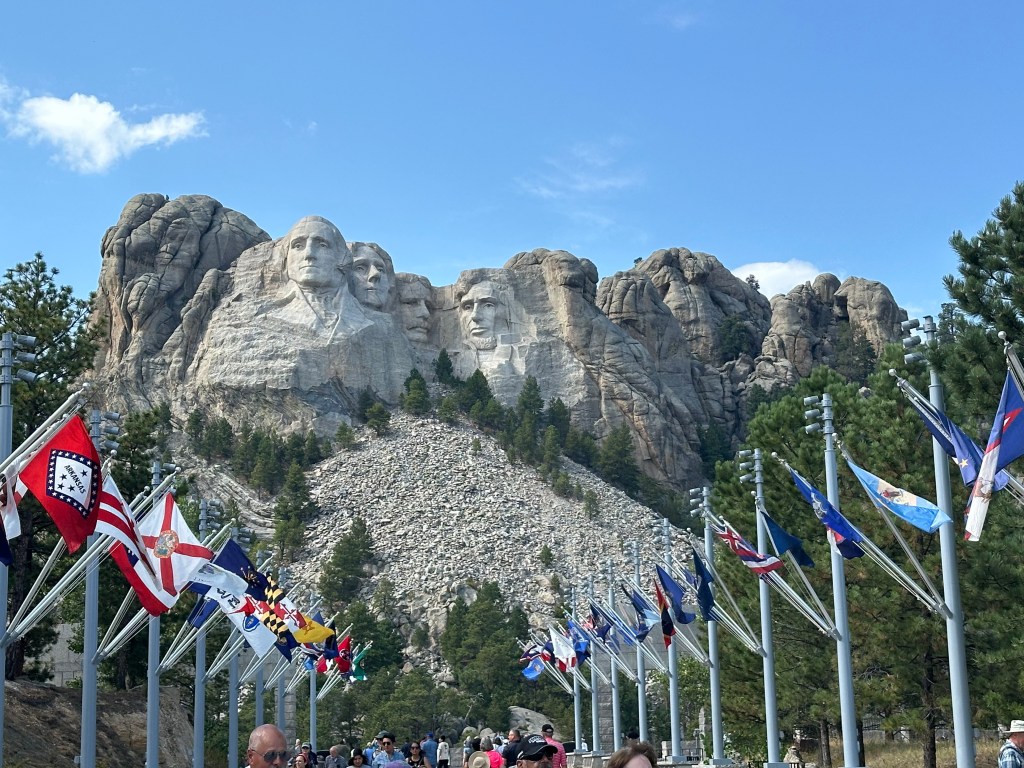
But for us, as we approached the gallery of flags, the impact immediately exceeded the hype. We had tingles.
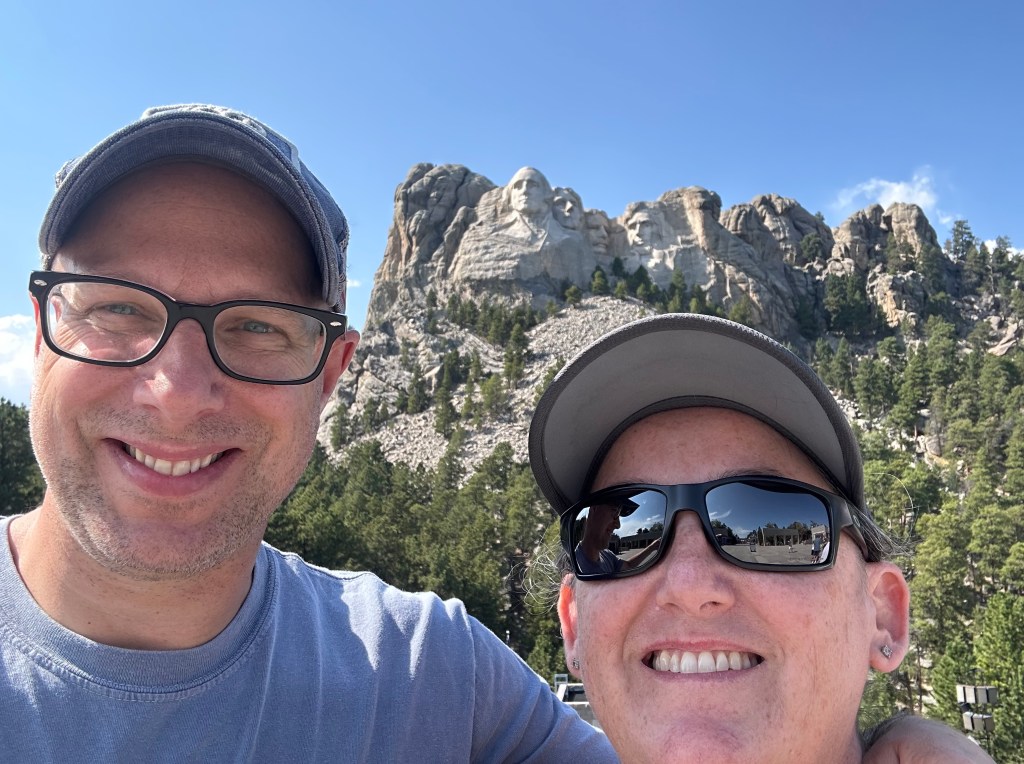
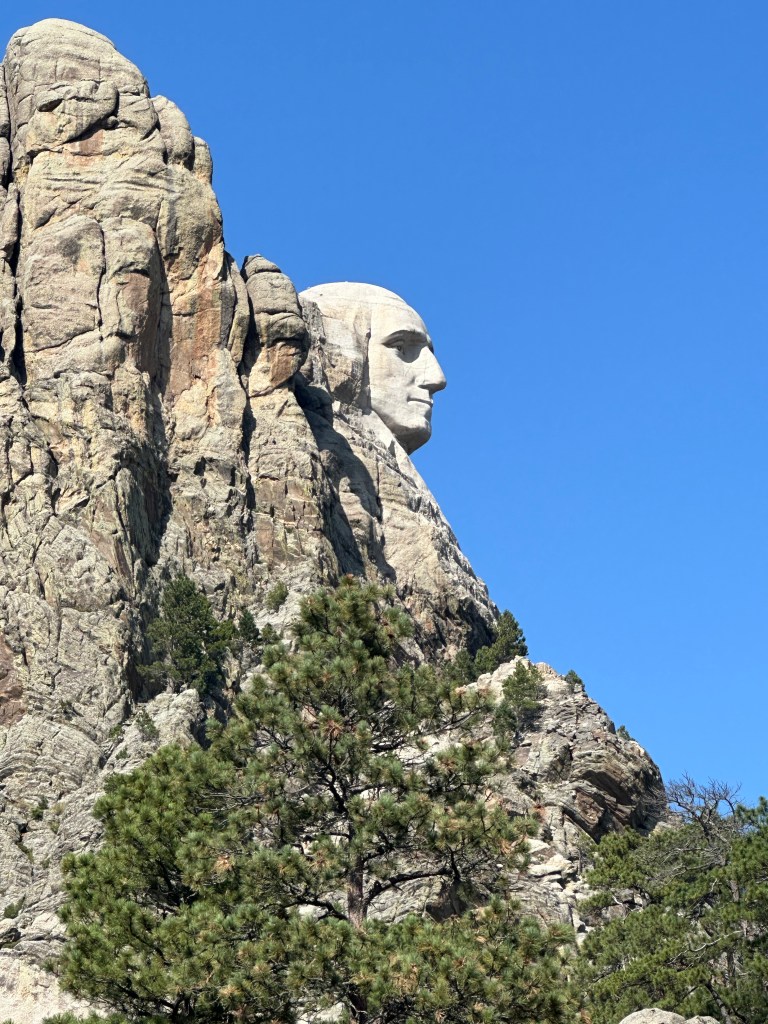
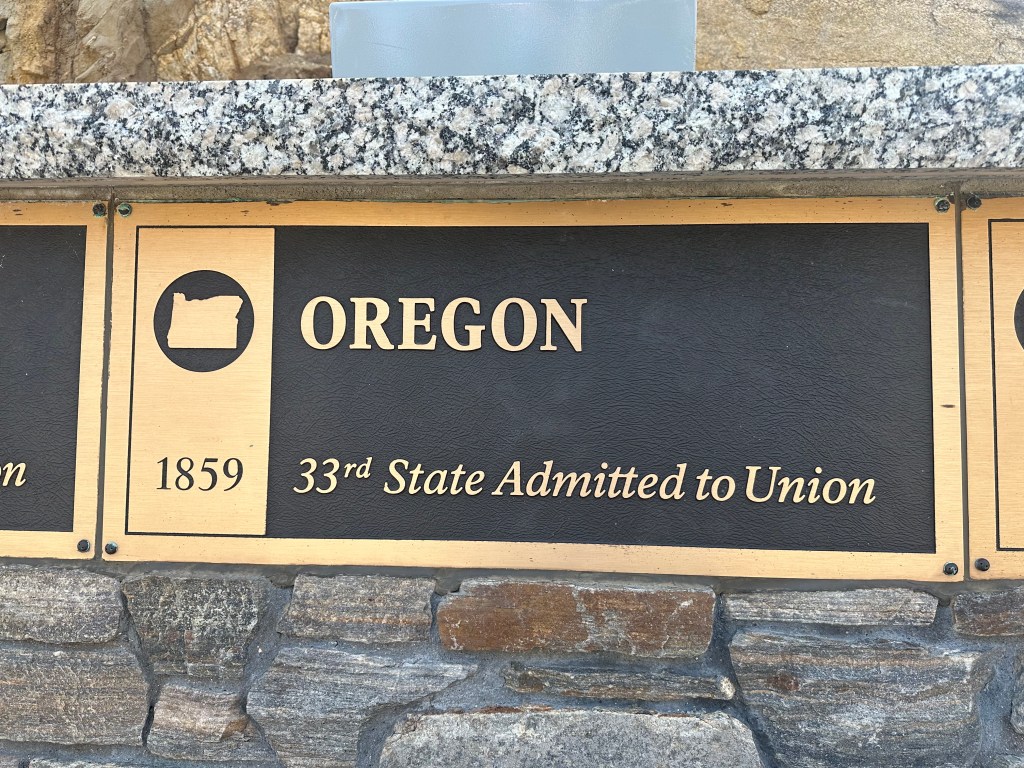
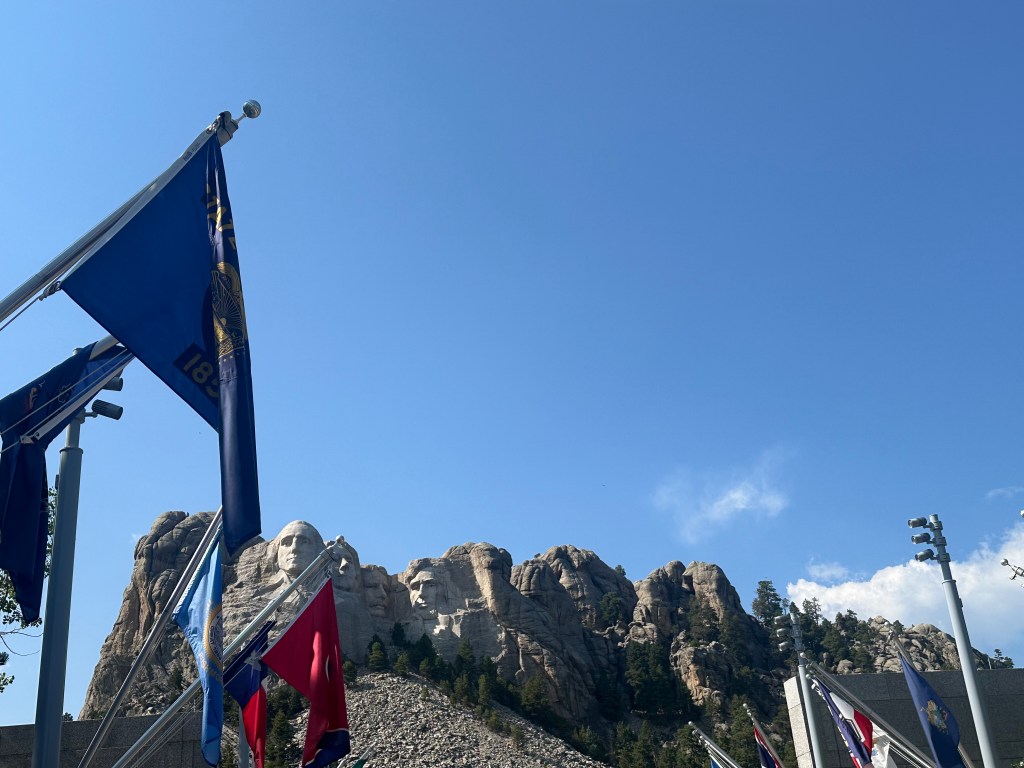
While there, we perused the gift shop where we decided to buy sweatshirts, and we also enjoyed cones from the ice cream shop. Interestingly, the shop proudly features a vanilla ice cream allegedly from Thomas Jefferson’s original recipe. We did not try it, mostly because both of us felt a little more than vanilla at the moment.
We enjoyed Rushmore so much that we came back a second time later in the week. One night after work, we drove the half hour to Rushmore to take in the evening lighting ceremony, which we had heard was worth the trip. Honestly, most of the ceremony itself was somewhat banal, consisting mostly of a ranger telling stories. But the ending was a projected video with patriotic music timed perfectly to align with the moment spotlights light carvings. It was worth the return trip.
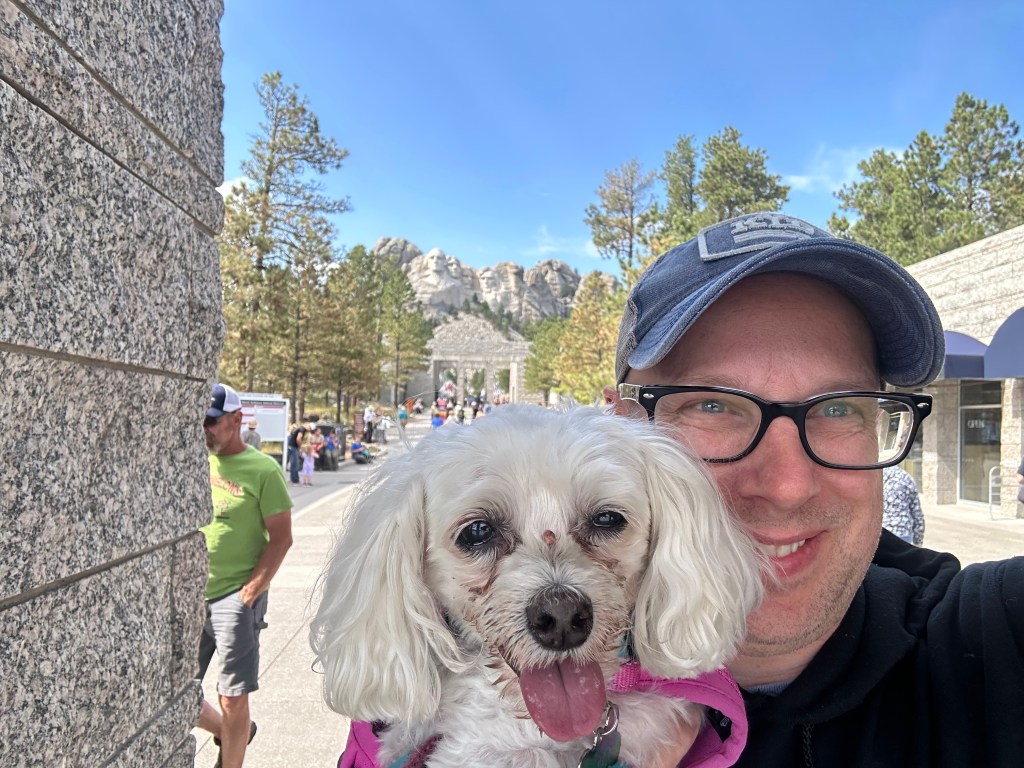
For those curious, Bella enjoyed a brief trip to the pillars at the entrance, which was the furthest point the furry friends were allowed.
-
Cody and Devils Tower
We are still buzzing from our visit to Yellowstone, mostly because opportunities to see big game animals are nonexistent around the Portland area. We see the occasional deer and the rare cow elk, but the others are basically nonexistent for us outside Yellowstone. We’re grateful to have visited our favorite park once again.
At the end of our time in Yellowstone, we were reluctant to leave, but excited to head into Cody for some family visits. The Ponderosa Campground was a great place to set up for the stay, with remarkable green grass, friendly staff, a laundry, and a general store. We had a great site on the corner with a general lawn area.
We all grew up in and around Portland, but my sister went to college in Klamath Falls where she met her future husband, and ultimately moved with him back to his hometown of Cody, where they raised two kids. We have spent significant time in Cody over the last 25 years, appreciating its scenic mountain backdrop combined with its strange mix of tourism and natural resource economies. More recently, my mom and stepdad moved to Cody to spend their retirement years enjoying the dry climate and quiet surroundings.
We spent five nights in Cody visiting with family and enjoying the scenery, although we did not do any of the typical tourist activities one might expect from a visit to Cody. We’ve done most of those in the past and don’t feel the urge to repeat those experiences. Instead, we spent the weekend doing laundry, gathering with family around meals, playing a round of disc golf, and even doing some grunt work to help prepare the base for a masonry path at my sister’s house.
After the long Labor Day weekend, it was back to work Tuesday morning, and back to the routine of relegating all travel and trailer-related activities to non-work hours. Tuesday night we finished final preparations for travel in advance of the Wednesday morning travel. We woke ourselves at 4:00am (Mountain), hitched up, and headed east, making it to Gillette by 9:15 (Mountain) in time to park in a Walmart parking lot and set up my computers for the start of work at 8:30am (Pacific).


At the lunch hour, we finished the short remaining stretch to a campground just outside Devils Tower National Monument.
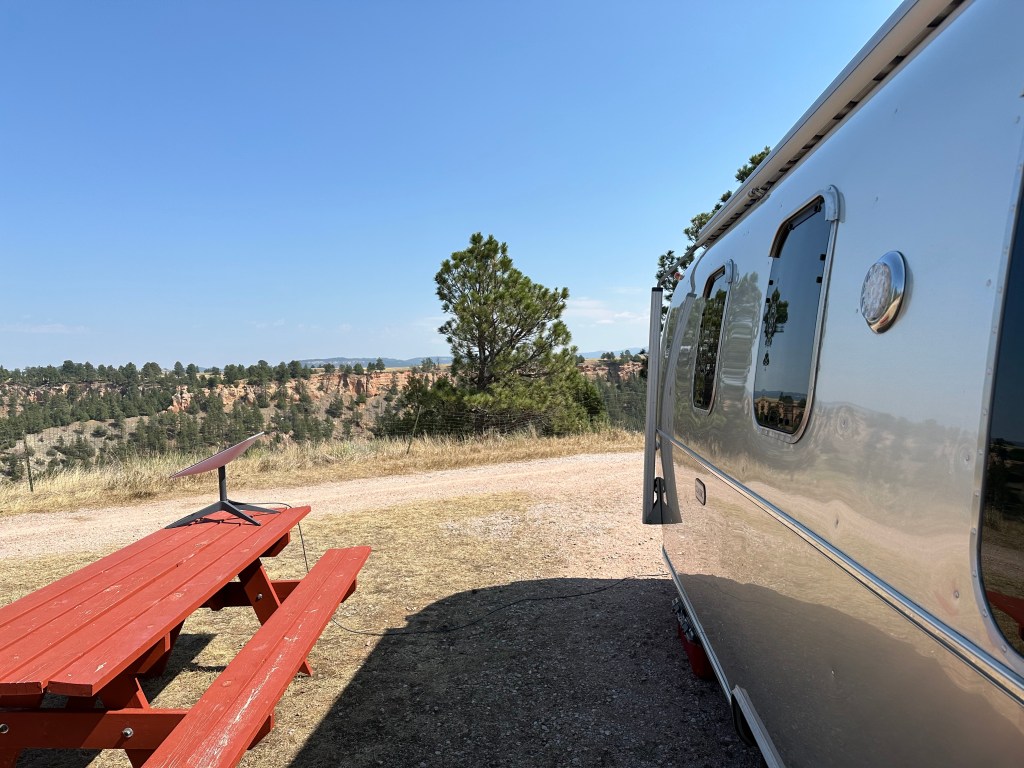
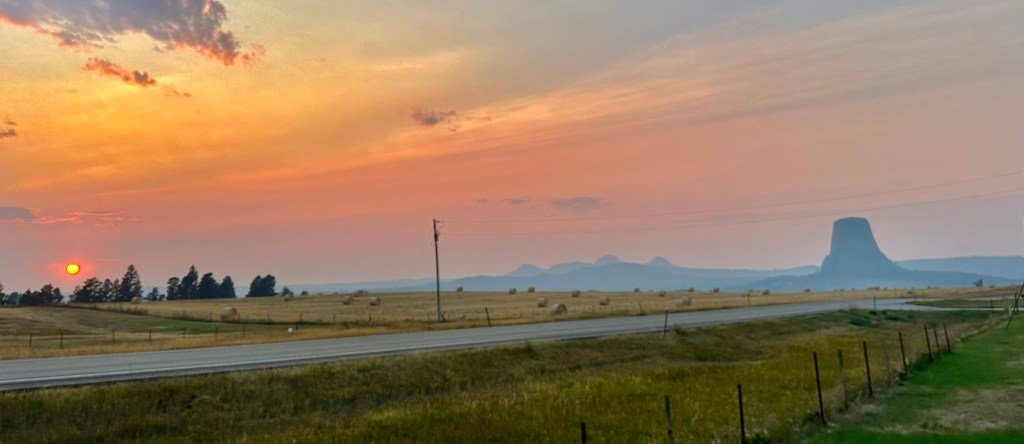
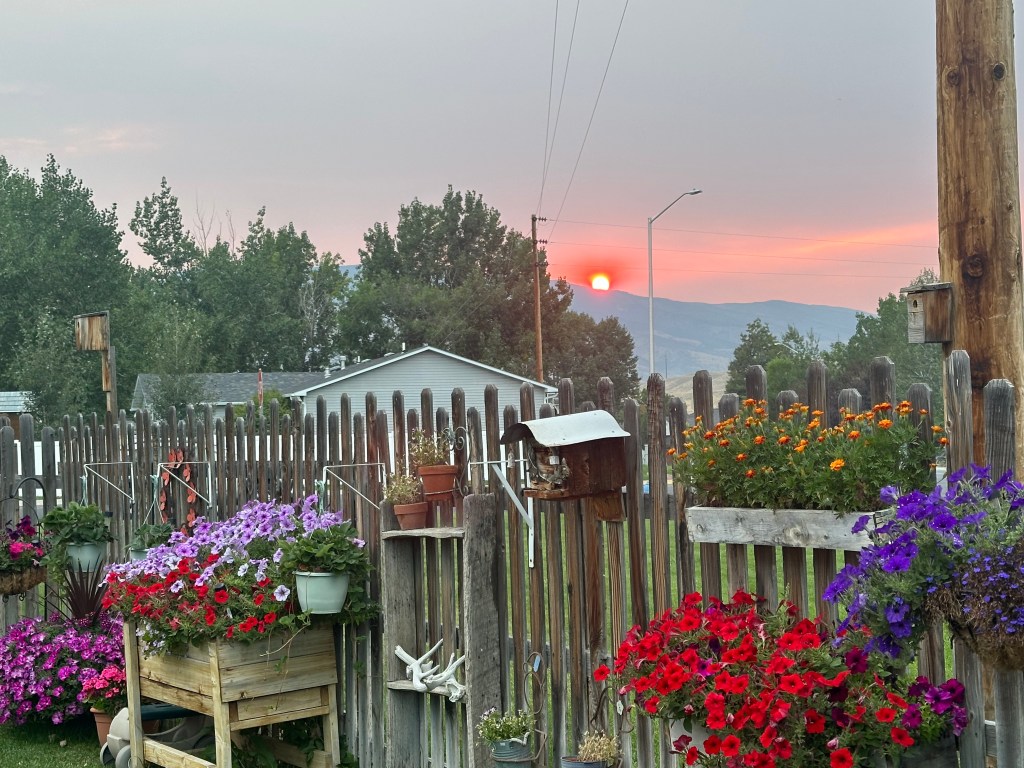
We spent a quiet evening in the trailer enjoying a sunset screened by smoke from a recent fire.

The next day during lunch, we drove into the Monument briefly, although Micki got to spend additional time after dropping me back at the trailer. We went back in the evening and enjoyed the views of the Monument from the Visitors Center.
One of the initial surprises of the Monument is the prairie dog town. For some, these little things are fairly routine, but we’ve never experienced them. For us, prairie dogs exist primarily within the realm of colorful verbs and adjectives, best used to describe unique and playful actions. Our tour bus operator in Glacier used the phrase “prairie dogs up” as permission to stand inside the bus to gain a better view from beyond the line of the convertible roof. Everyone on the bus knew what he meant. But before now, I could not have told you anything about real prairie dogs, but now I can.
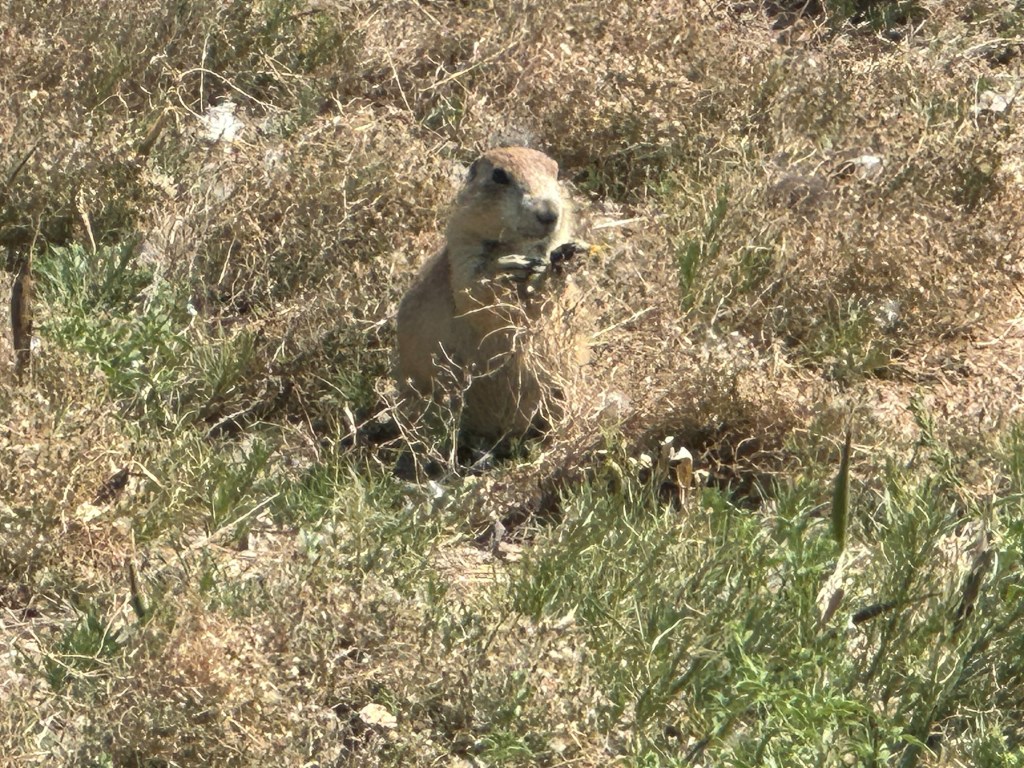
These little cuties live in flat fields with light grass and dry soil, into which they burrow, creating tunnels that connect the various holes and mounds on the surface. They are smaller than squirrels, perhaps the approximate size of chipmunks, with thin tails and cute little cheeks. They group themselves together in communities, meaning they do not often stray from the “town” created by the community of prairie dogs. This means if you see one prairie dog you are likely to see quite a few within the surrounding field.
These are genuinely cute animals. Their little faces bear a natural inquisitiveness, which is amplified by that iconic prairie dog posture when they stand on their hind legs to take in the surrounding noises. They also make this tiny noise that is best described as something between a bark and a squeak. Within the town, we heard many of them sounding off in a chorus of little “squarks” that was enrapturing in a childlike and unexpected way.
Devils Tower itself was also strange and wonderous in its own way. Mostly, I found myself asking why this monstrosity exists in an area of otherwise gentle rolling hills. It is prominently featured in the movie Close Encounters of the Third Kind, which I’ll now need to rewatch.
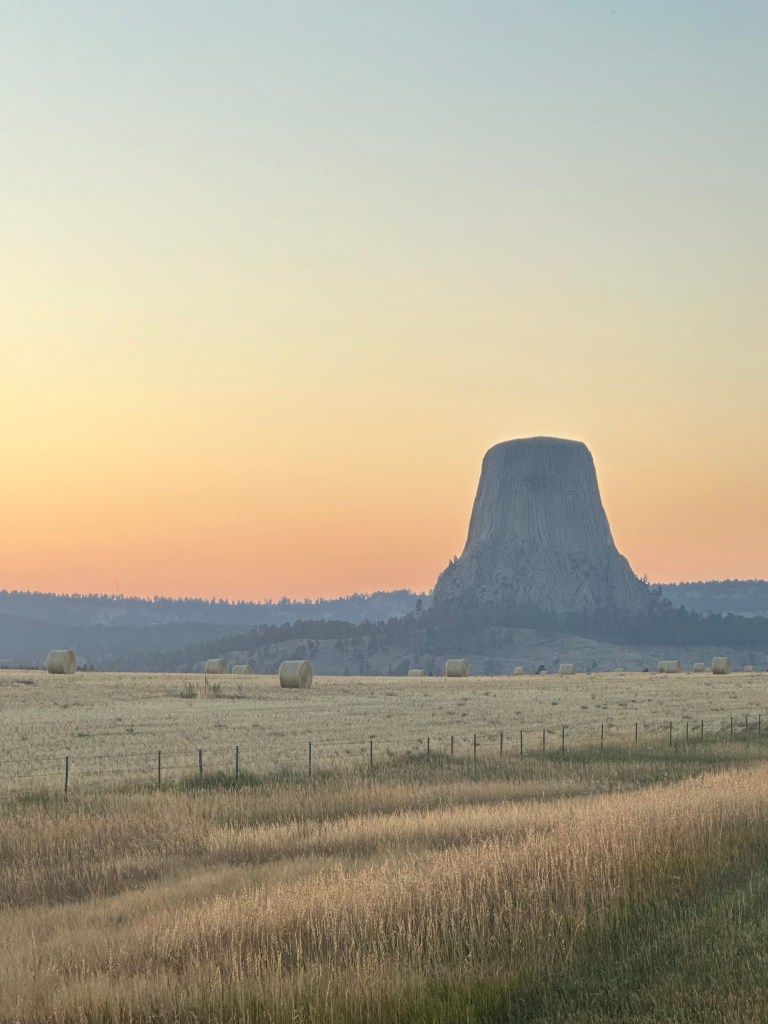
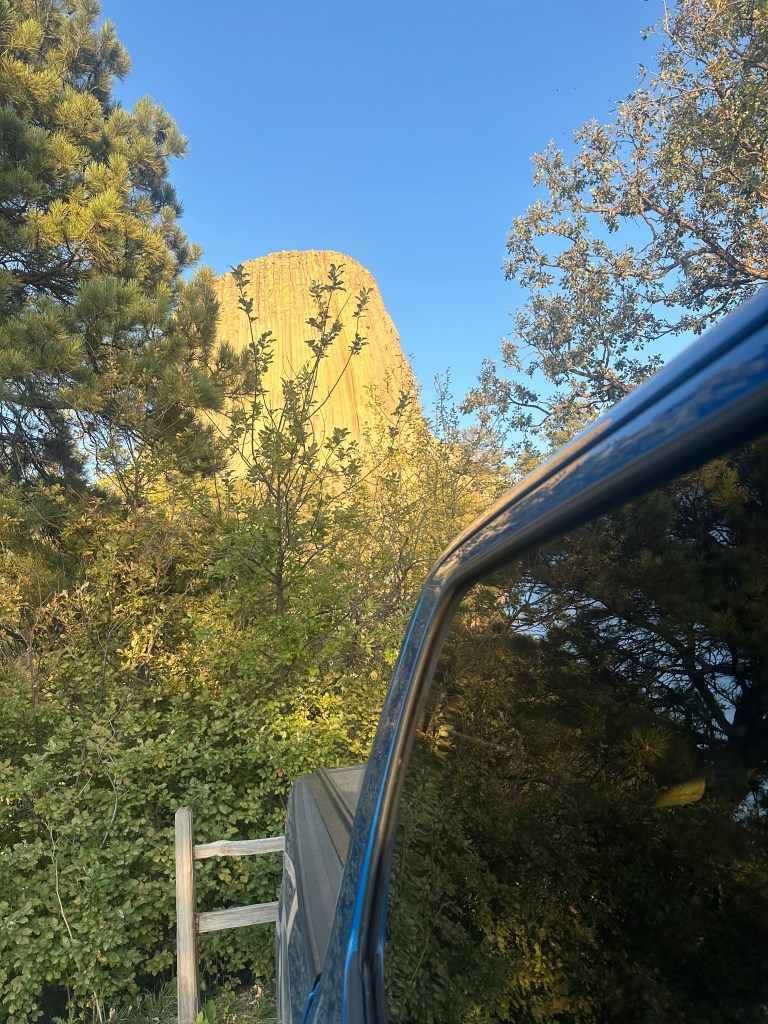
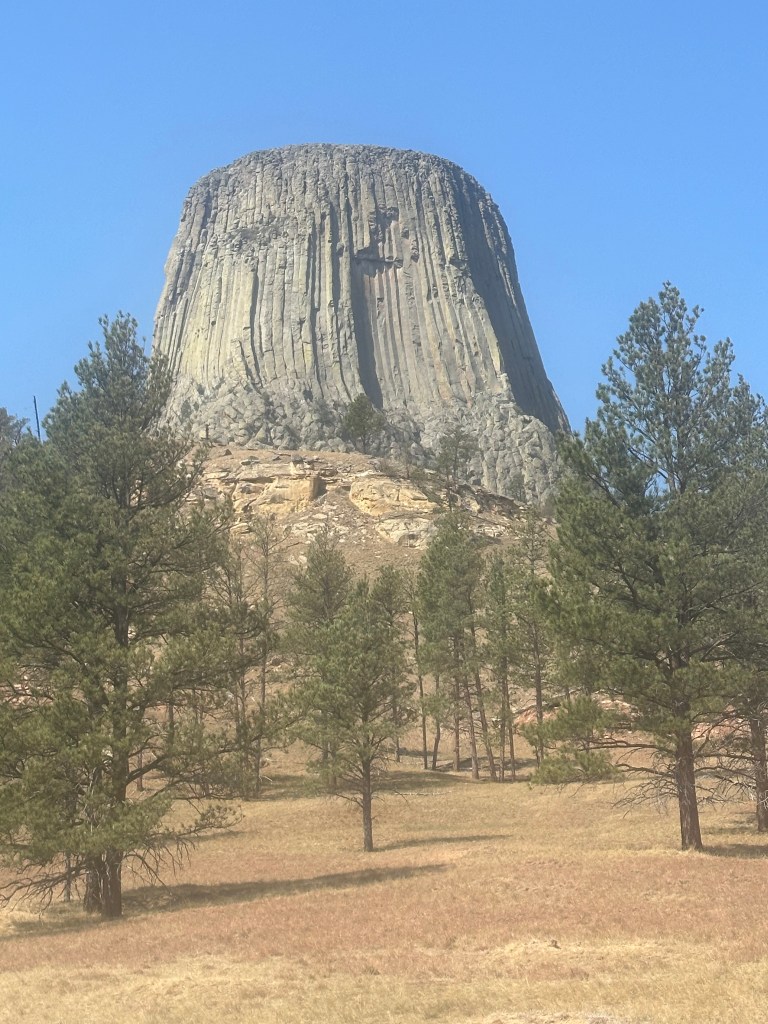

Micki watched climbers traverse the surreal vertical straked columns that flank the exterior of the Tower. She heard that a climber had fallen earlier in the day, but details were few. The Tower is unexpected and strange and entrancing in a way that is difficult to describe, and the effect was amplified by the remarkable sunsets.
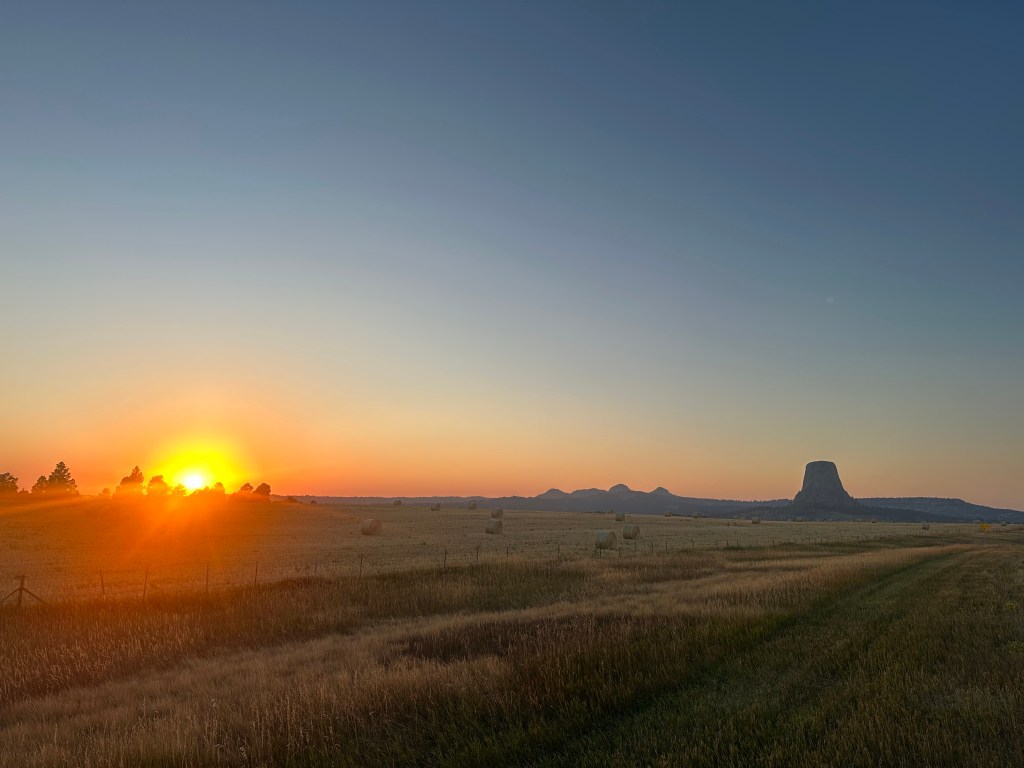
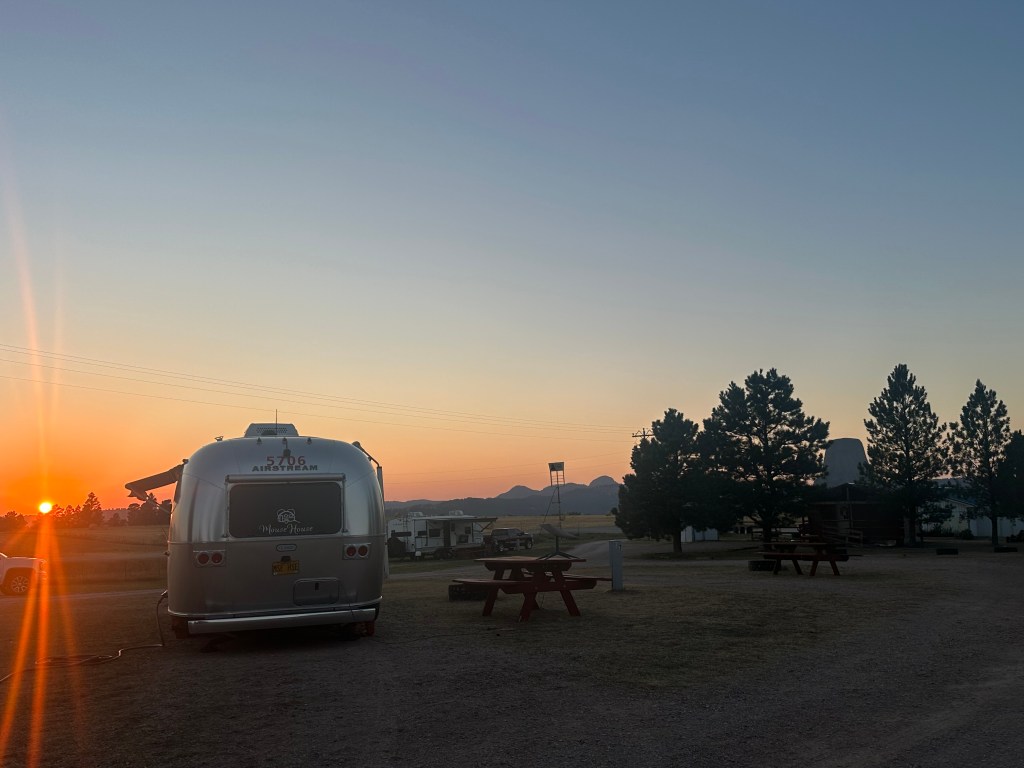
After two nights at Devils Tower, we packed up for a relatively short drive to Rapid City, South Dakota, which is close to Badlands, Mt. Rushmore, Wind Cave, Jewel Cave, Custer State Park, and a host of other sights, not to mention expected visits with longtime friends.

-
Yellowstone!
Call us vain and picky, but despite the beauty of Glacier, we found ourselves yearning for the unique and familiar experience of Yellowstone. We did not originally plan to visit Yellowstone on this trip. We had instead planned to visit Lewis and Clark Caverns for a cave hike. But the animal-free Glacier experience cemented a growing urge to visit Yellowstone while in the neighborhood (ish). We left Glacier early, cancelled our reservations at Lewis and Clark Caverns, and made our way southeast from Glacier to Yellowstone.
We have visited Yellowstone many times over the years and it remains one of our favorites. You might think repetition would fade the wonderment, yet somehow not. Like Ravel’s Bolero, each repetition’s varied tone and intensity enhances the experience despite being identical in nearly every other respect.
So we found ourselves driving from Glacier to Yellowstone past the Montana mountains and lakes, reminiscing about prior visits to Yellowstone and all the unique experiences with family and friends over the years past.
We hoped to stay inside the park for all three nights, but last-minute reservations at the end of summer tend to be elusive. Nevertheless, Micki’s tenacity yielded two nights at a KOA just outside the park followed by one night at Fishing Bridge inside the park.
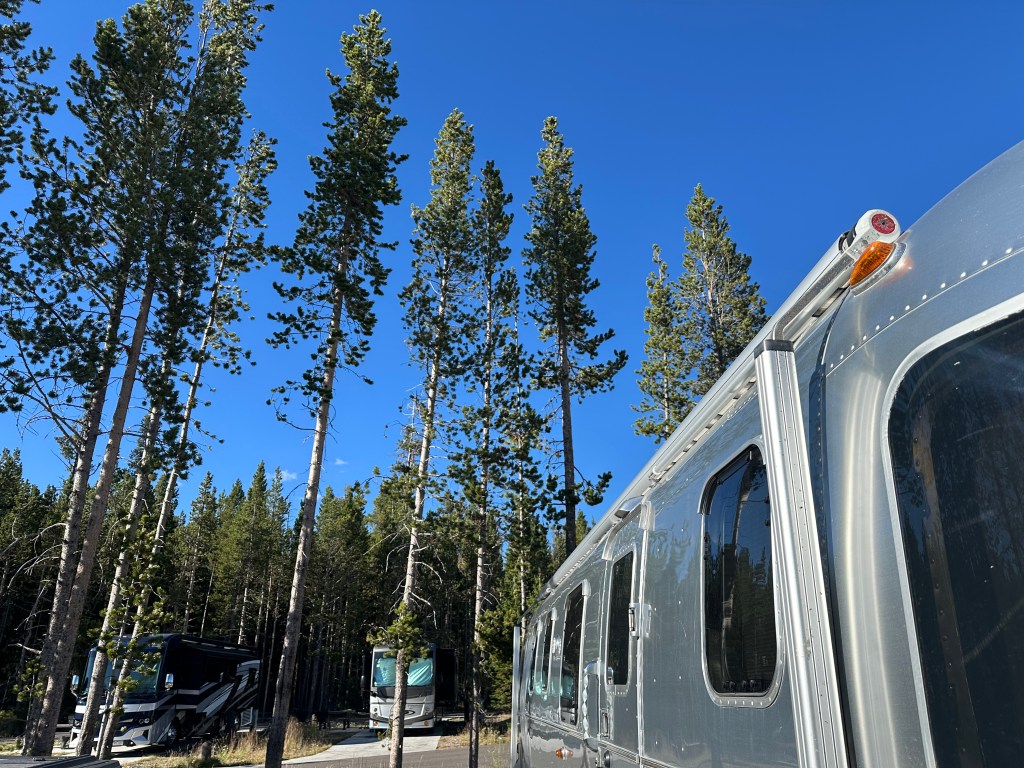
Yellowstone offers a wide variety of sights and experiences, including strange landscapes, boiling pools, steam vents, geysers, and animals everywhere. Most of these experiences are not easily replicated elsewhere, so we looked forward to taking in as much as possible.
However, Yellowstone is massive at 2.2 million acres, meaning it is more than twice the size of Glacier. Although roads and accessibility are dramatically better in Yellowstone than Glacier, driving the park consumes a great deal of time. If you were to complete the “Great Loop” road around the park with no stops, you would likely spend five to seven hours of your life only for the privilege of feeling like you missed most of the park by not stopping anywhere.
We had two full days in the park plus one evening and one morning, so we planned accordingly. Even with that planning, the hours of driving left us road-weary at the end of each day. The combined effect of all these long driving days left us wanting a vacation from our vacation. We’ll be back to the daily work schedule and the slower pace next week, but we were determined to soak in as much as possible until then.
Fair warning: This post includes many photos and videos, starting with the scenery and then proceeding to the animals. I wouldn’t blame you for skimming, but if you’re so inclined, let me urge you to pause on the short vides of the bugling elk and the black bear with her two cubs below.
first the scenery, starting with the West Thumb Geyser Basin, which is a geothermal area that rests on the shore of Yellowstone Lake, creating a strange contrast of hot and cold.
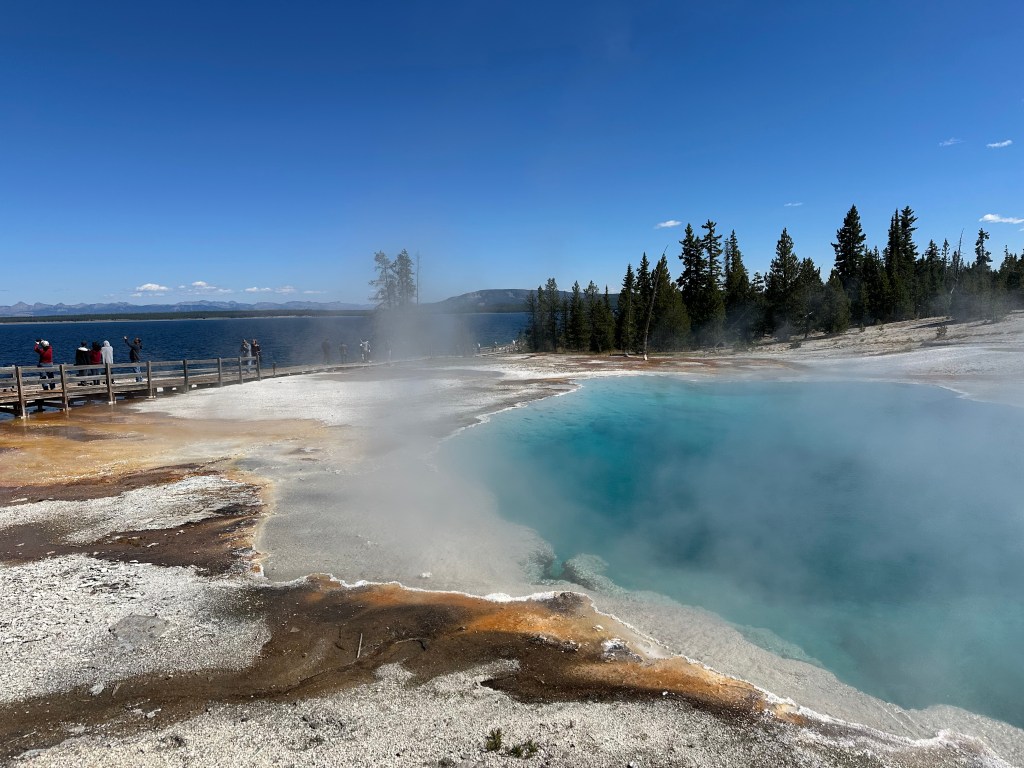
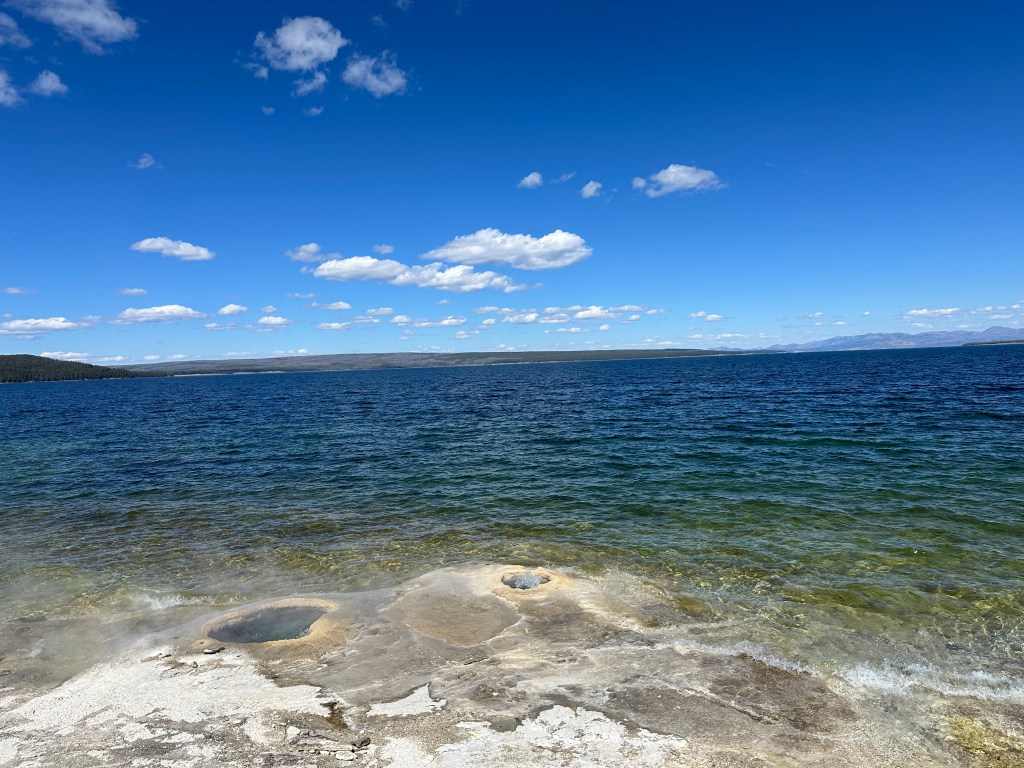
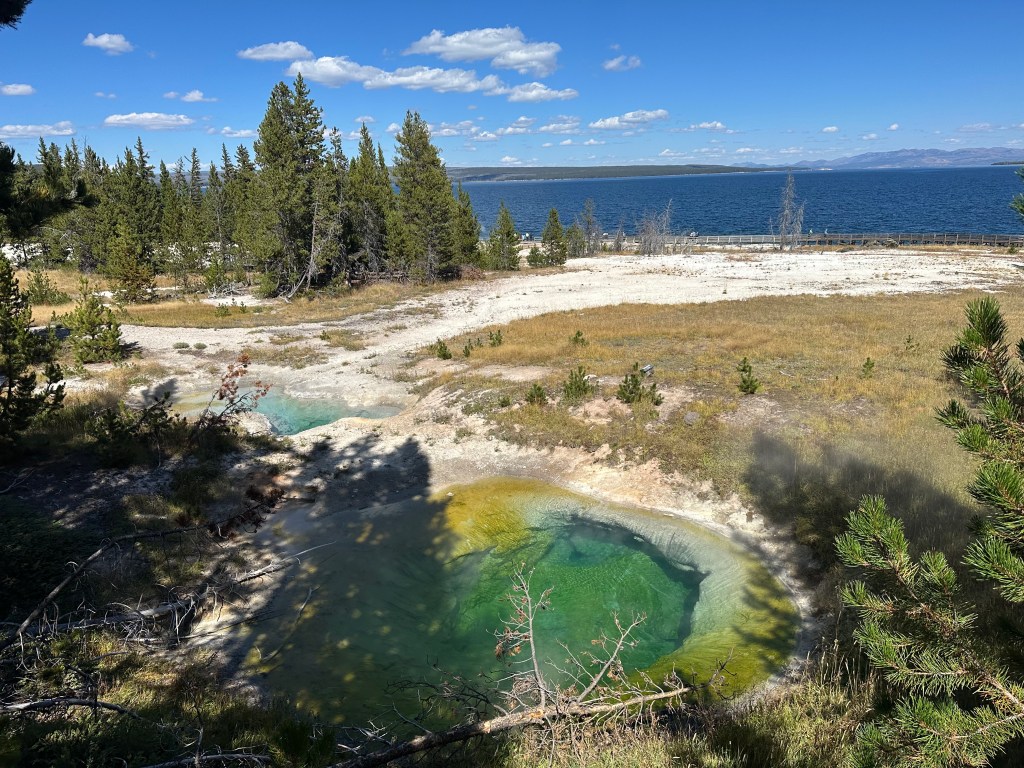
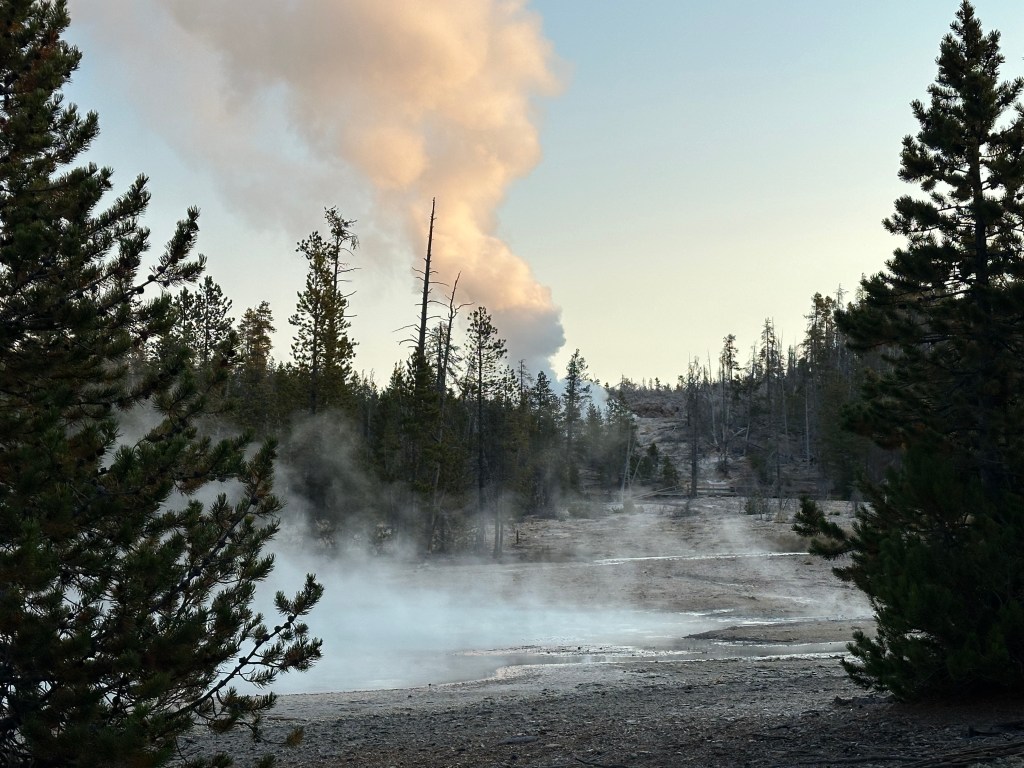
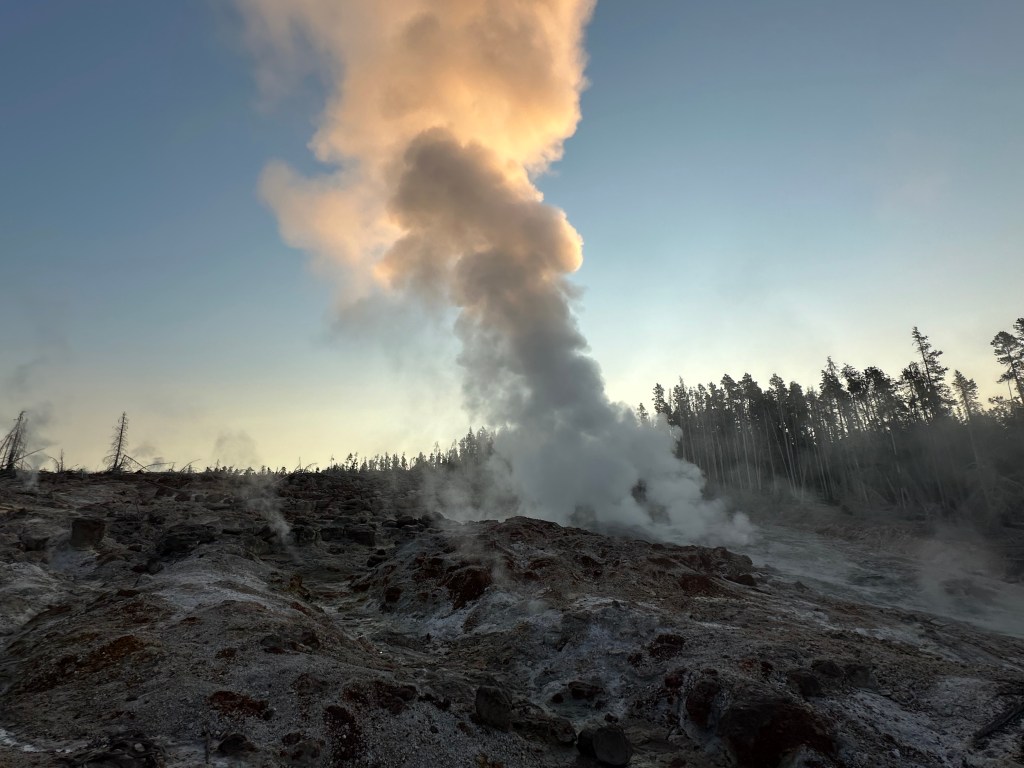
We skipped Old Faithful due to time constraints, but the Norris Geyser Basin is another geothermal area that offers a more engaging and surreal experience. We visited early in the morning with very few others present, and the steam rising against the cold sunrise air created a unique serenity.
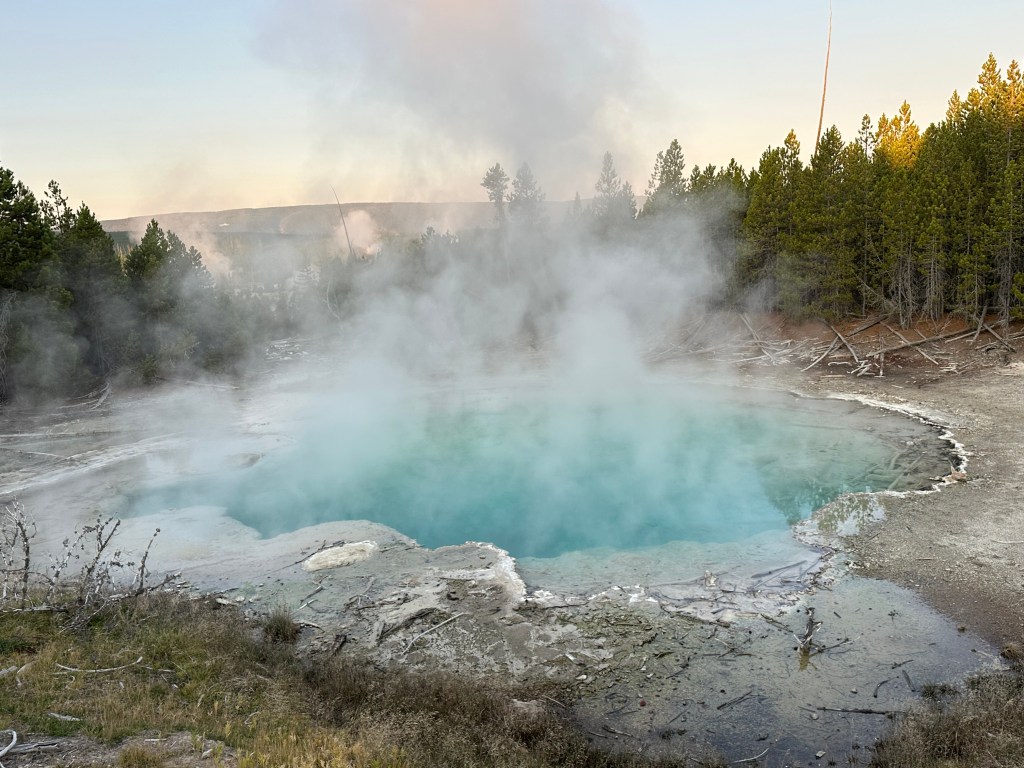
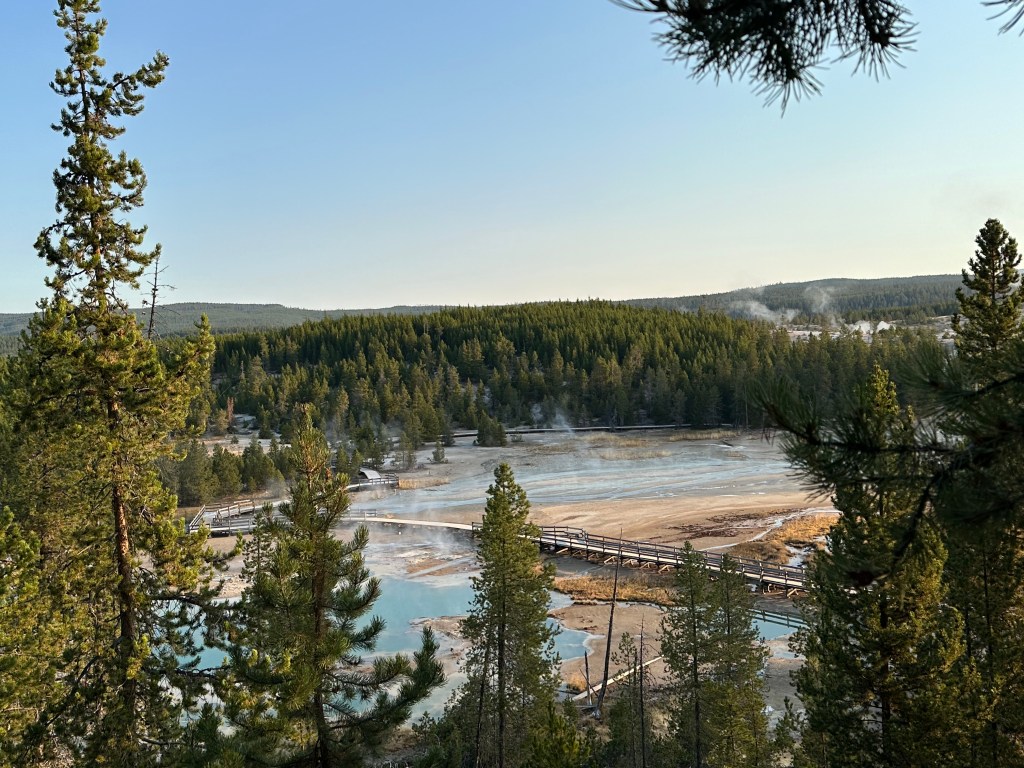
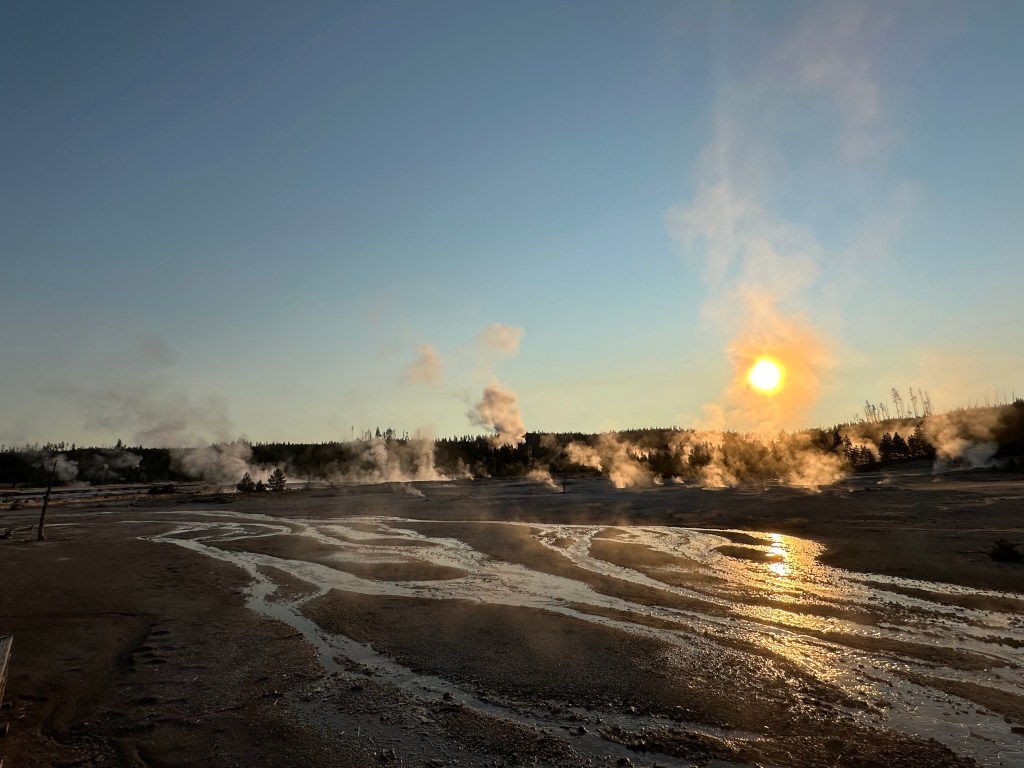
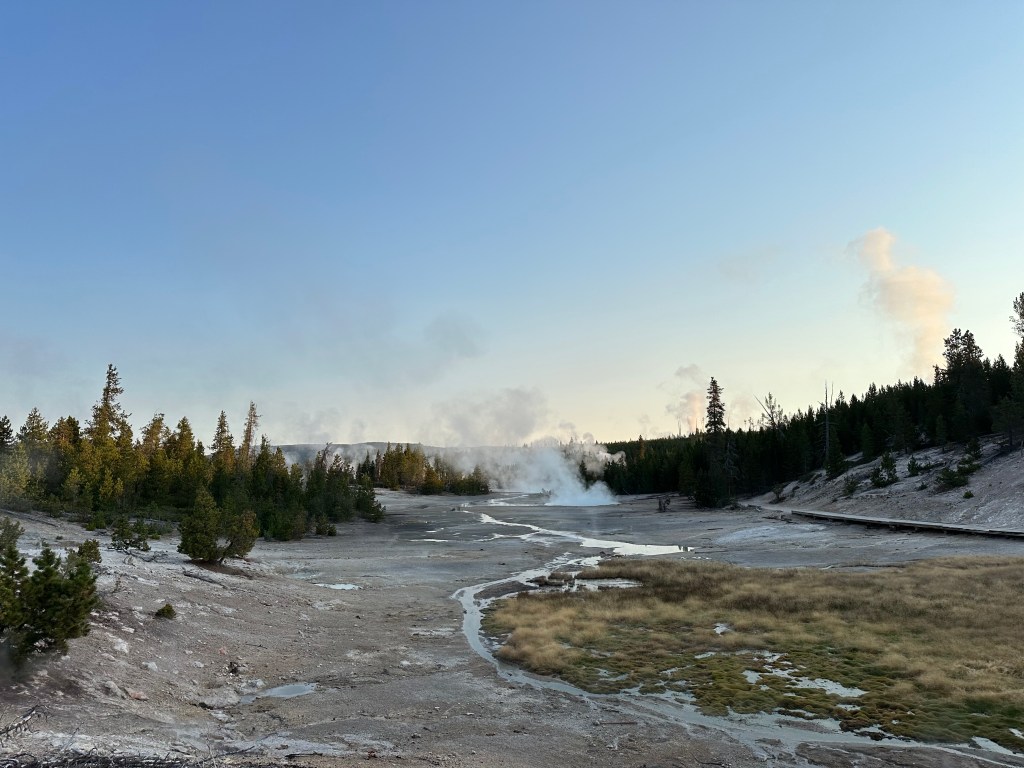

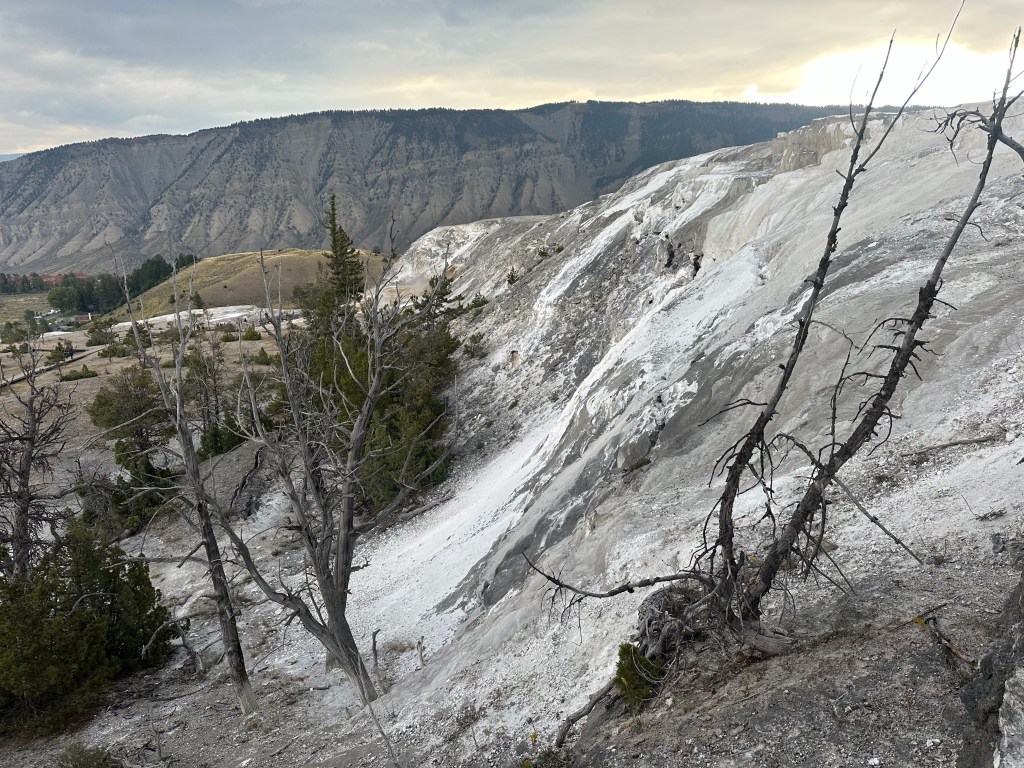
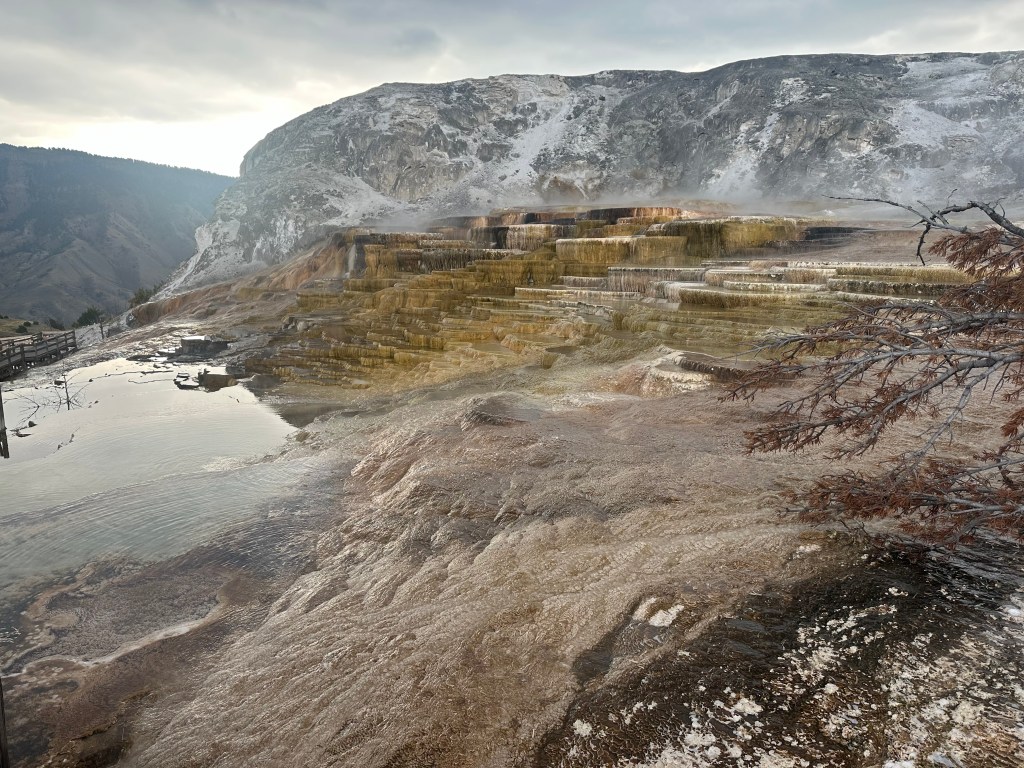
We also visited Mammoth Terrace toward the north end of the park, which is a geothermal area with a distinctly post-apocalyptic vibe.
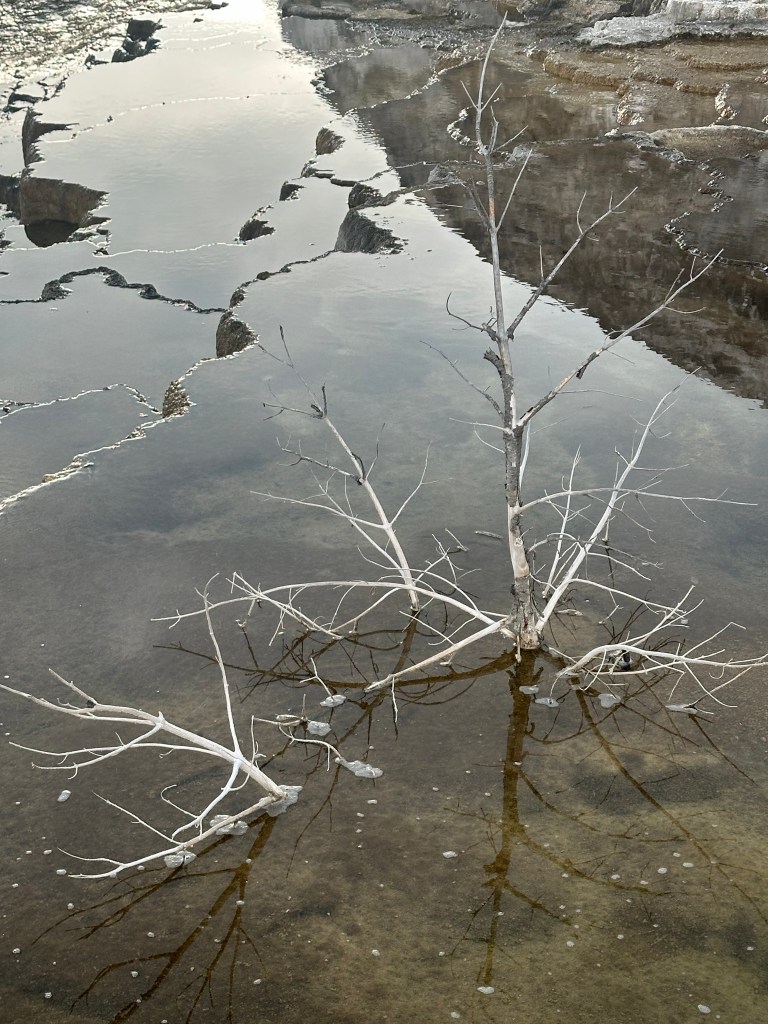
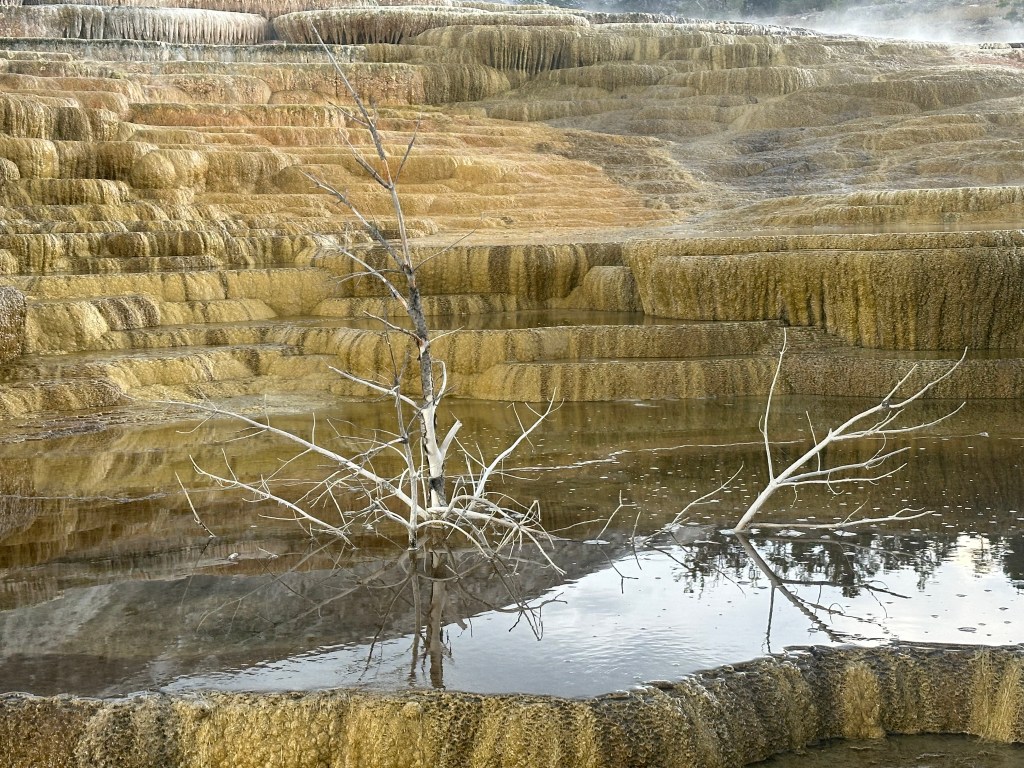
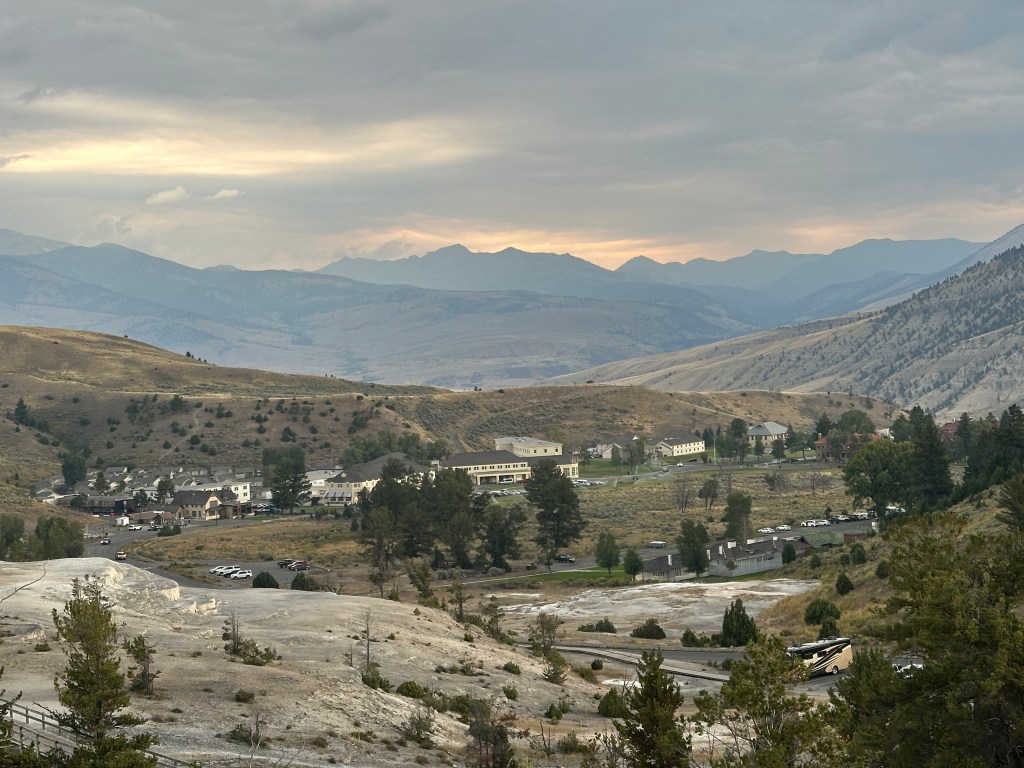
We also saw many other beautiful landscapes, waterfalls, and natural beauty, which are typical for Yellowstone.

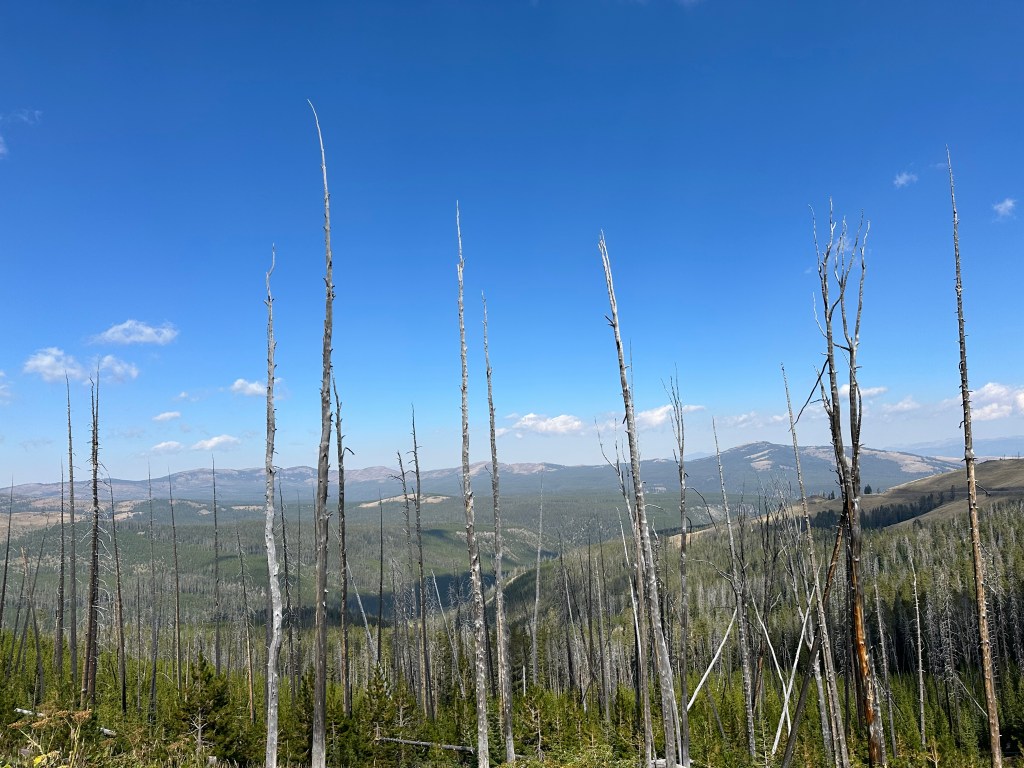
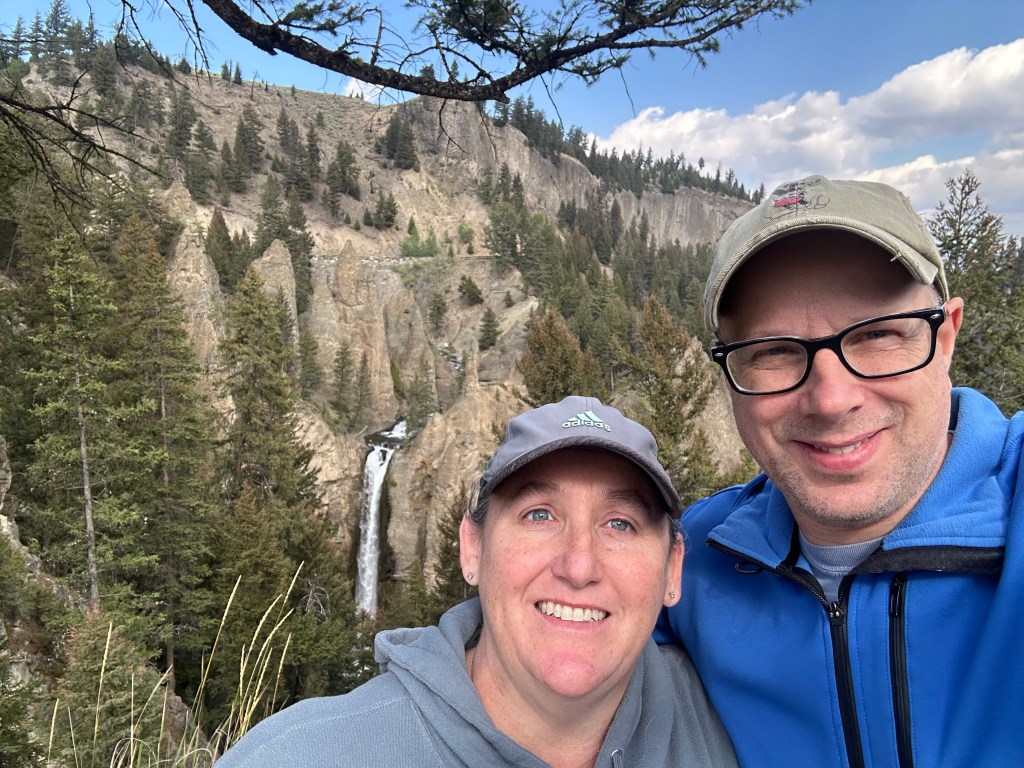

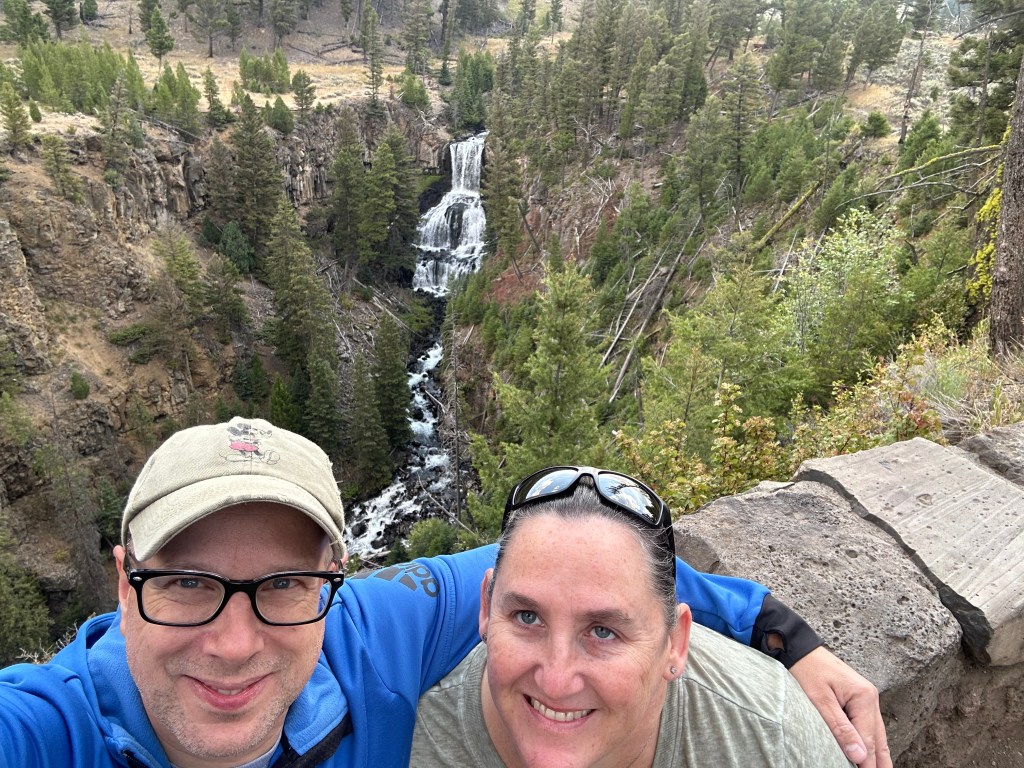

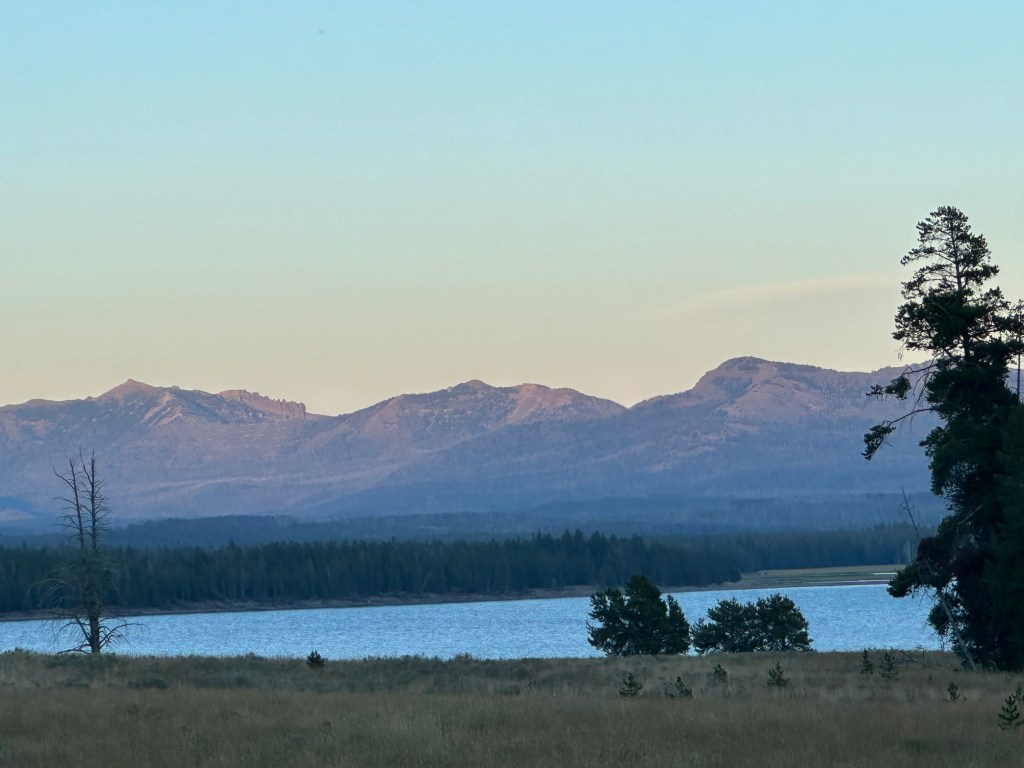
Most important on this trip were the animals. If you saw our most recent post about Glacier National Park, you will recall our disappointment in not seeing much wildlife.
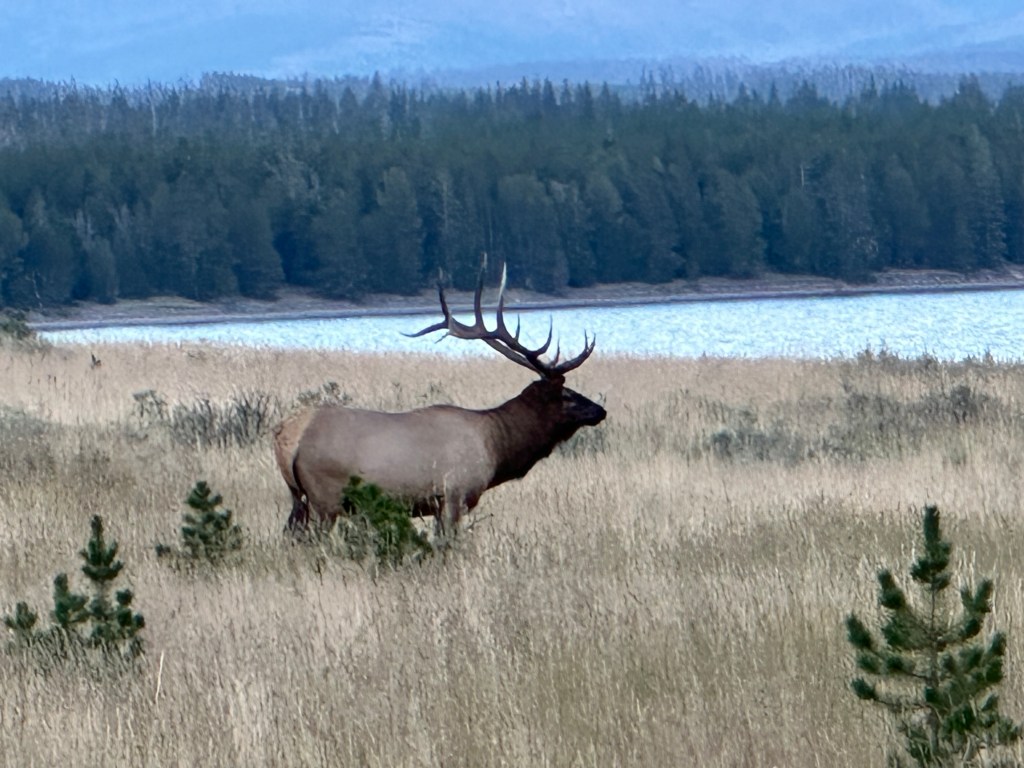
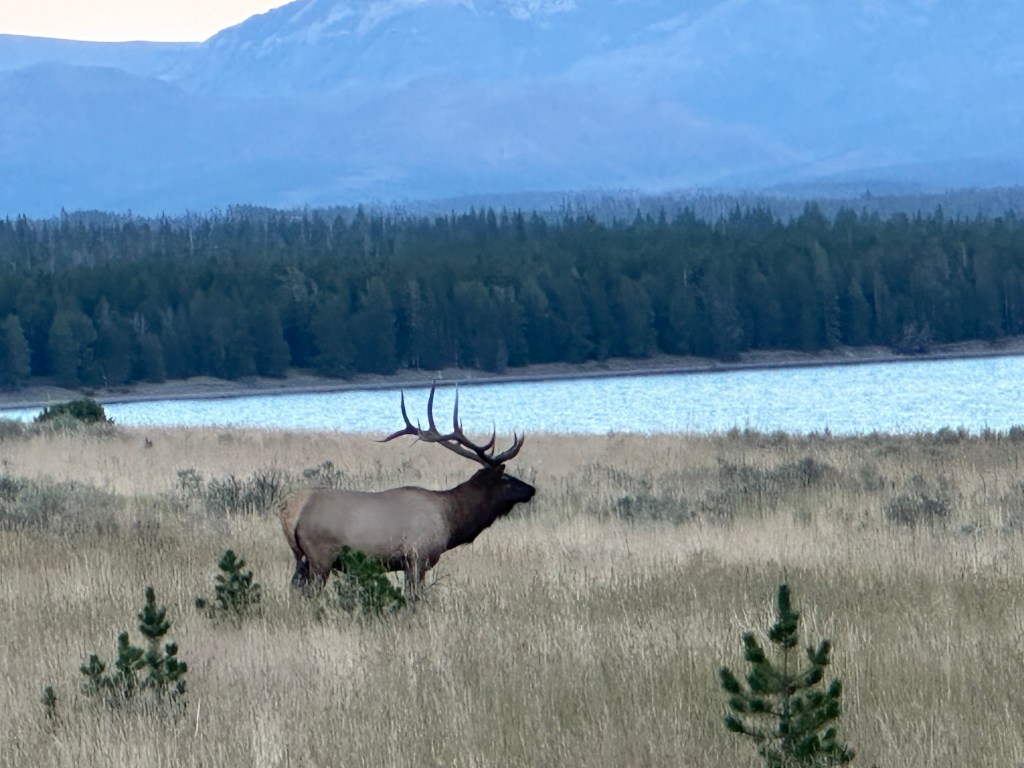
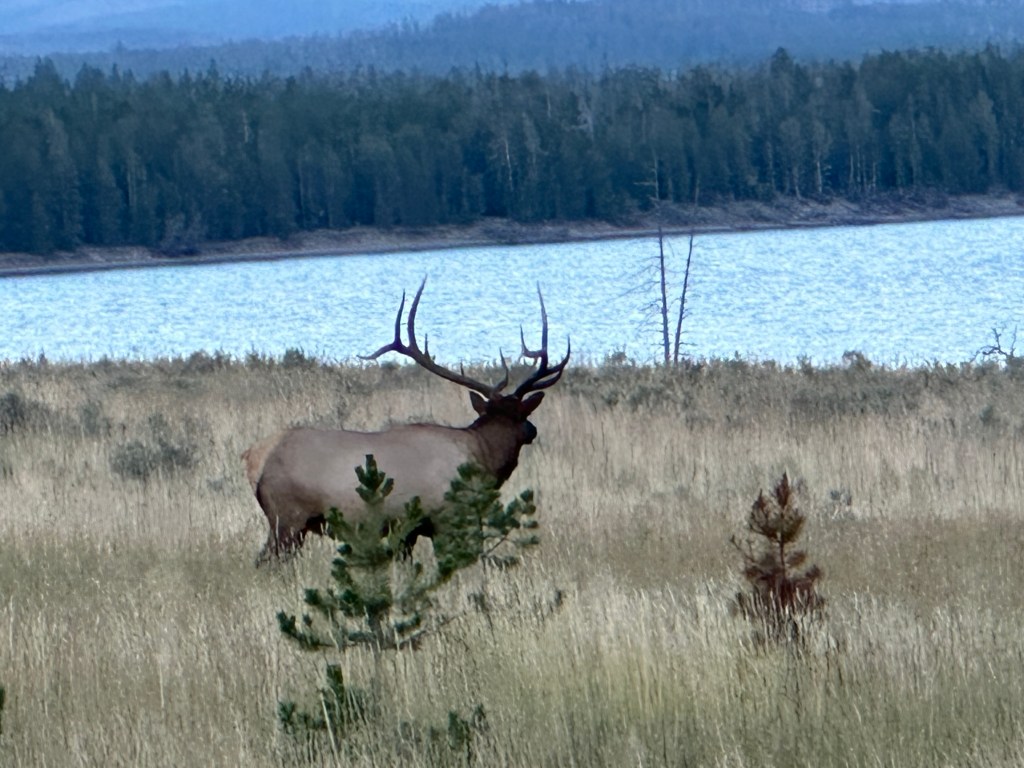
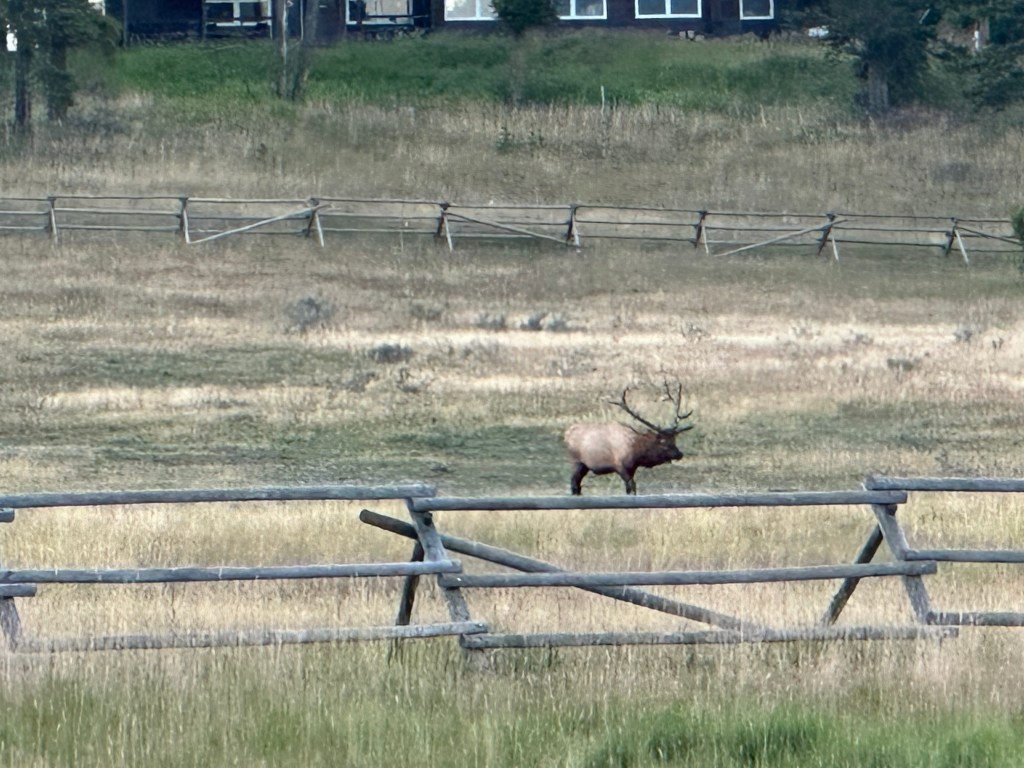
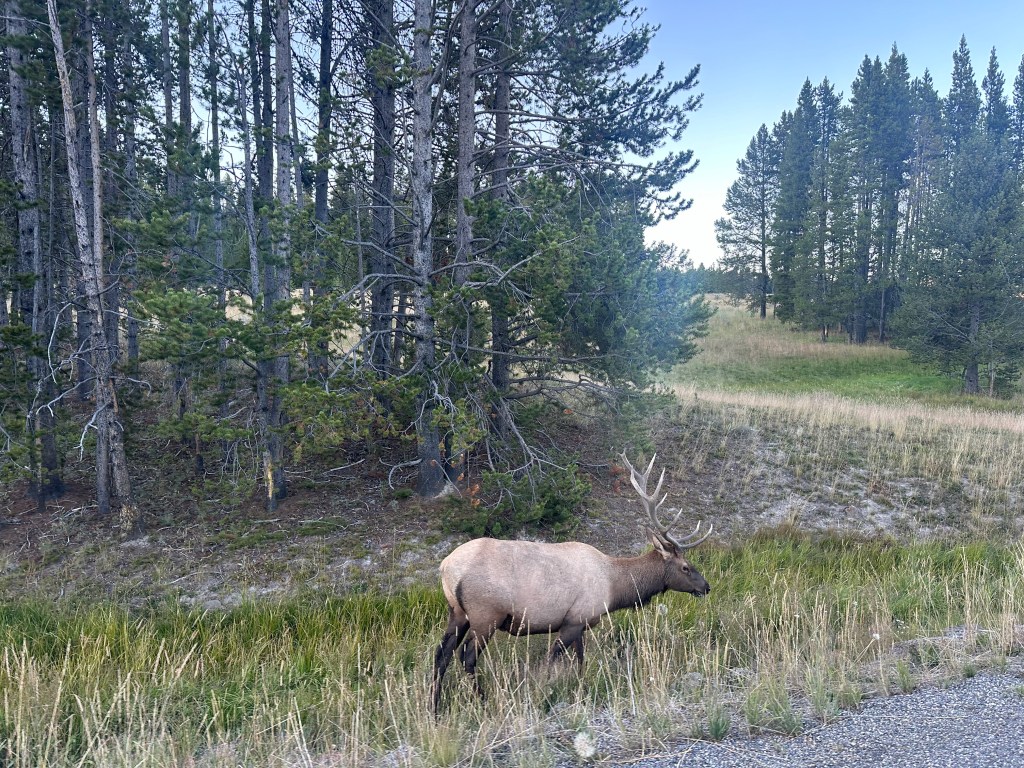
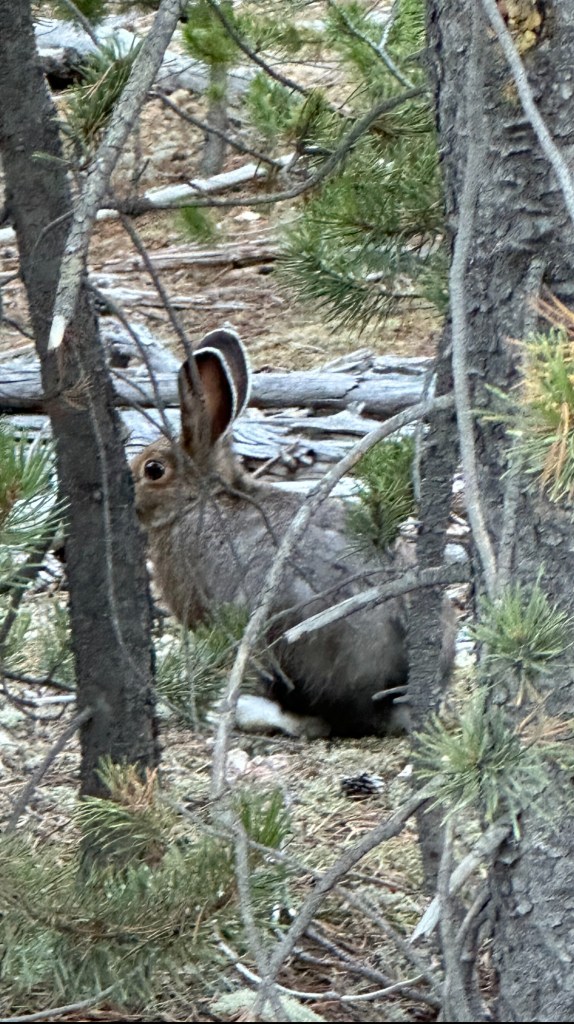
Yellowstone stepped right up and said, “hold my beer.” We saw massive elk, bison, bears, several unique birds, and something that looked like a coyote or wolf (we can’t be sure). Pictures below grouped by animal.
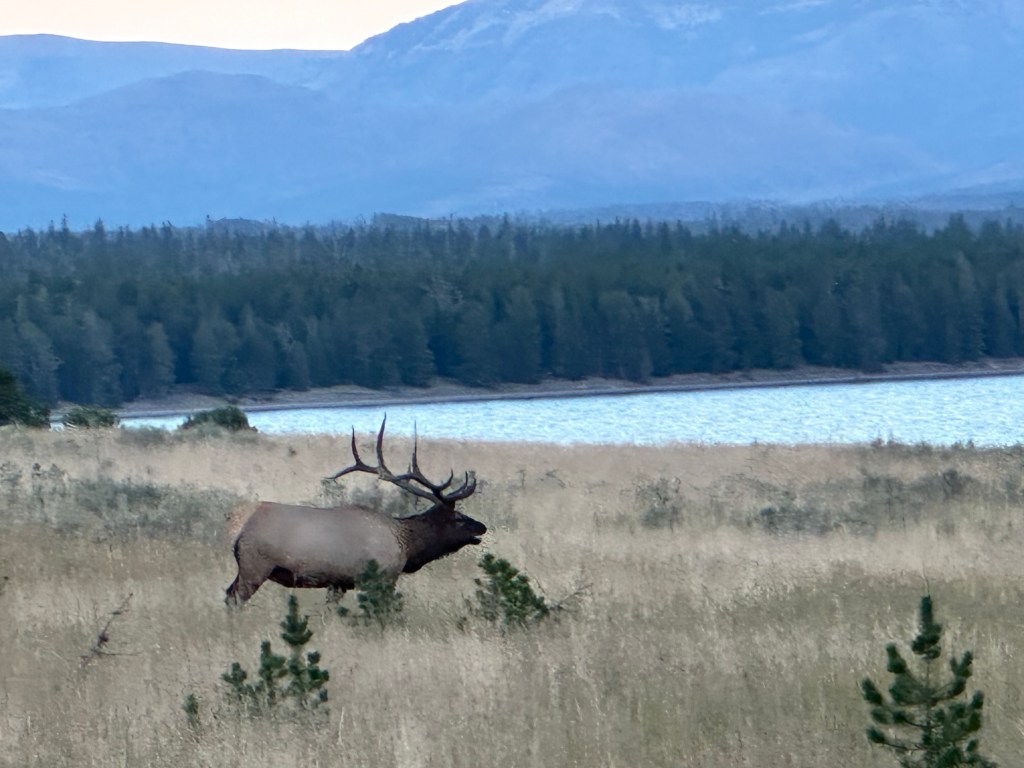
Elk
The elk were out in force this year and it was rutting season, meaning we were lucky enough to hear several of them bugle fairly close.

Bears
We saw bears! Despite the Yogi Bear phenomenon and the general perception that bears are everywhere in Yellowstone, bears mostly stay hidden. Seeing them is uncommon. We have seen bears previously – including one notable incident where a momma grizzly walked right in front of our truck and stood up to peer inside – but most visit go entirely bearless. This time we chanced to see a momma black bear and her three cubs from a safe distance, which I caught on video.
Bison.
We saw many bison but photographed very few. Bison are often willing to crowd the roadway in Yellowstone, and we have past pictures aplenty. This time they remained mostly distant, which is unusual, so the pictures are few.
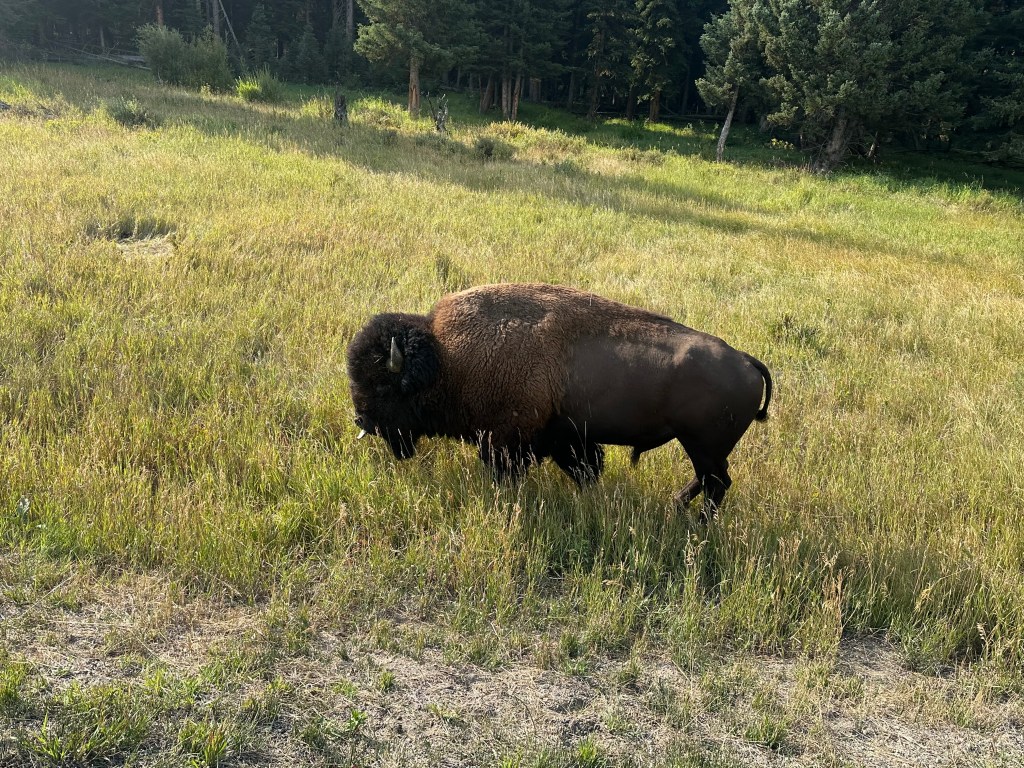
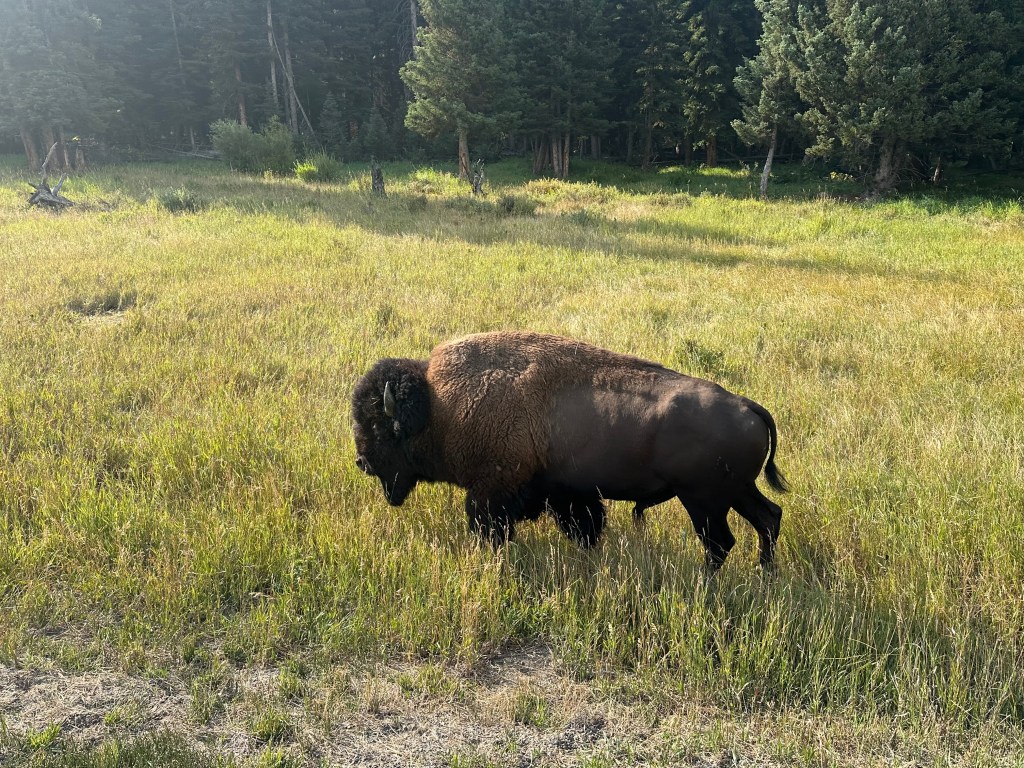
Coyote or Wolf or something else?
Early one morning just after dawn we saw a couple other cars stopped, so of course we pulled off and saw this particular confident predator prowling near the pull-off. The picture is grainy because the light was dim and I kept my distance, but this was another very rare sight!

Birds
Birds deserve credit too, and we definitely saw a few that were unique to our eyes.

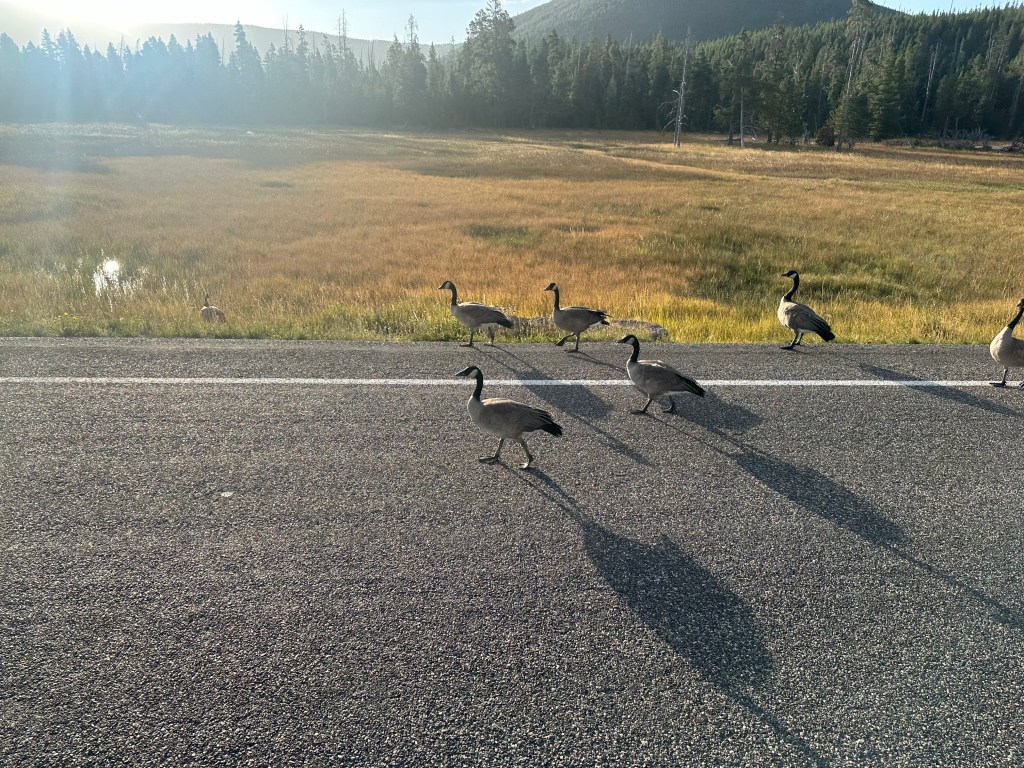
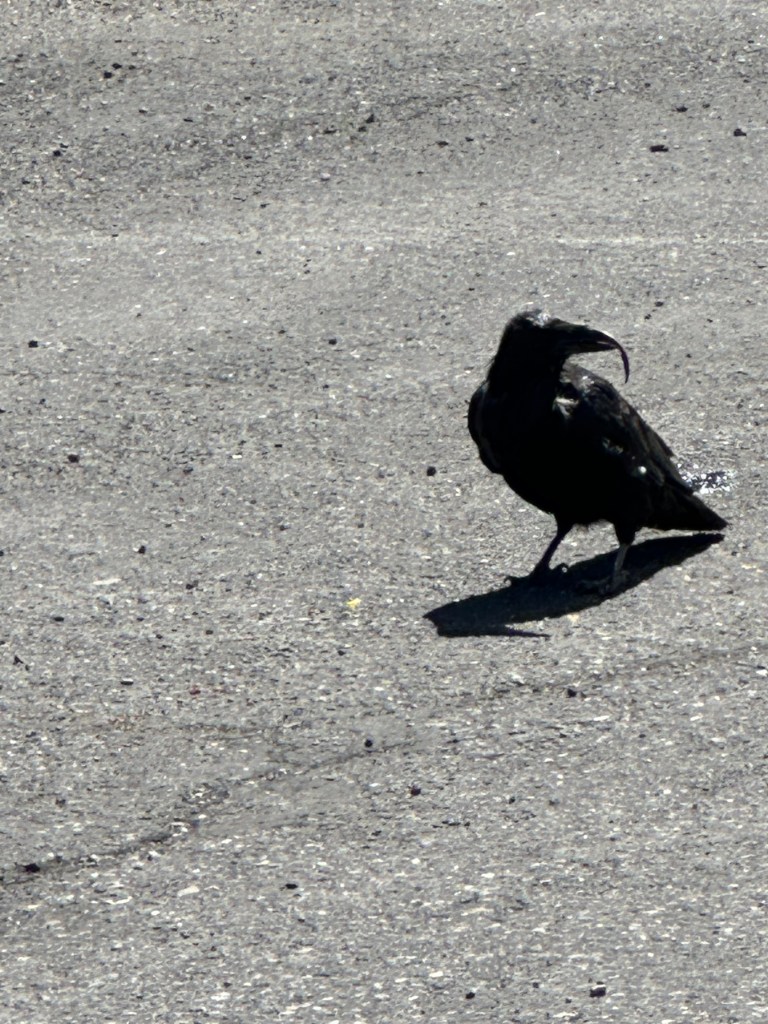

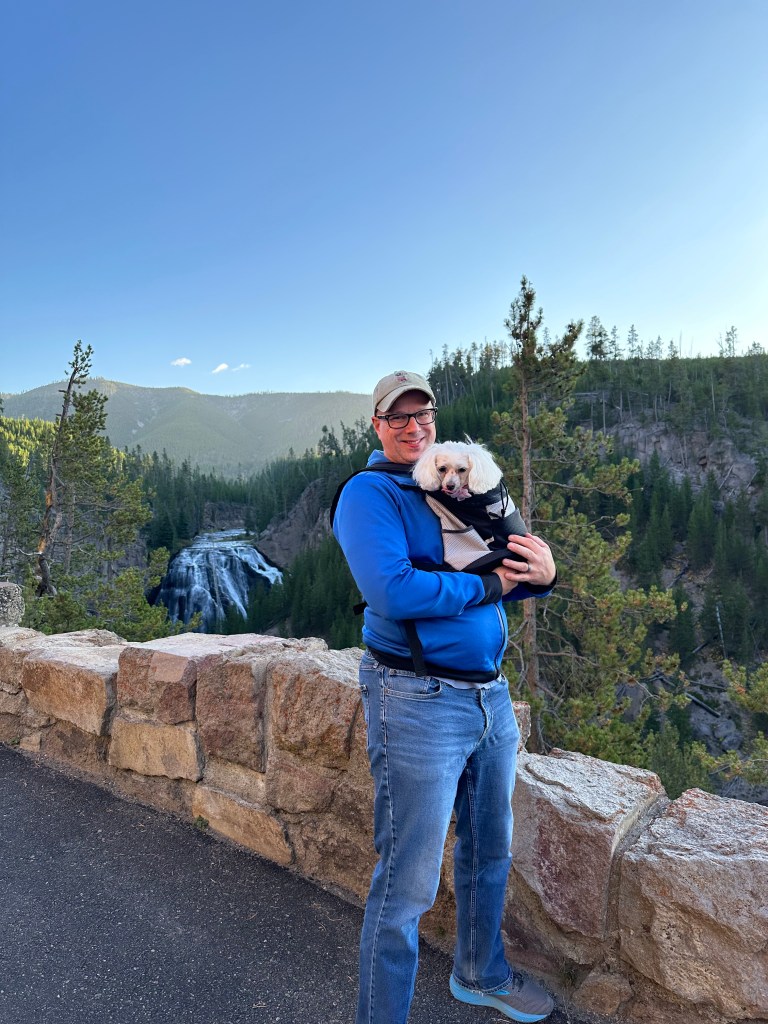
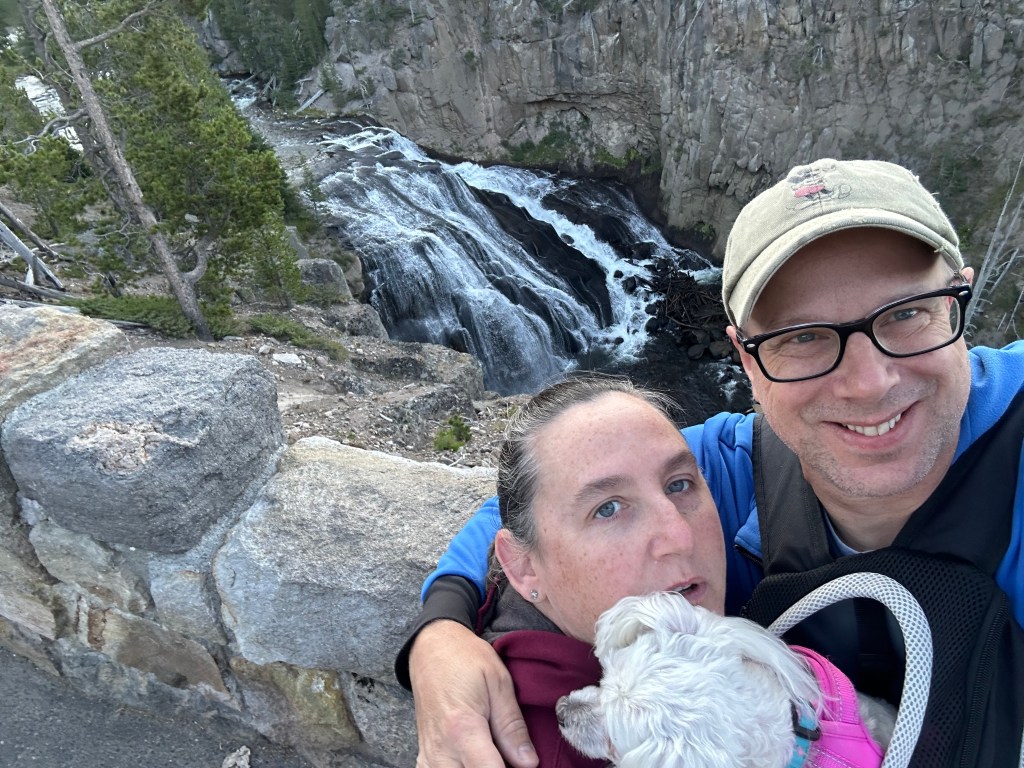
Other Animals, including Bella in a front pack. 😁
Next stop is Cody, Wyoming, where we have friends and family to visit.
-
Glacier National Park!
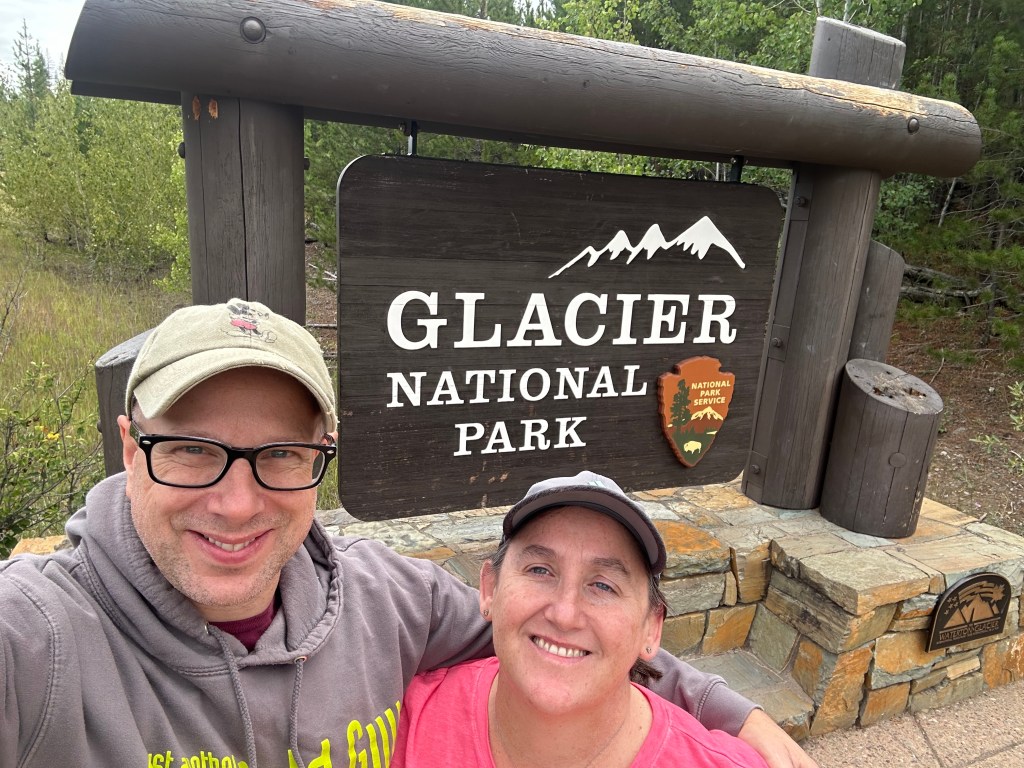
This place is like something out of Lord of the Rings: desolate, inaccessible, and breathtaking. We knew very little beforehand, beyond anecdotal reports of its beauty. But such reports without context or explanation do not much capture my fascination. I have questions: Why did this area merit becoming a national park? Why is it called “Glacier” National Park? And finally what do people do while in the park? I could have researched such things in advance, but why ruin the surprise? 😊
After a couple days in the park, we know what all the fuss is about, we know better how to approach the park next time, and we’re grateful for the experience. First things first: it’s called “Glacier” because :1) it is very high in elevation and has 25 actual glaciers that remain in the park, and 2) the entire park consists of mountains shaped by glacial movement over the various ice ages. The park covers over a million acres of alpine terrain at the peaks of the Rocky Mountains, and includes something like 175 mountain peaks, some over 10,000 feet in elevation. What do people do? Drive and hike. That’s basically it.
Most of Glacier is simply unreachable. It is phenomenally large and most of it is literally just the Rocky Mountains, which are unreachable to mere mortals. Many other areas are reachable only by travelling several hours over potholed gravel roads that will test the strength of your dental fillings or by engaging in international travel into Canada then back south by way of a Canadian lake ferry back into Glacier Park.
Seriously this place just doesn’t care about you. Like an aloof mother-in-law, Glacier itself doesn’t want you to be there; you must be the one to “want” to be there, and you better make sure you have your crap together because Glacier will not make it easy for you. Paved roads are a luxury. The most popular trails are long and high in elevation. Driving anywhere takes hours even on the paved roads.
Because Glacier is overlaid across the Rocky Mountains, it covers both sides of the continental divide, meaning the entire park is divided into east and west. The west side has a more typical Pacific NW forest feel, with bushy fir trees and thicker undergrowth. The east side of the park is more typical Eastern Montana plains feel with tall grasses, scraggly pines, and barren rocky areas.
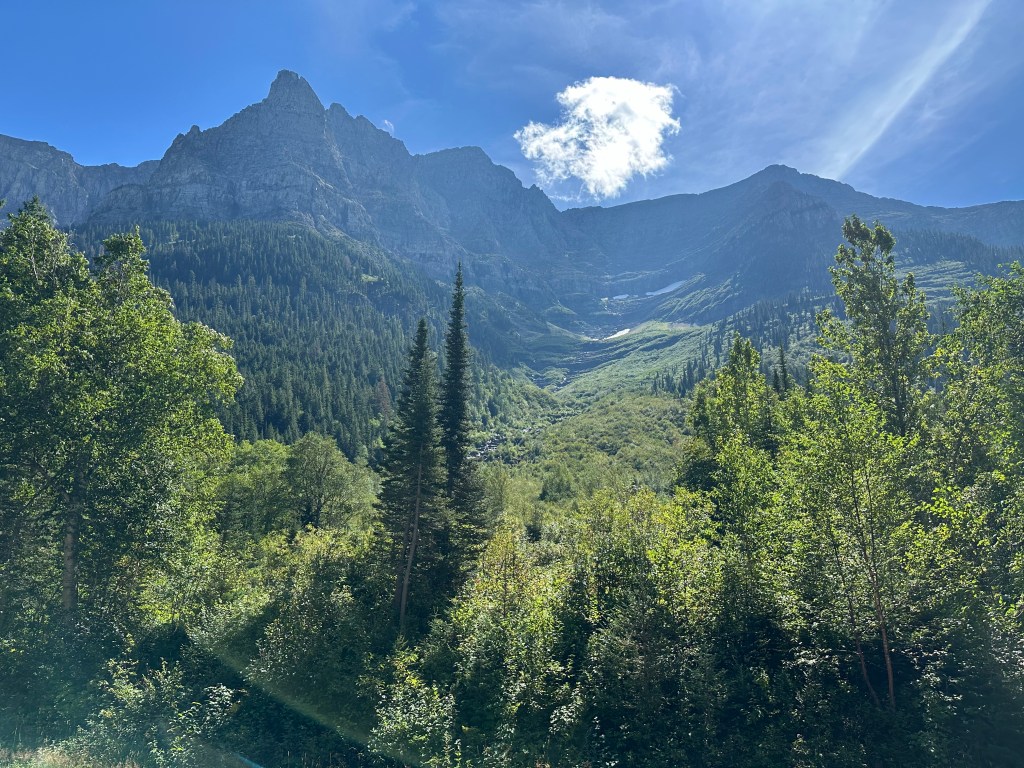
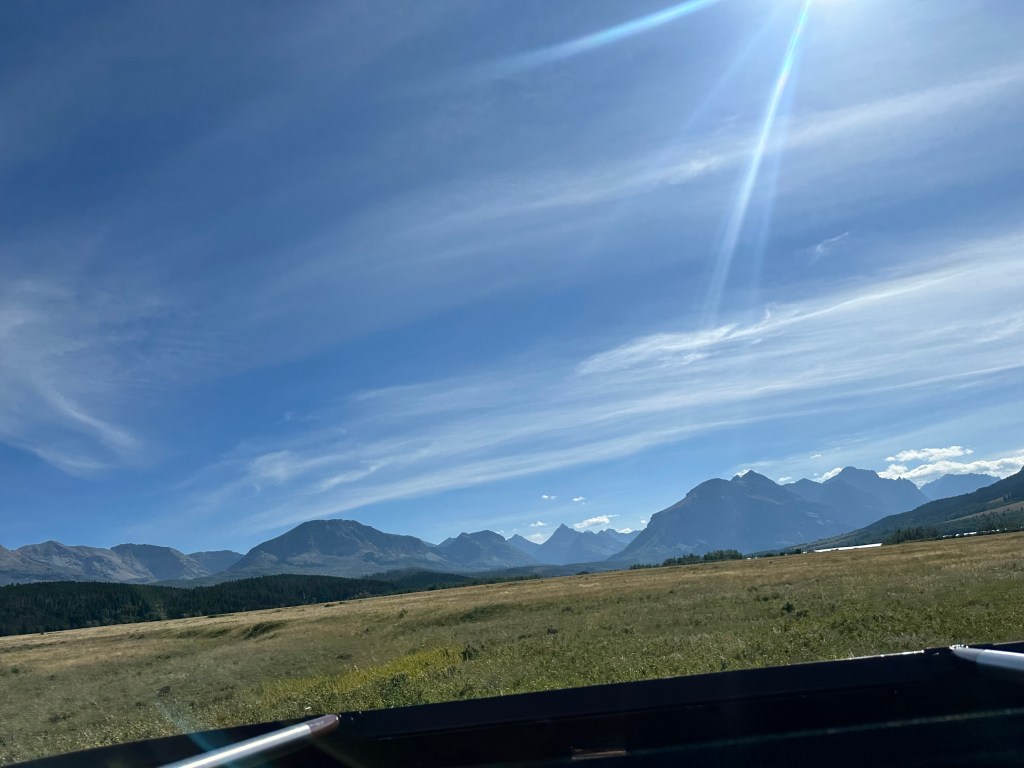
Driving from west to east means either going outside the park to go around the south side on non-park Montana roads or driving across the very narrow but scenic “Going-To-The-Sun” Road over a very high mountain pass. More to come about that…
If you want to get the most out of Glacier, you really should plan for some bigger hikes, which we did not. Now we know, and we’ll plan accordingly next time. But for now, here’s what we experienced on our first trip.
Glacier requires advance reservation vehicle passes divided in three zones: North Fork, Many Glacier, and the Going-To-The-Sun Road (I’ll call this GTTS to make life easier). We had vehicle passes for GTTS for all three days planned in the park, with hopes of scoring other passes as the NPS occasionally releases passes at the last minute. Luckily we got a pass for the North Fork at the last minute. We were excited because we wanted to explore all of the areas to the extent possible. You know nothing, Jon Snow.
We entered through the West Glacier entrance and stopped by the Apgar Visitor Center to get our bearings. After a brief chat with a ranger, we took off for the North Fork right away, and 15 miles later we discovered that the next 20-ish miles would be over mediocre gravel roads, only for the promise of another 20 miles back, not counting whatever exploring we might do up north. We stuck with it for a few miles, but doubt crept in. With all our camping gear in the back, and a strong desire NOT to find out what parts of our road queen F350 might be prone to rattling apart given enough time, we erred on the side of caution (read: chickened out) and turned around. I’m a big fan of Top Gear, and I loved watching those guys break down time and again, but it really would be a large inconvenience.

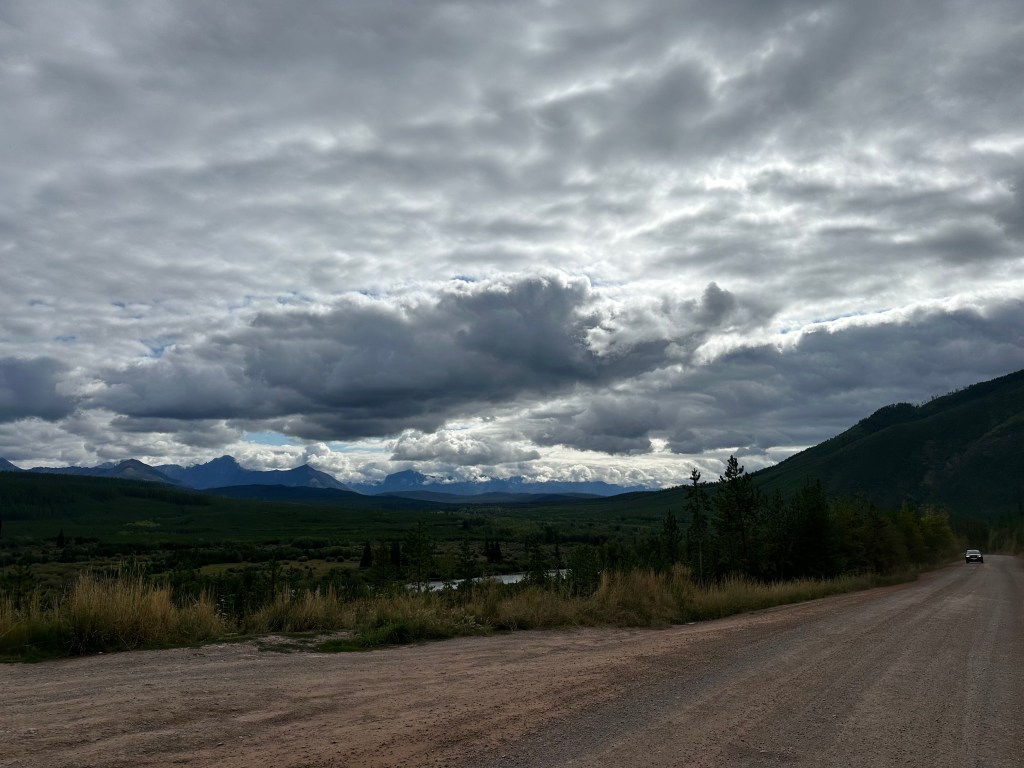
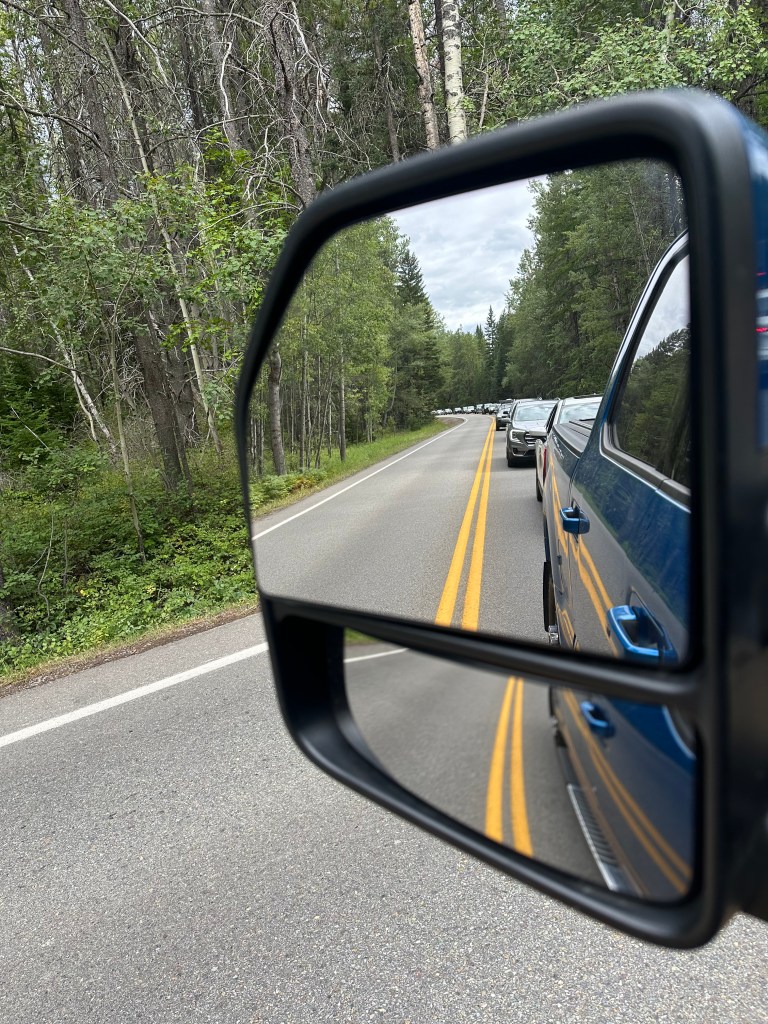
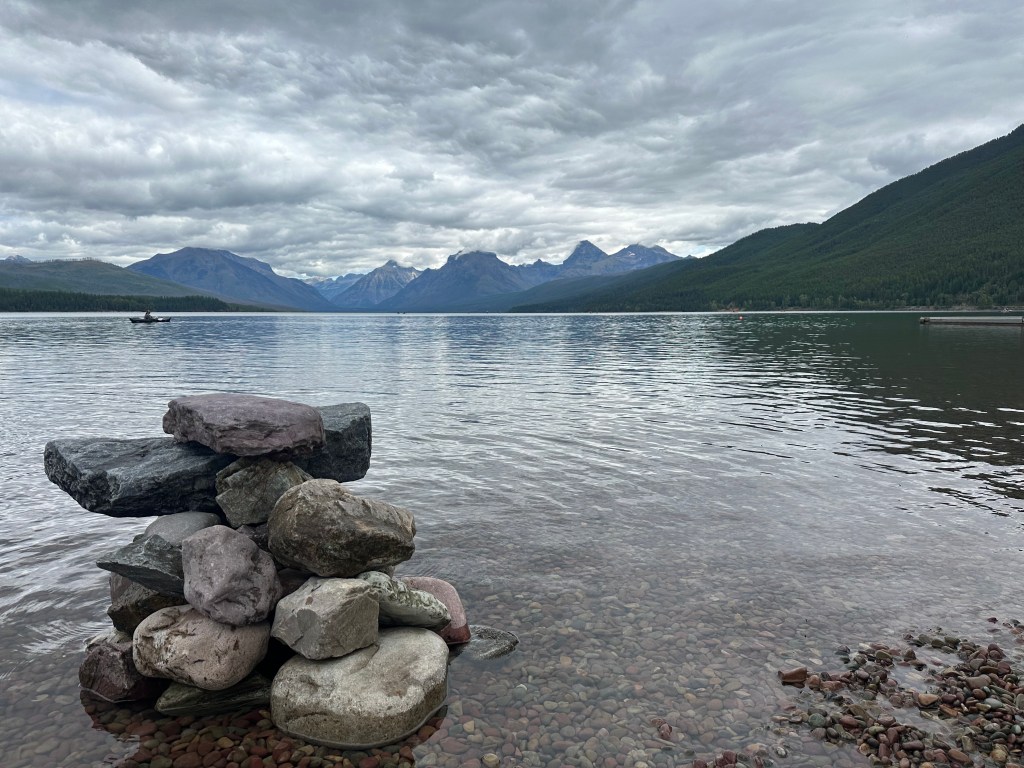
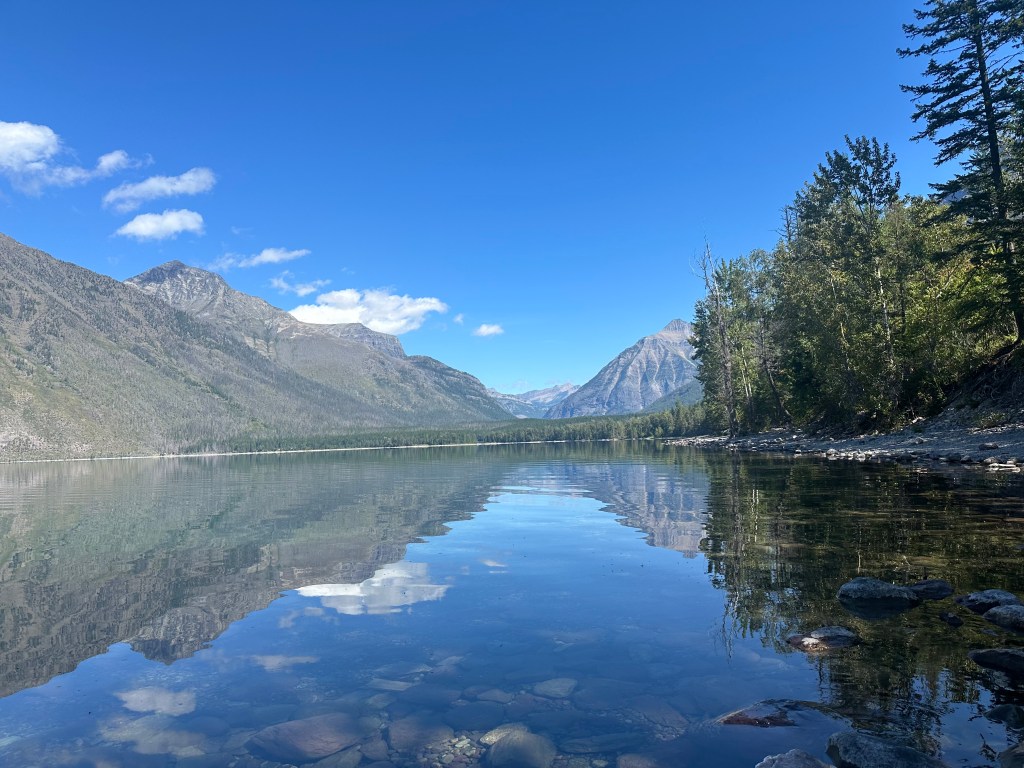
So back south we went, stopping into the Apgar Village area for a quick view of the largest lake in the park: McDonald Lake. After seeing the lake and a short run through a gift shop, we decided to take the GTTS route. We already had next-day tickets on the National Park tour bus/van/thing to have a guided tour across the GTTS, but we figured no harm in experience it ourselves right away. The first “experience” was a significant traffic jam headed into the ranger check point where they were verifying the vehicle pass for each vehicle. This was a surprisingly long line, but we would see later that controlling traffic on this road is a worthy goal.
The GTTS Road – Part 1
The GTTS road is approximately 50 miles long, and most of it is exceptionally scenic. However, it is also notoriously “white knuckle” worthy due to its narrow 1930s roadway, the cliff on one side, and rock face on the other.
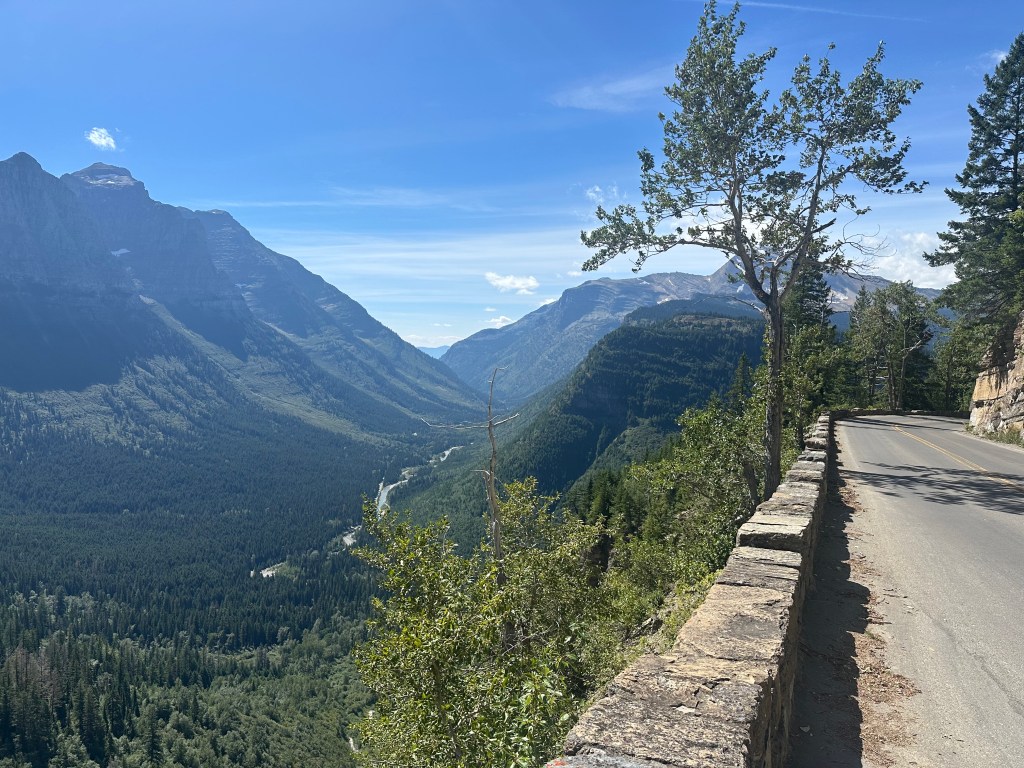

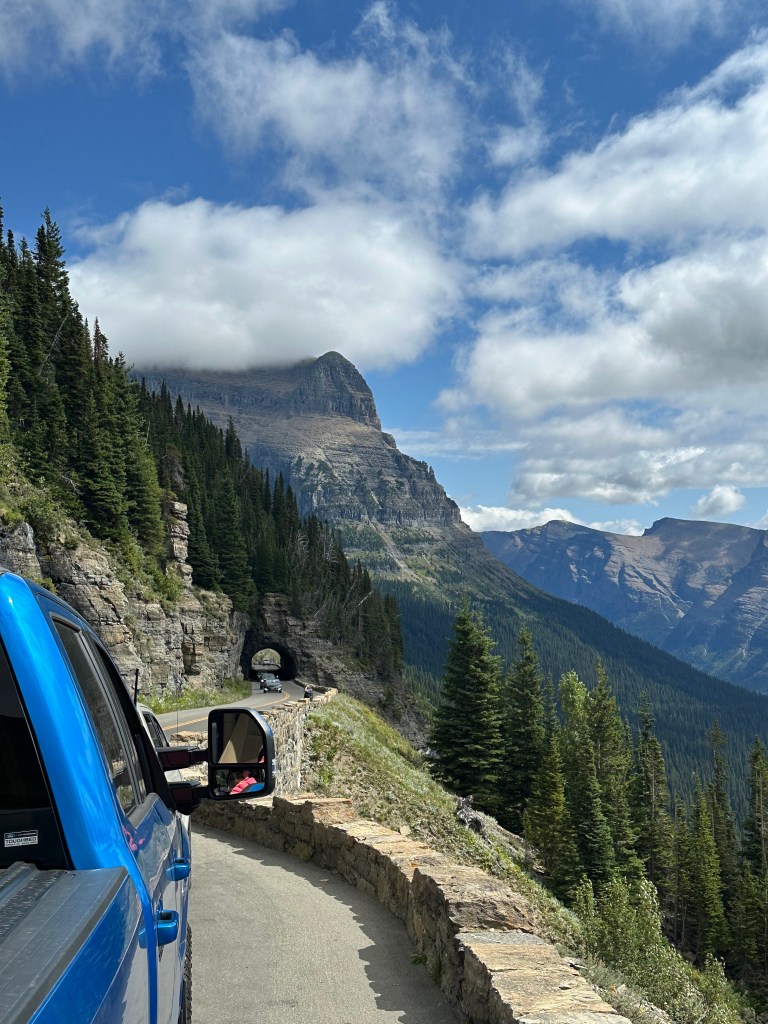
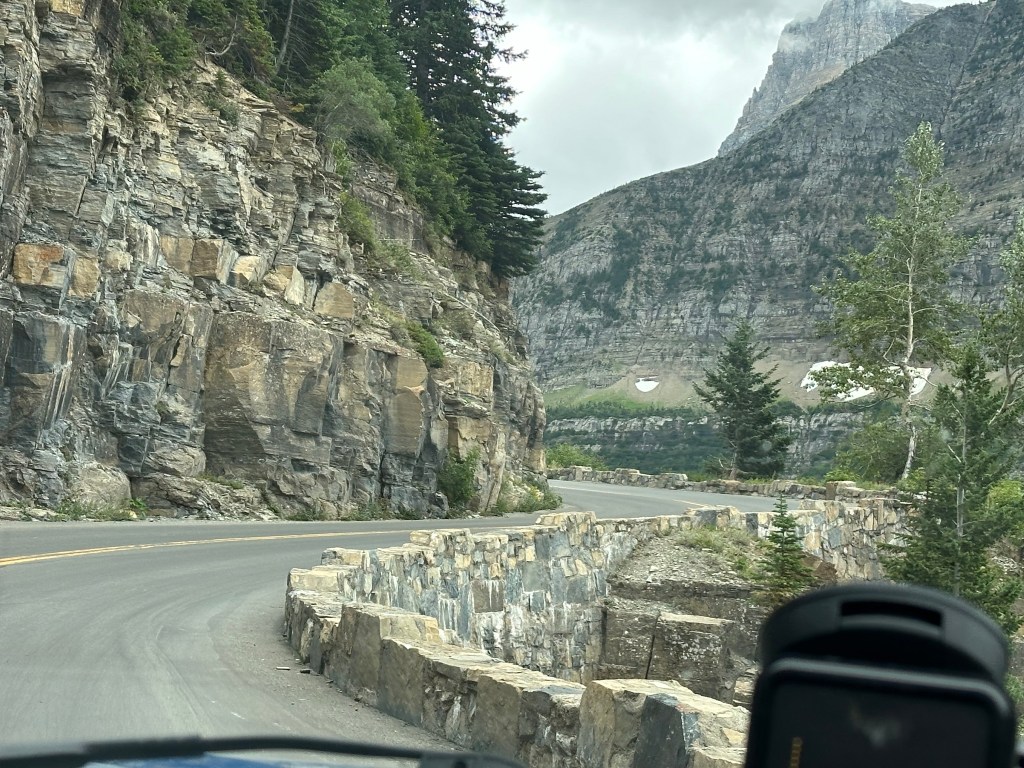
The GTTS Road crosses the continental divide at Logan Pass, which is approximately 6,600 feet. The views are pretty amazing, and there are a couple of hikes that depart from the visitor center. However, when we arrived, we found no parking spaces, and the chaos of other vehicles trolling for spots made is bail out pretty quickly. We would be back tomorrow, and the tour busses have special parking, so no worries.
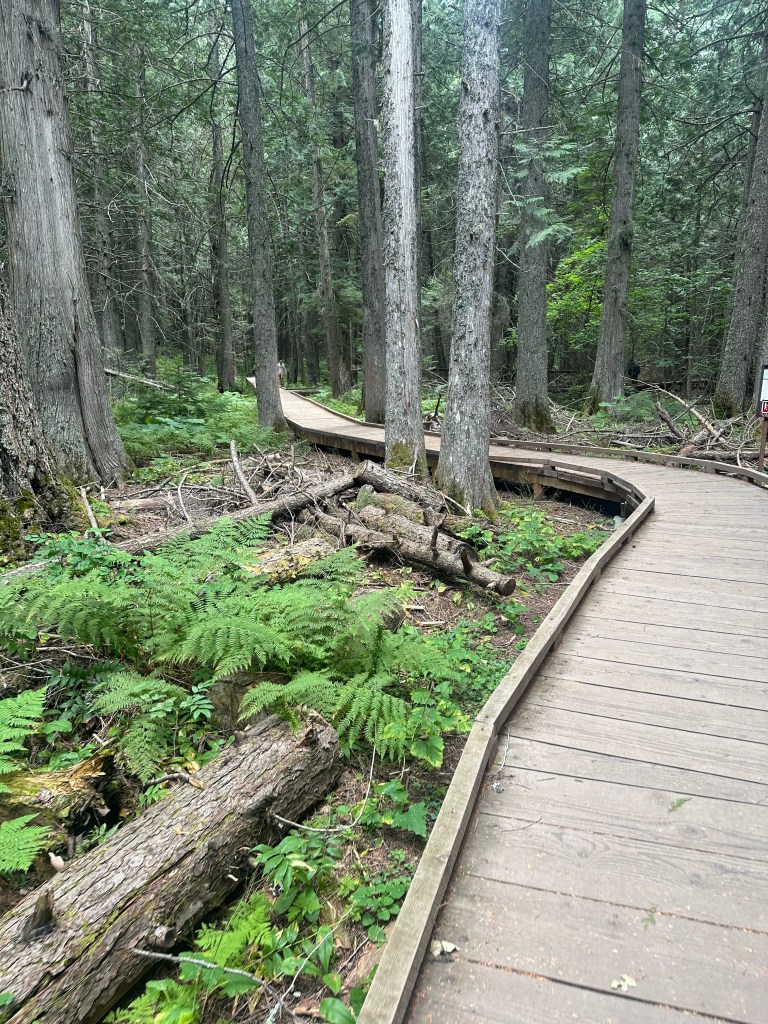
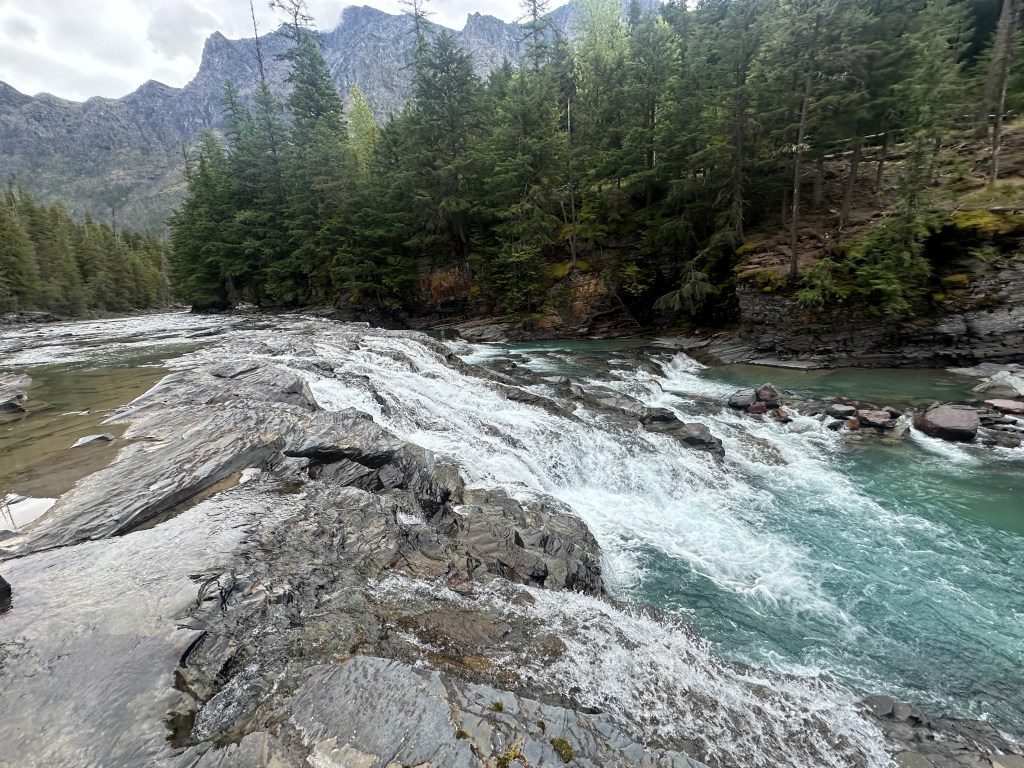
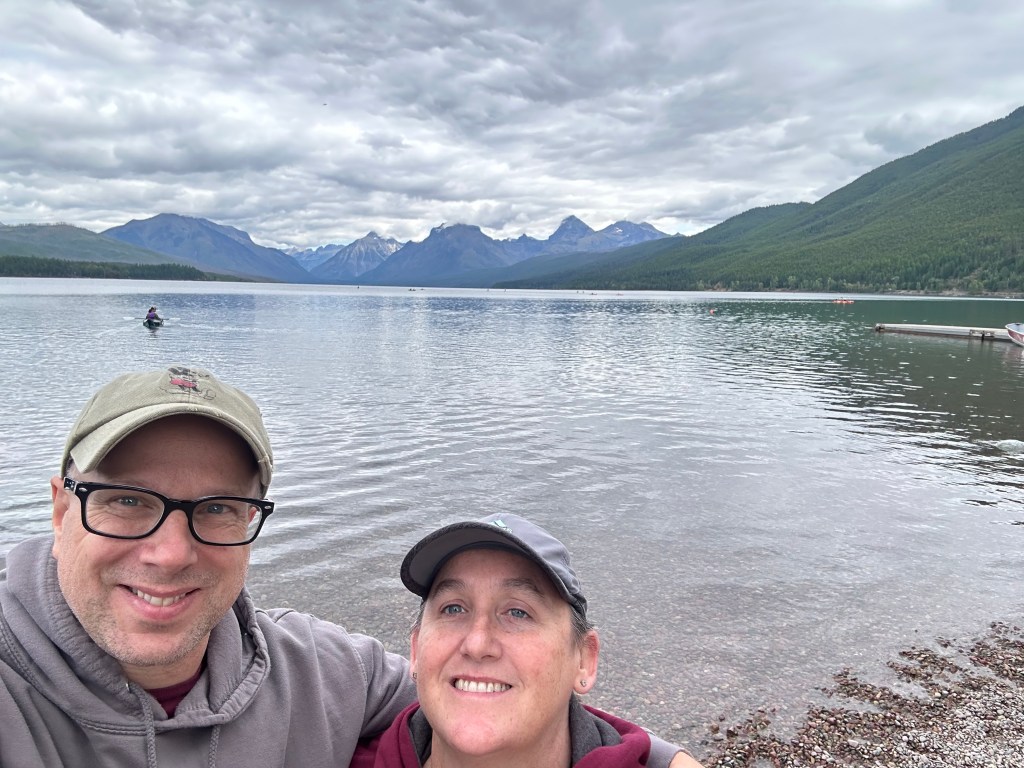
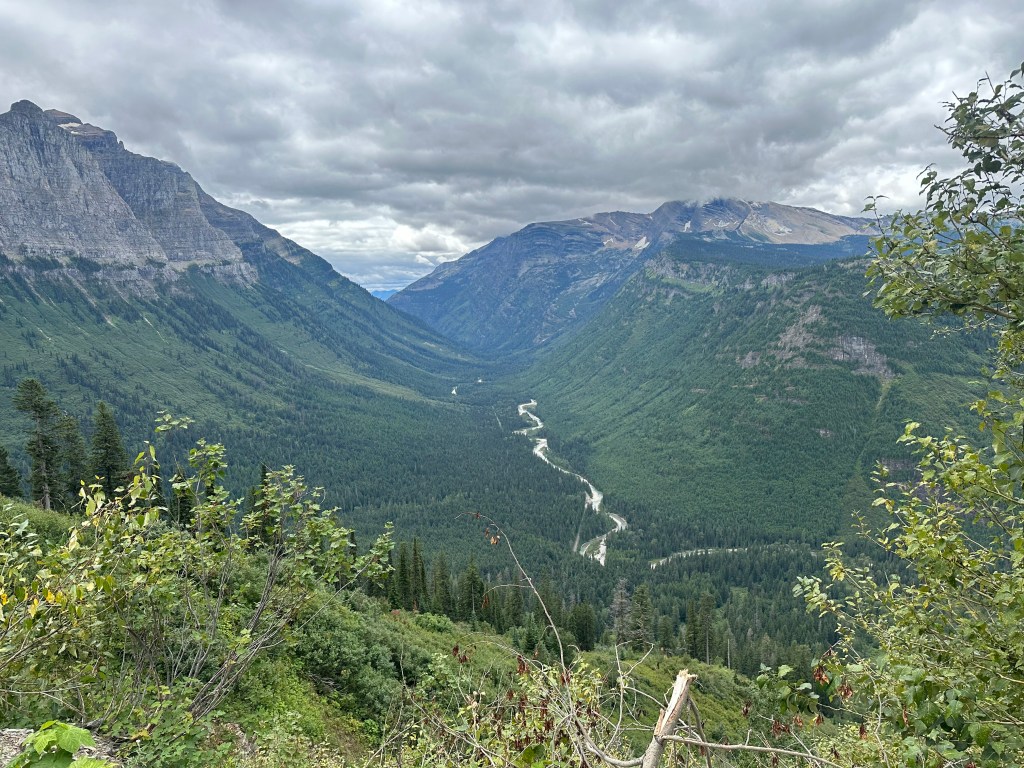
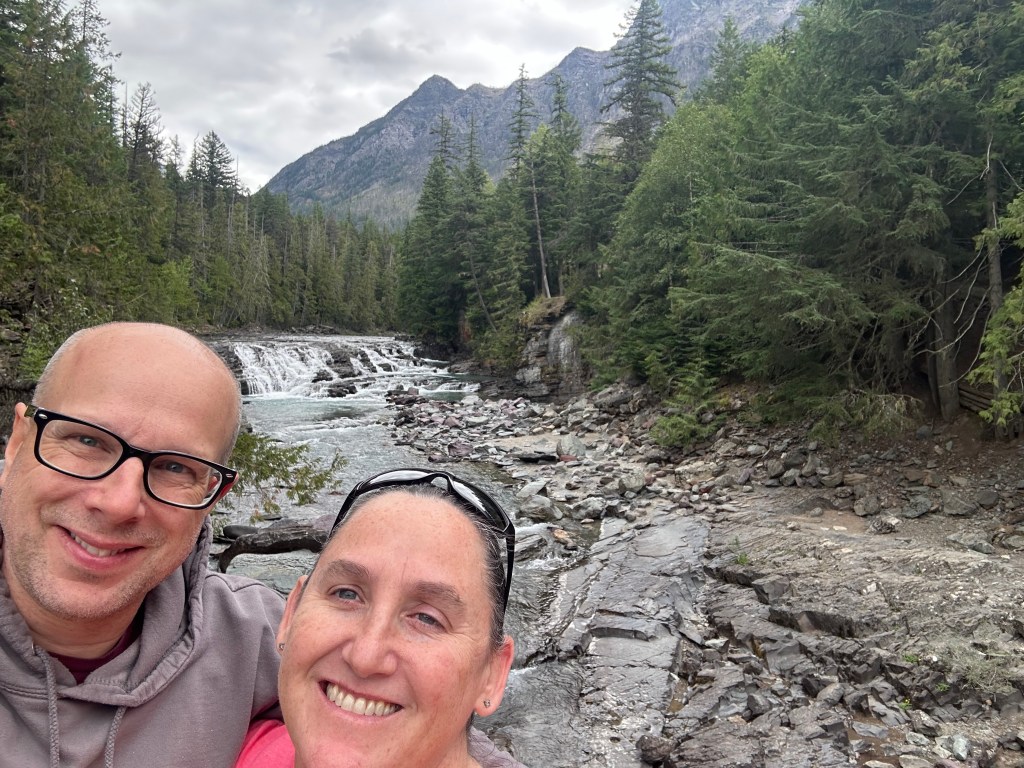
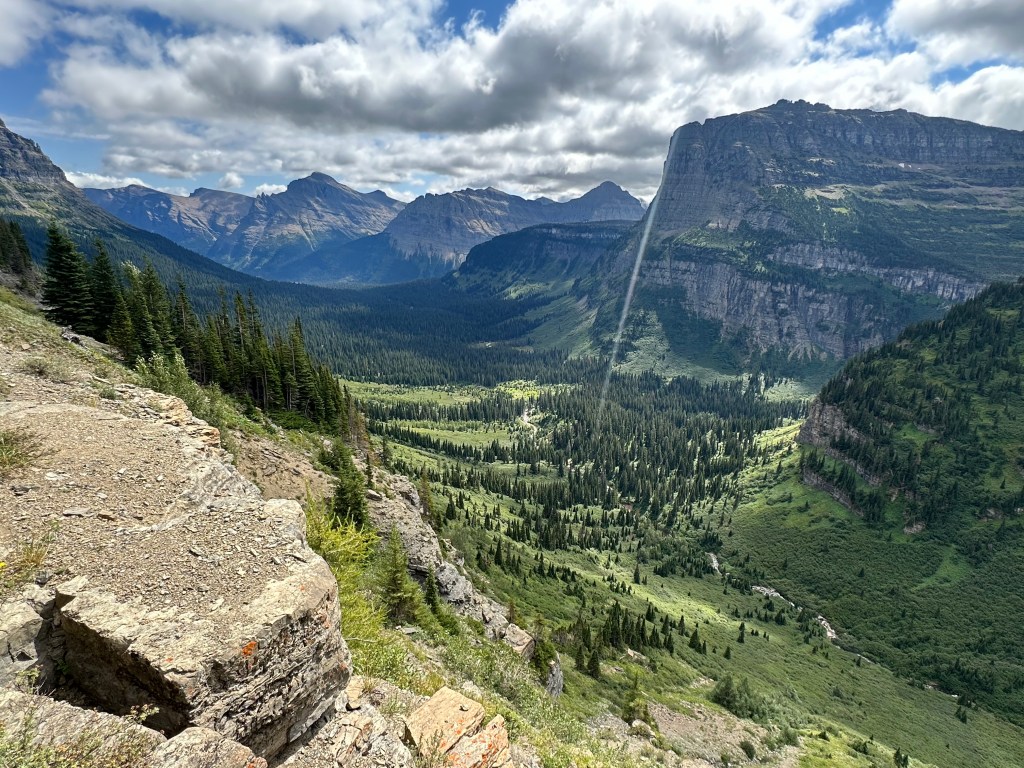
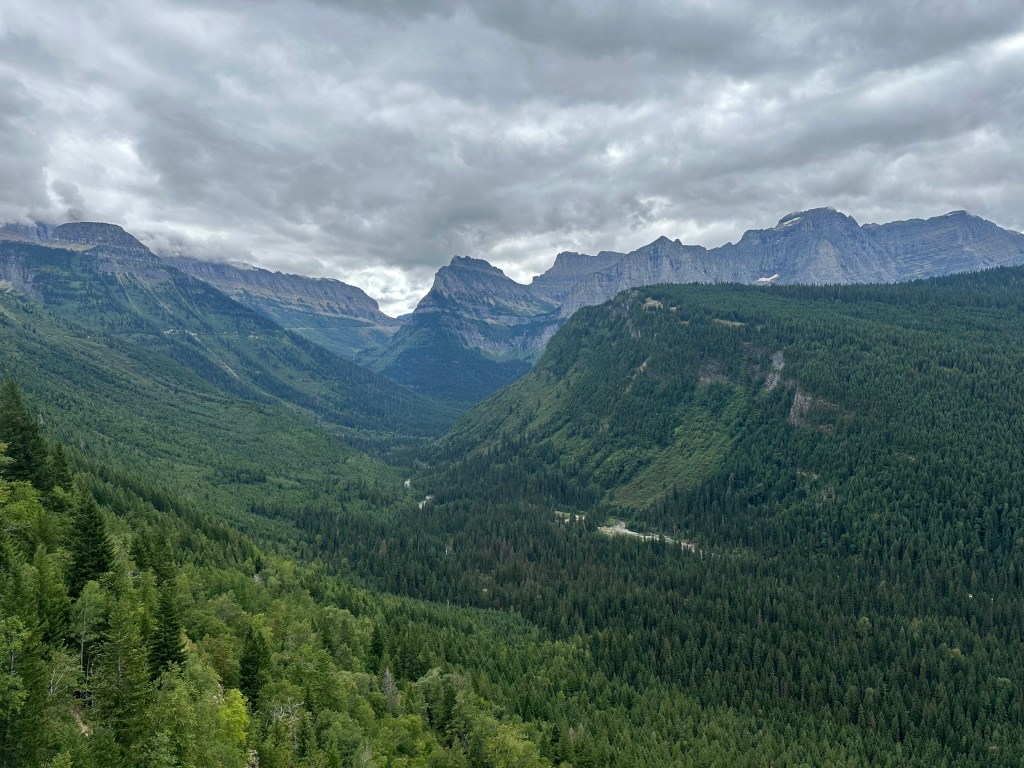
Many Glacier.
After finishing the GTTS in the village of St. Mary, it was roughly 2:15, and the vehicle pass requirement would expire at 3:00. Knowing it would take some time to make our way up the entrance to Many Glacier anyway, we figured we could time it pretty close and be able to get a sneak preview to see what else we might want to do.
We’re glad we did. Despite again needing to use unpaved roads, the area is very beautiful, with a large Swiss-Chalet lodge on Swiftcurrent Lake, with a view directly to the Grinnell Glacier.
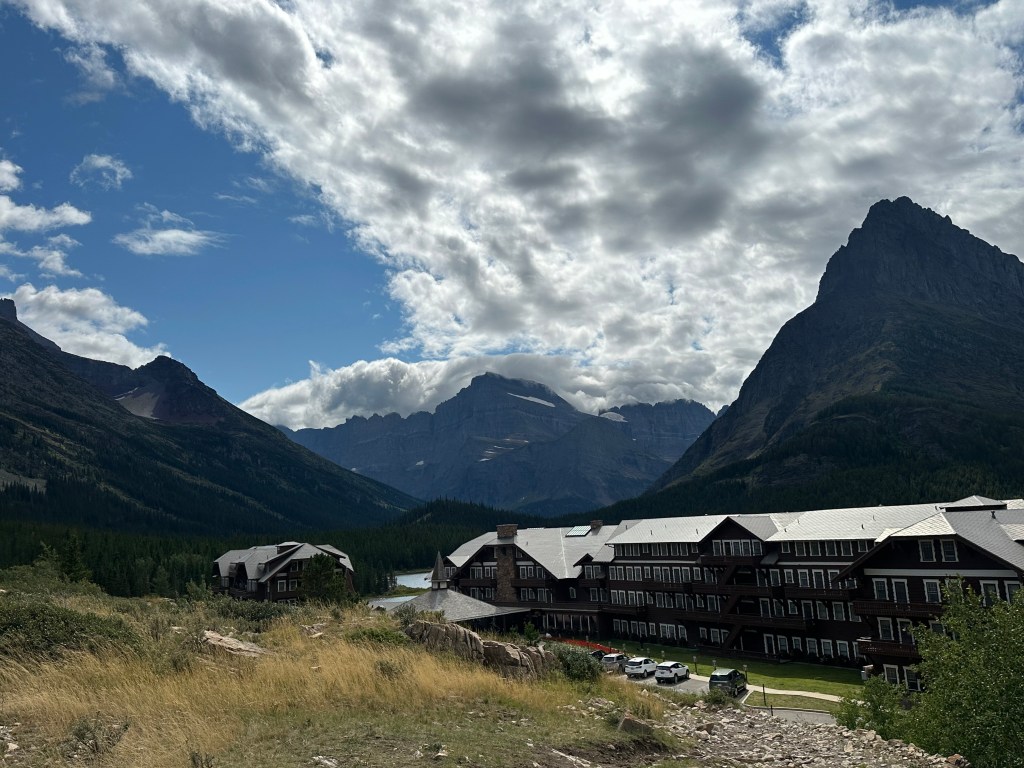
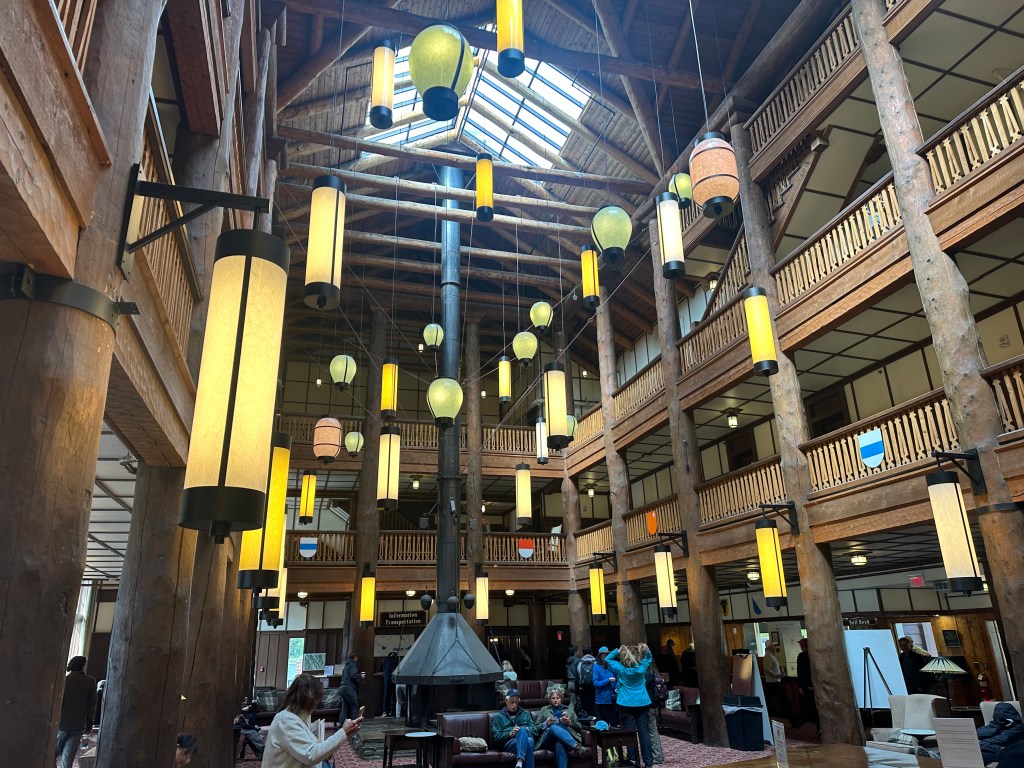

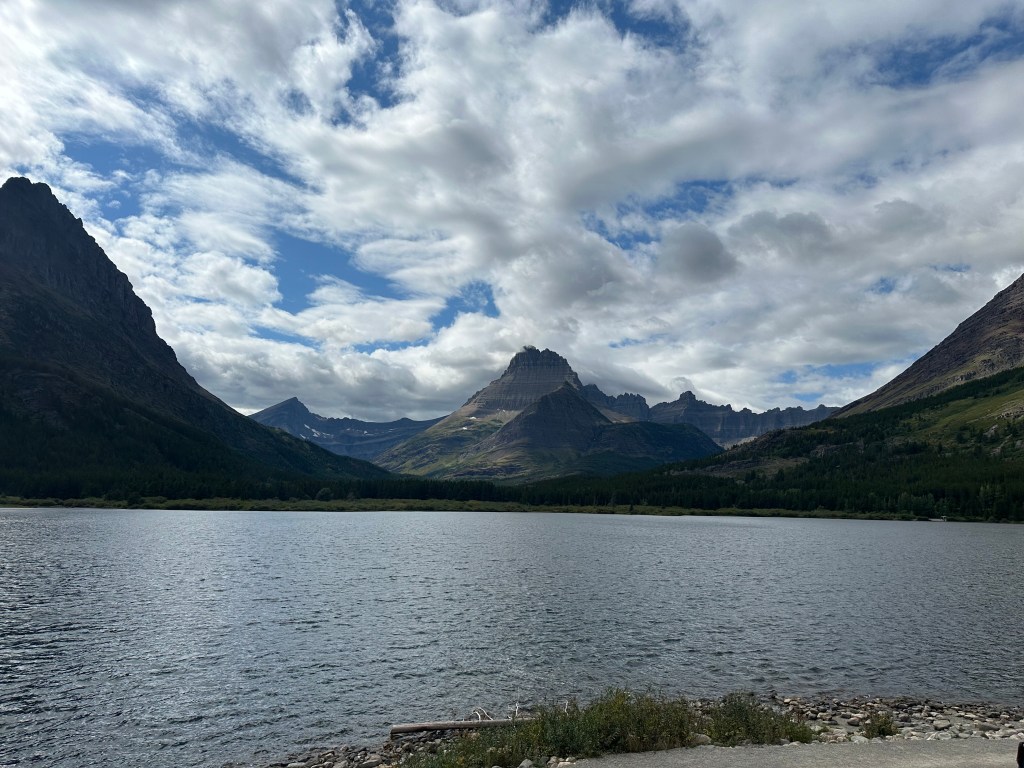
However, to proceed further requires undertaking one of several hikes, which go around the lake, up to Grinnell Glacier, or up one of several other lengthy trails. We had never the time, the planning, nor the inclination to take on any of these hikes. So instead we perused the lodge, exploring the gift shop and the lakeside areas.
GTTS Road – Part 2
Day 2 was the bus tour, which departed from Glacier Park Lodge in the village of East Glacier. Our campground is just outside West Glacier, meaning we had an hour drive in the morning around the outside of the southern border of the park to get to the muster point. However, the Glacier Park Lodge is also very beautiful, similar to the Many Glacier Lodge but with a more traditional log-cabin architecture rather than the Swiss-Chalet style.
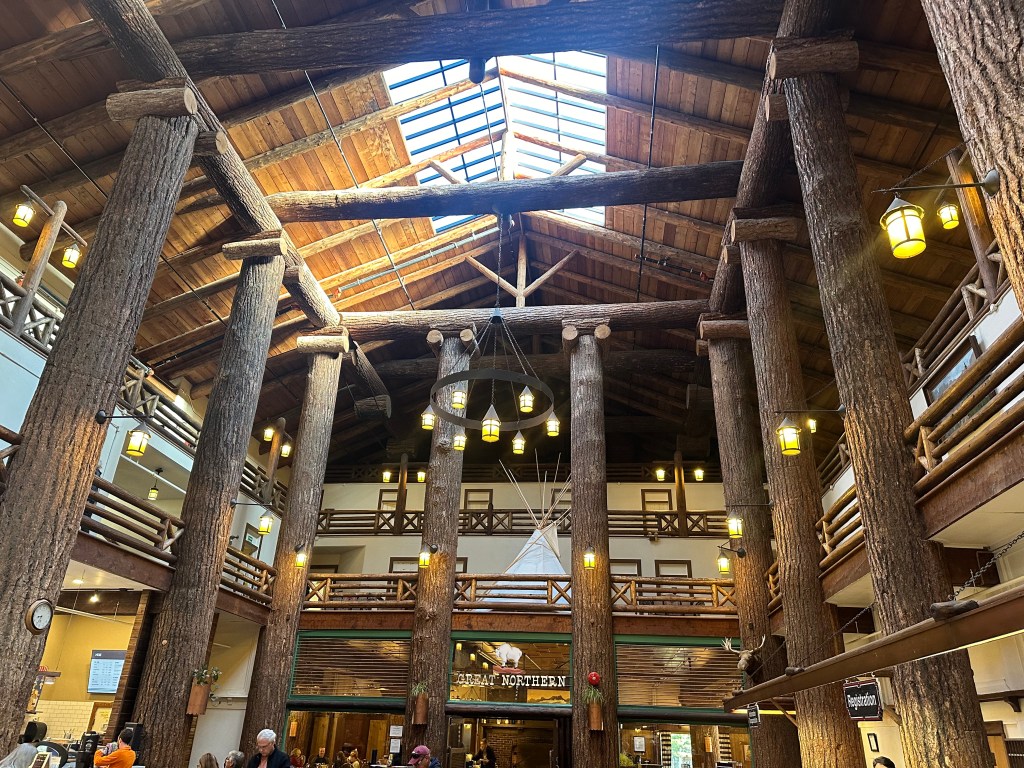
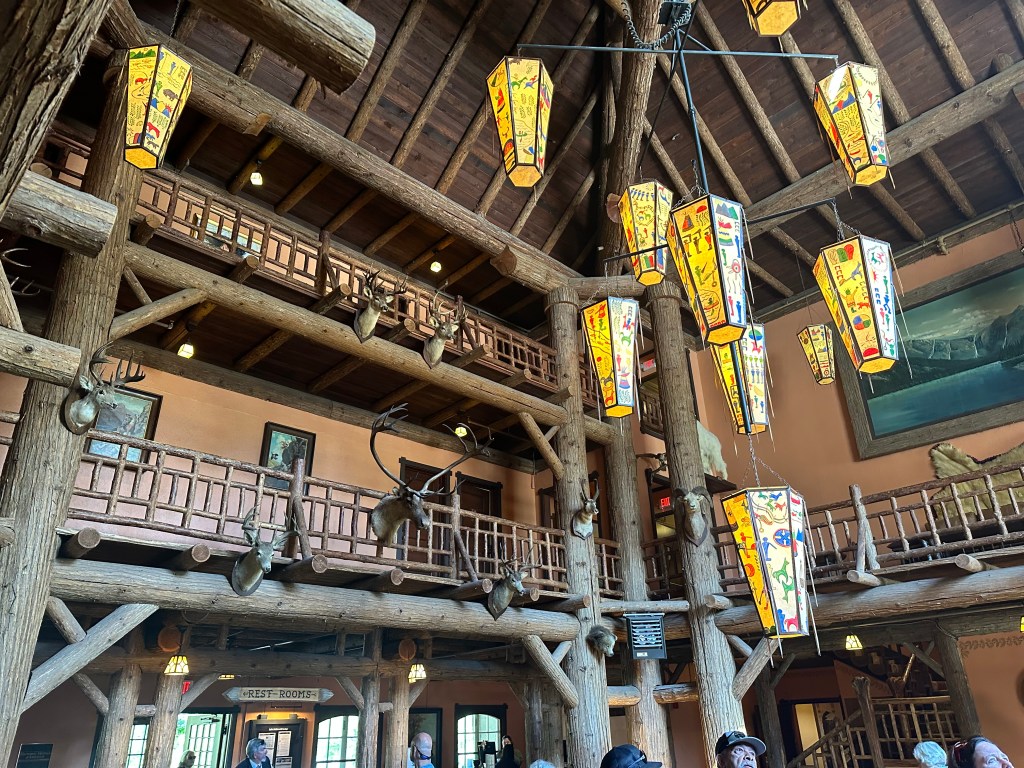
And our chariot awaited out front. The tour bus/van/thing is one amongst many identical vehicles built in the 1930s specifically for the national parks. Today, the body and interior remain the same, but the frame and drivetrain have been updated periodically over the years. The result is a reliable and purpose-built touring vehicle that has a very distinctive retro style and a convertible roof for sightseeing along the journey.
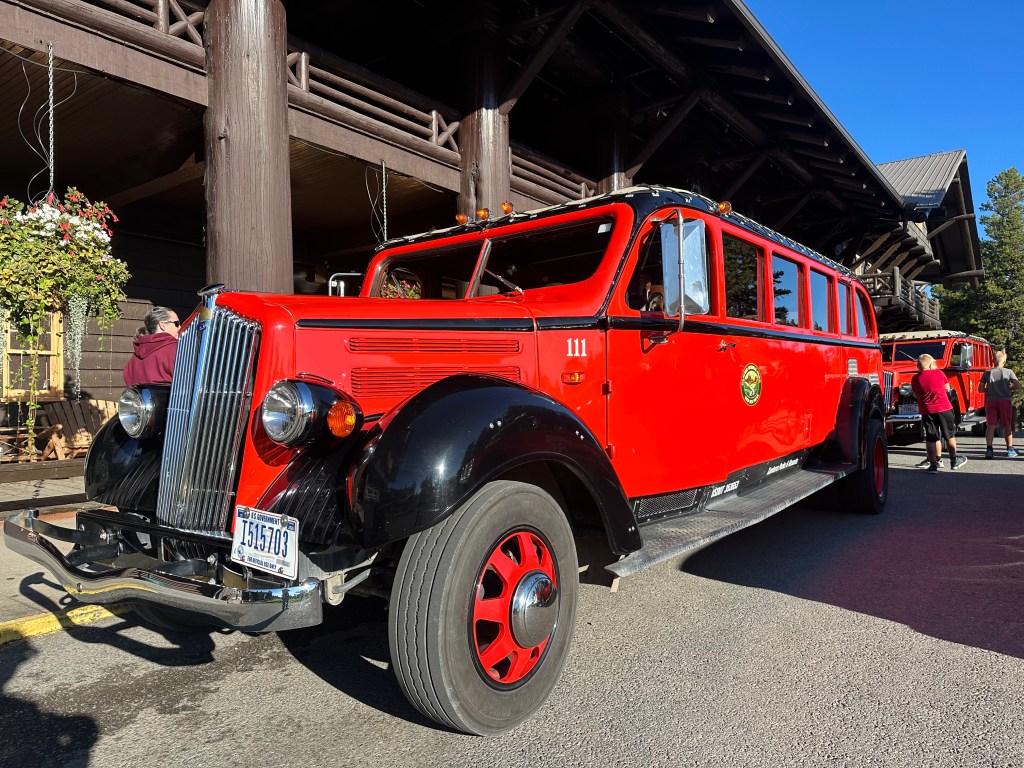
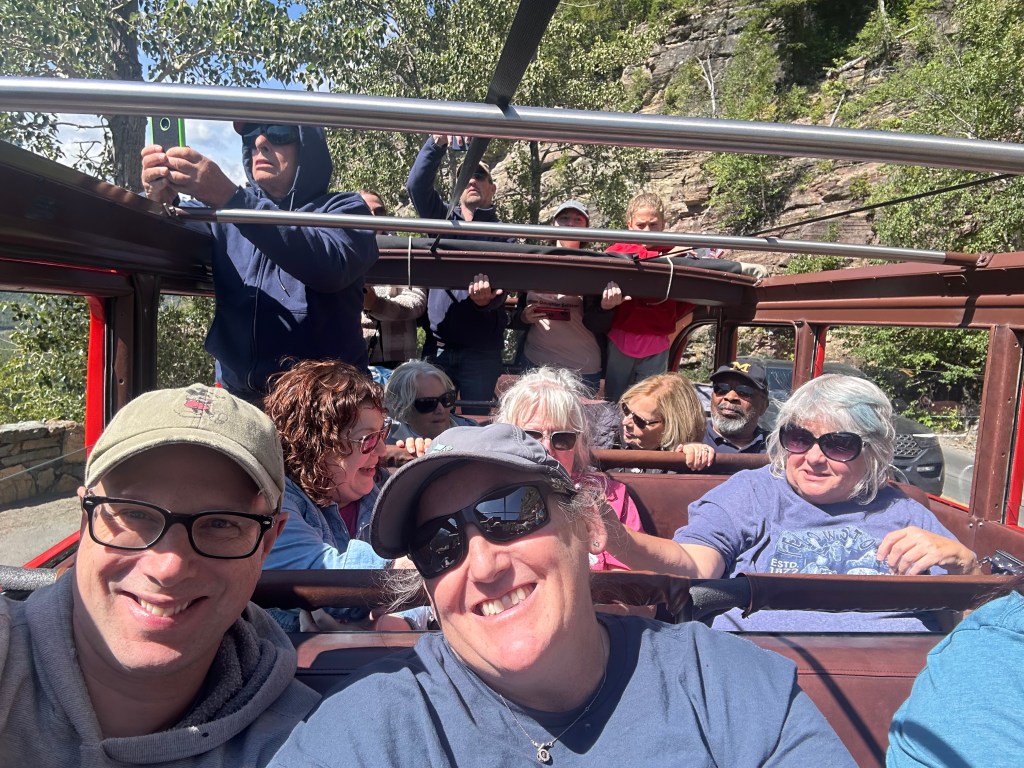
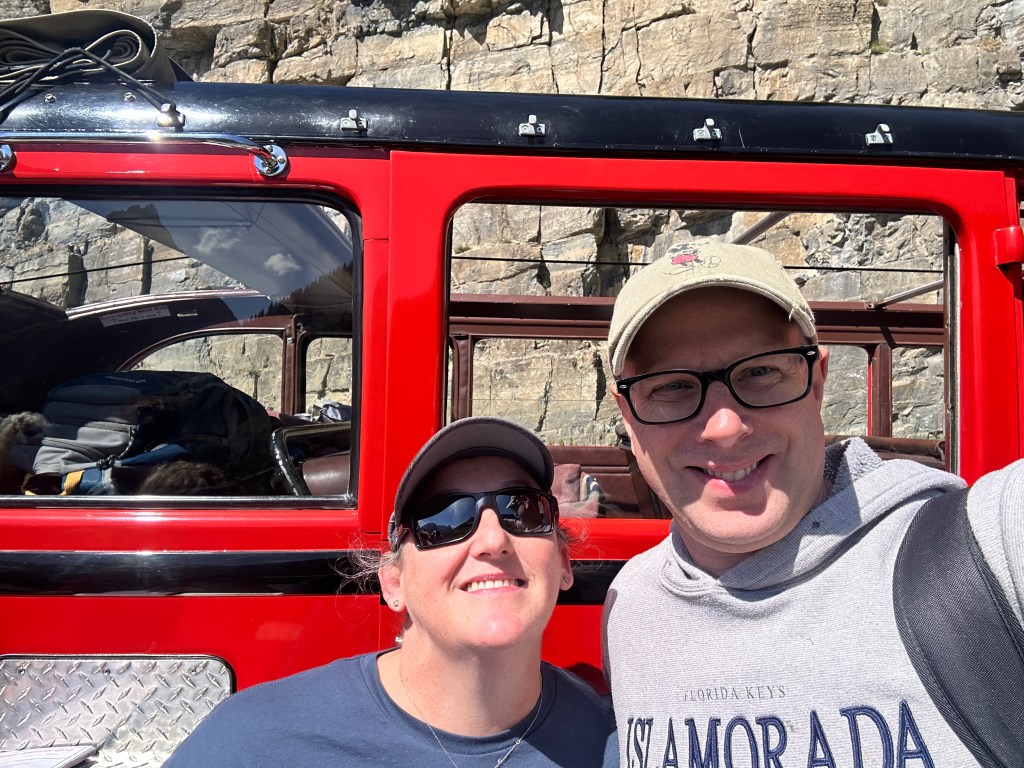
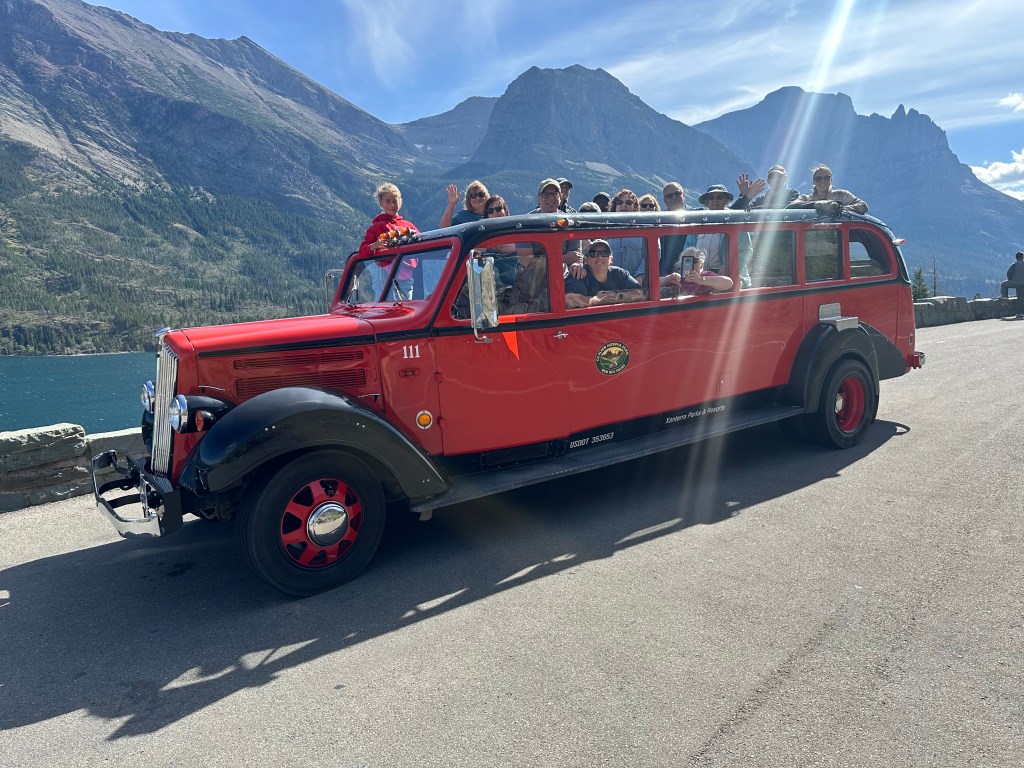
Video is part of the GTTS Road with our tour guide Stephen, doing his level best not to allow his personal opinions on climate change to creep into the commentary…. We are so very grateful to have signed up for this tour. It really allowed for a more relaxed and enjoyable travel across the GTTS, without any of the angst that attended navigating the narrow roads the day before.
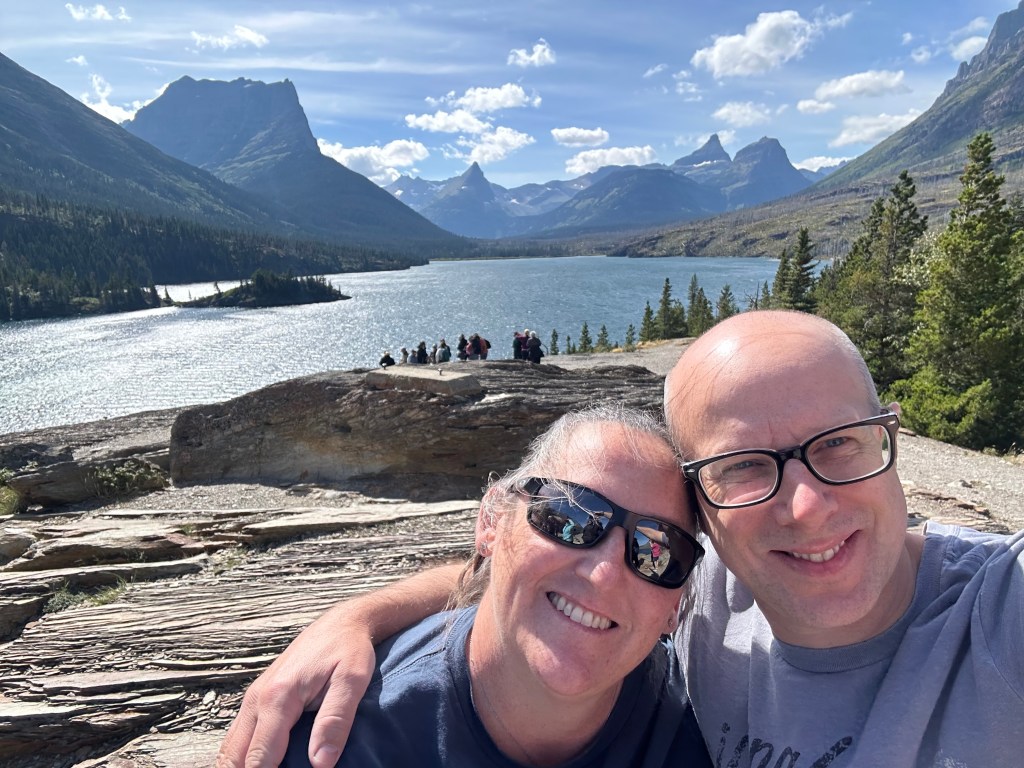
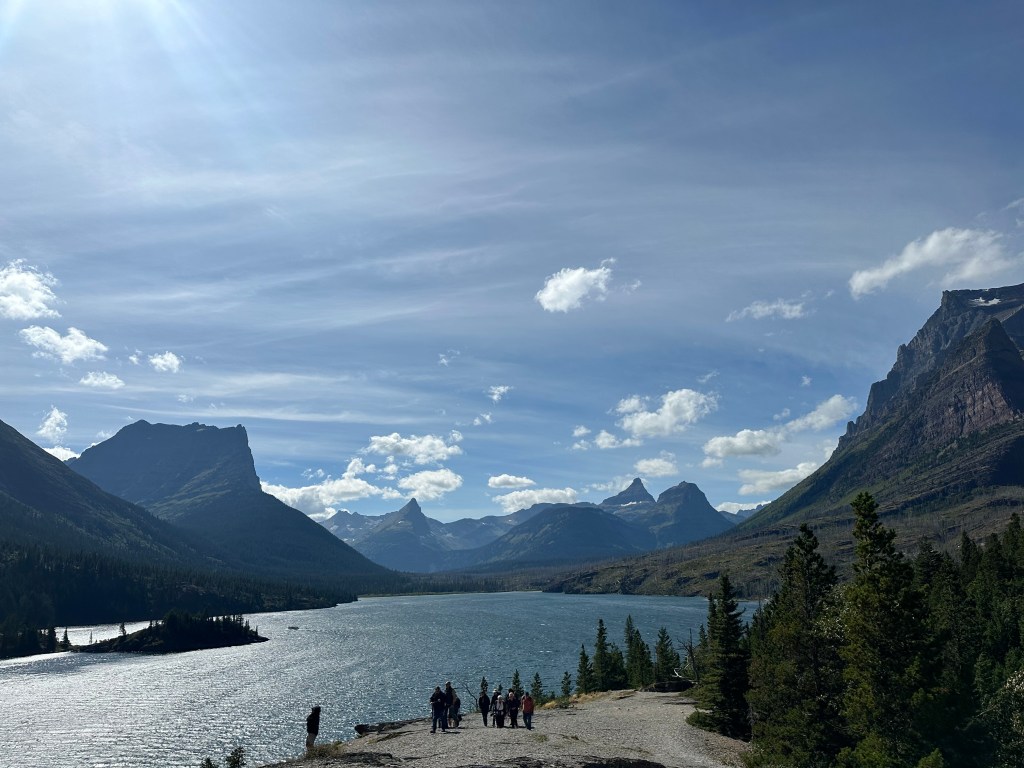
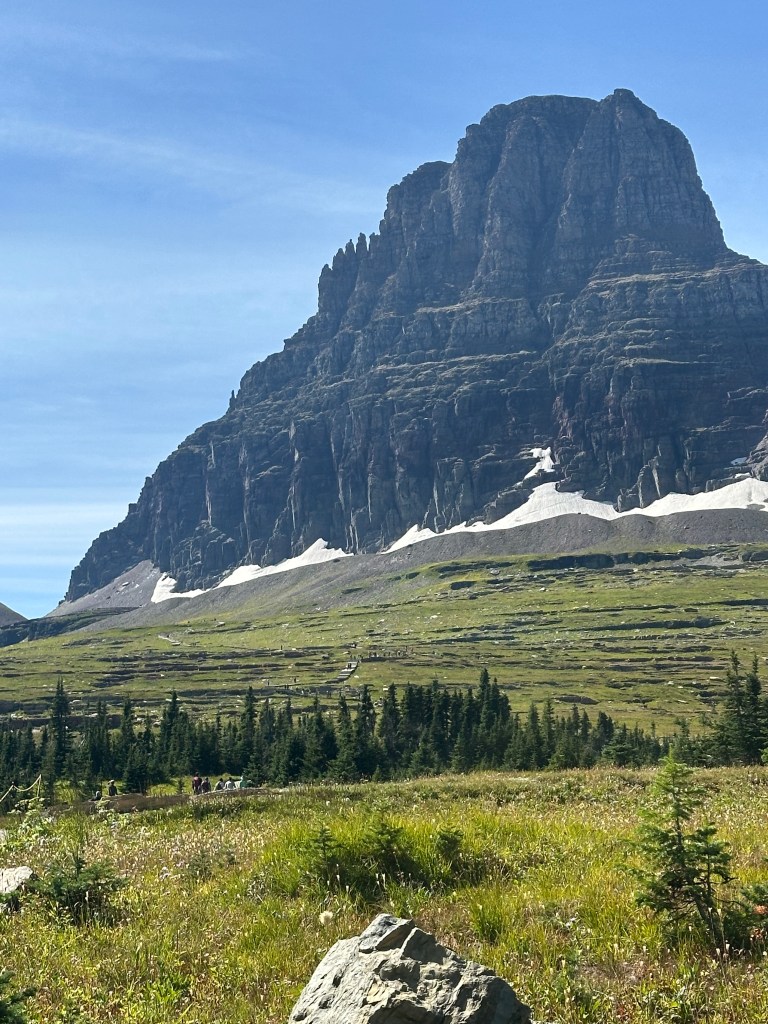
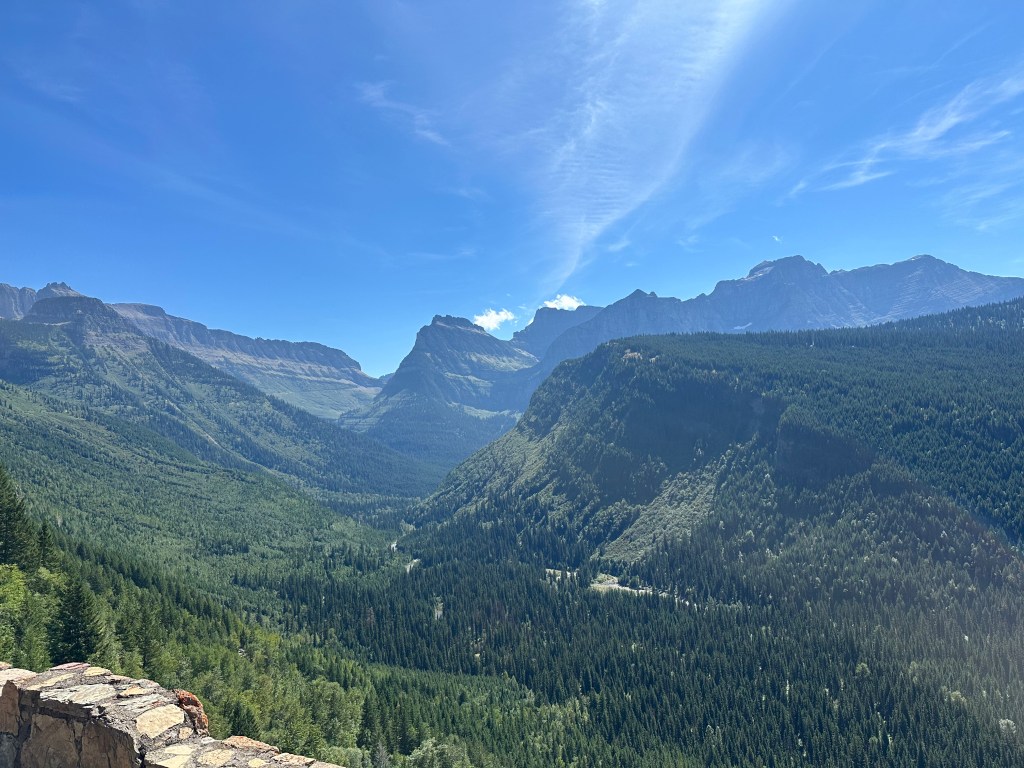

This squirrel at Logan Pass was the loudest little thing. Egregious Lack of Animals
One of the draws about Glacier for Micki and I was the prospect of animal spotting. We are long-time visitors and fans of Yellowstone, which is overrun with bison, deer, elk, and many other animals. Over the years, we have seen moose, bear, beavers, coyotes, and birds. So this trip to Glacier – a park that borders Canada and straddles the Rocky Mountains – gave rise to hope of seeing similar large animals, including goats, moose, and bear.
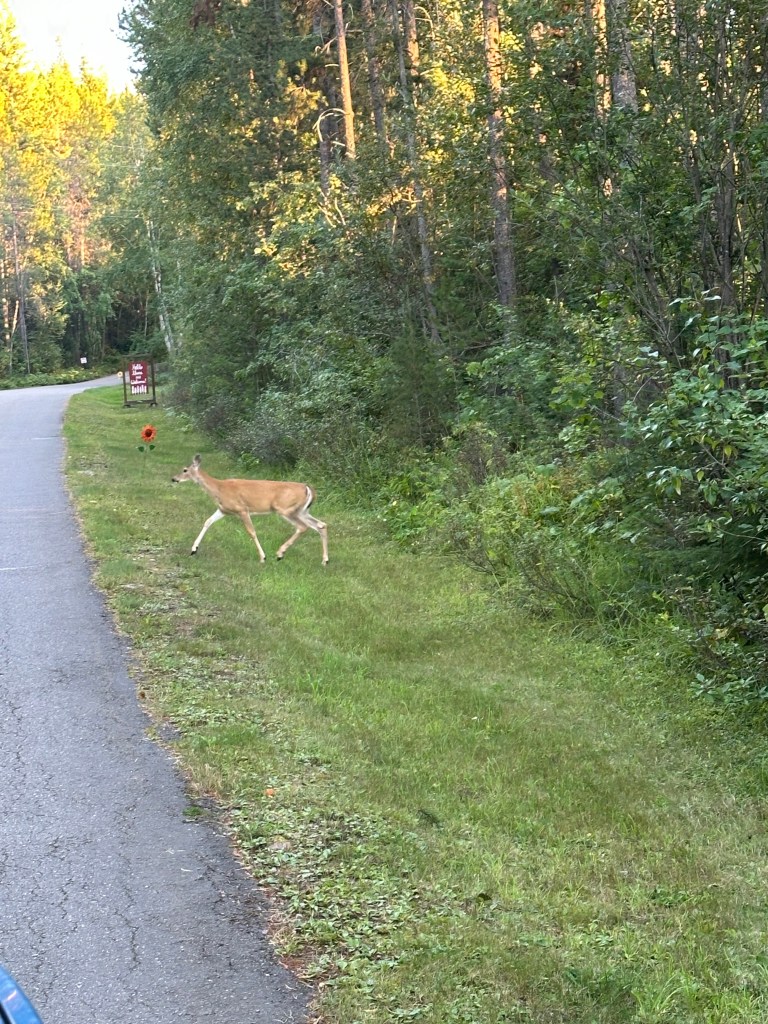
But we’ve seen nothing except a few cattle in the fields outside the park, a fiew small forest rodents, and a couple of dogs running free from homes along the road. Only this evening did we finally see one deer, but rather than in the park, this deer was in the entryway to our campground.
Where’s Bella?
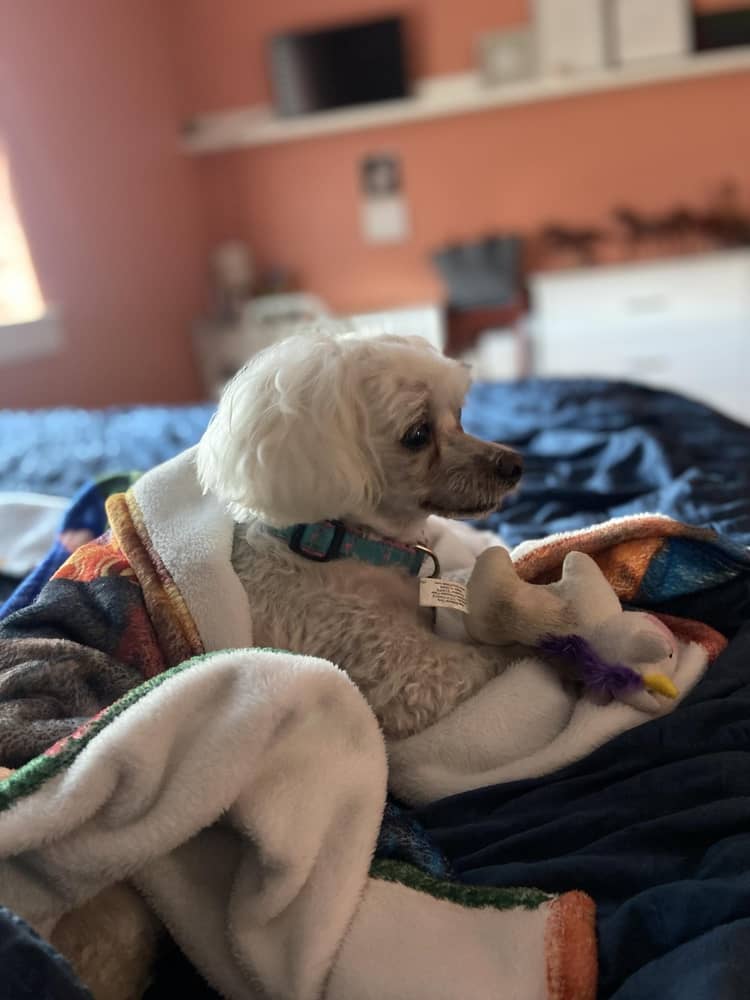
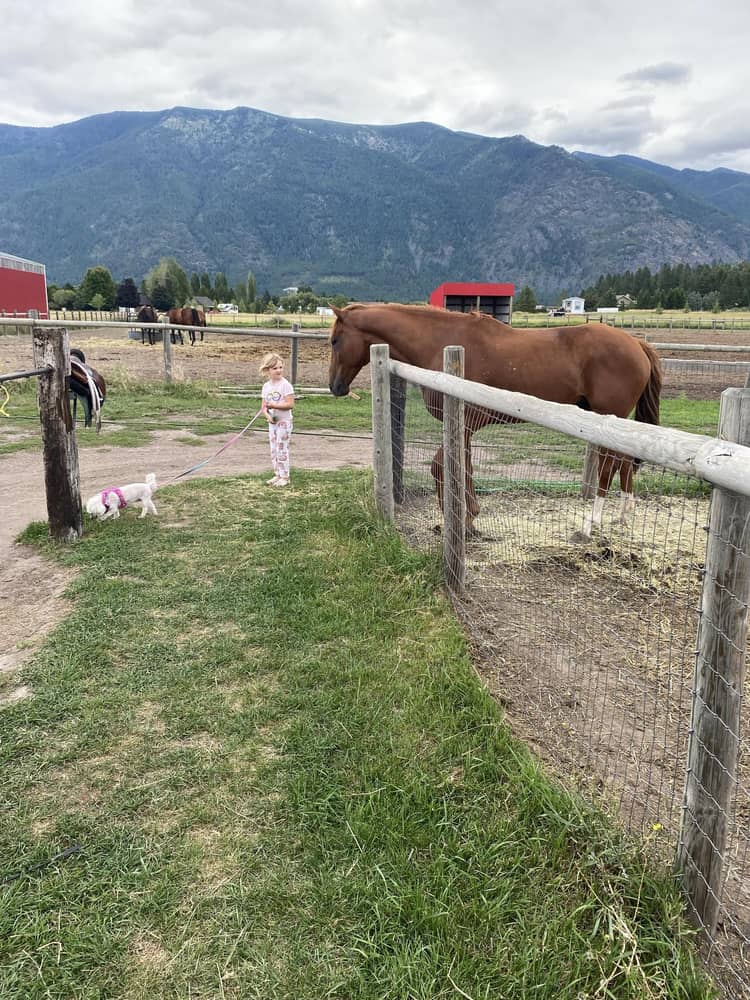
No dogs allowed in Glacier, and we obviously planned on long days away from the trailer. So used an app called ROVER and found a local family willing to dog sit at their home. Bella was spoiled rotten for these two days.
-
The First Step of 2024’s Big Trip!
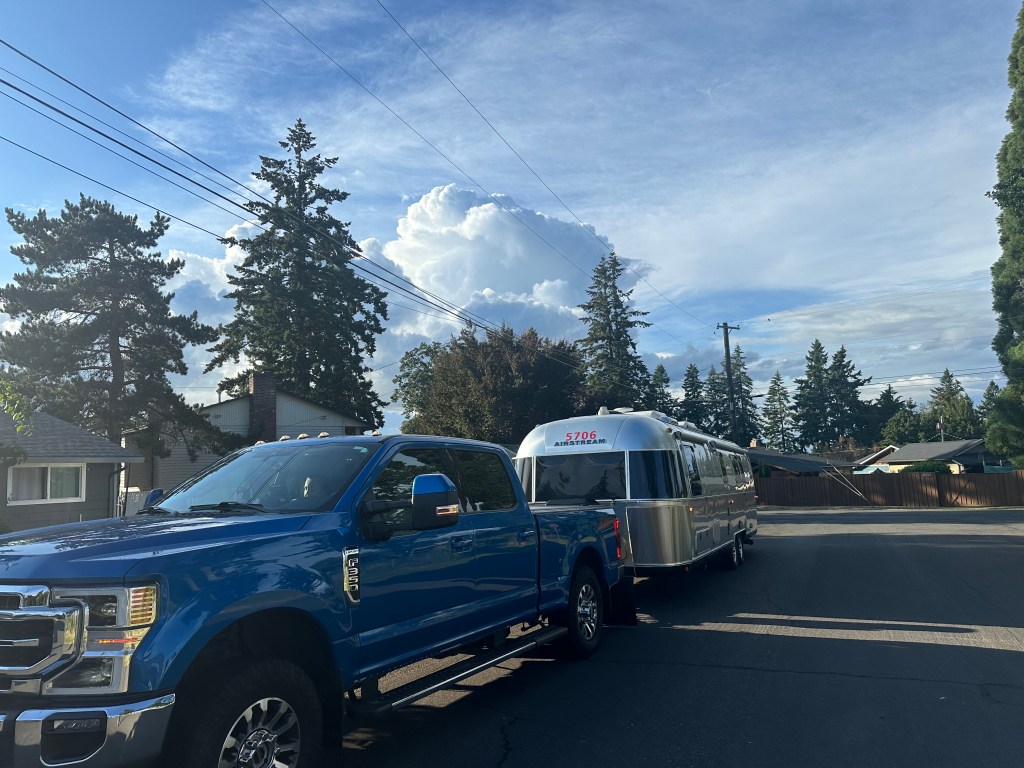
The Mouse House is loose!! Our 2024 big trip is officially under way.
Micki spent all year planning, I’ve spent the last month tinkering with the electrical system, and we both have spent the last week packing the truck and trailer. Friday we rolled out, headed east.
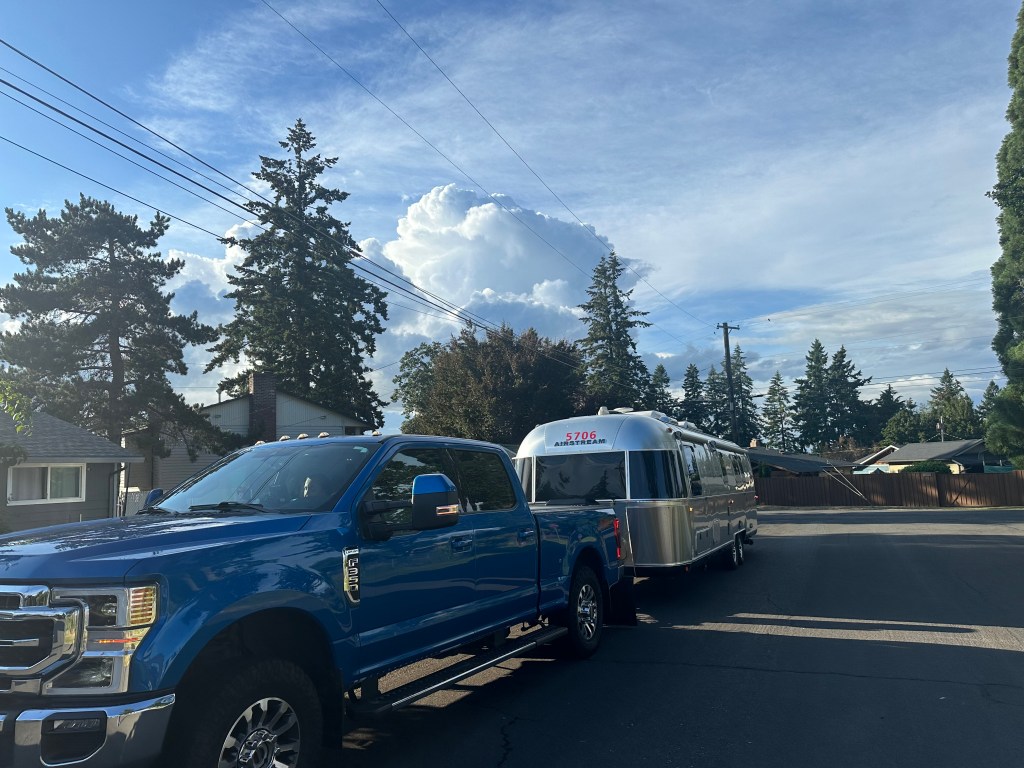
The trip is something of a combination affair, mostly centered around a slow roll down the old Route 66 from Chicago to LA, but will also involve a half dozen national parks on the way east to Chicago, another International Airstream rally, and a Halloween stint in Disneyland.
The first big stop is an actual vacation in Glacier National Park. Most of the time I work full time in the trailer, forcing us to travel short trips early in the morning then spend days in random parking lots for the sake of working in the trailer. But this week is a true vacation. I’ll work only gently, mostly just catching up on emails in the early mornings as necessary. We’re excited.
This is not our first big trip. Last year we did a 2½ -month trip to Florida and back. We entertain a mild self-delusion that we should be veterans of such long voyages, holding our chins up and chests forward, blasting ahead fearless into the road life for long stints away from our home. Somehow that wasn’t how we felt driving away. We had just hugged our kids goodbye – them back to college and us toward life on the road – and pulled away slowly, sorting out a variety of strangely mixed emotions. We felt neither proud nor fearless, but somehow still determined to accept the challenge issued by our former selves.
The first short leg of the longer trip was only from the Portland metro area to Tri-Cities, roughly 3½ hours away. I worked all day Friday, so we departed after dinner, and arrived in Tri-Cities well after dark. We stayed in the driveway of a very gracious friend and fellow Airstreamer, turning in for the night only after hanging out over a nightcap.
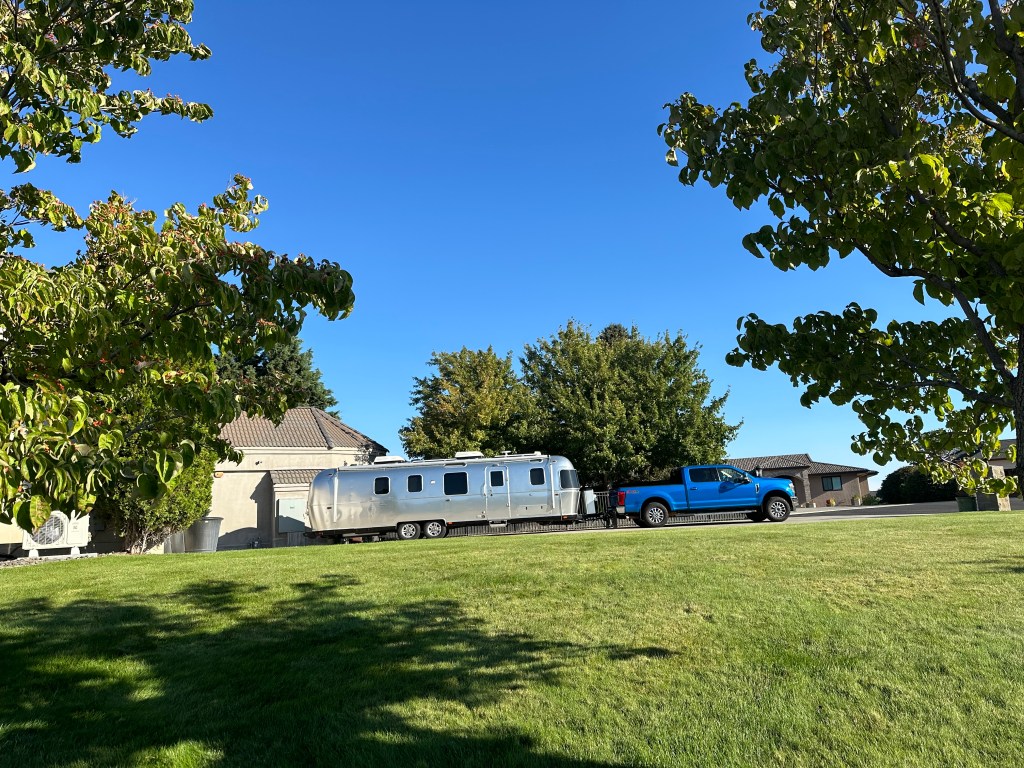
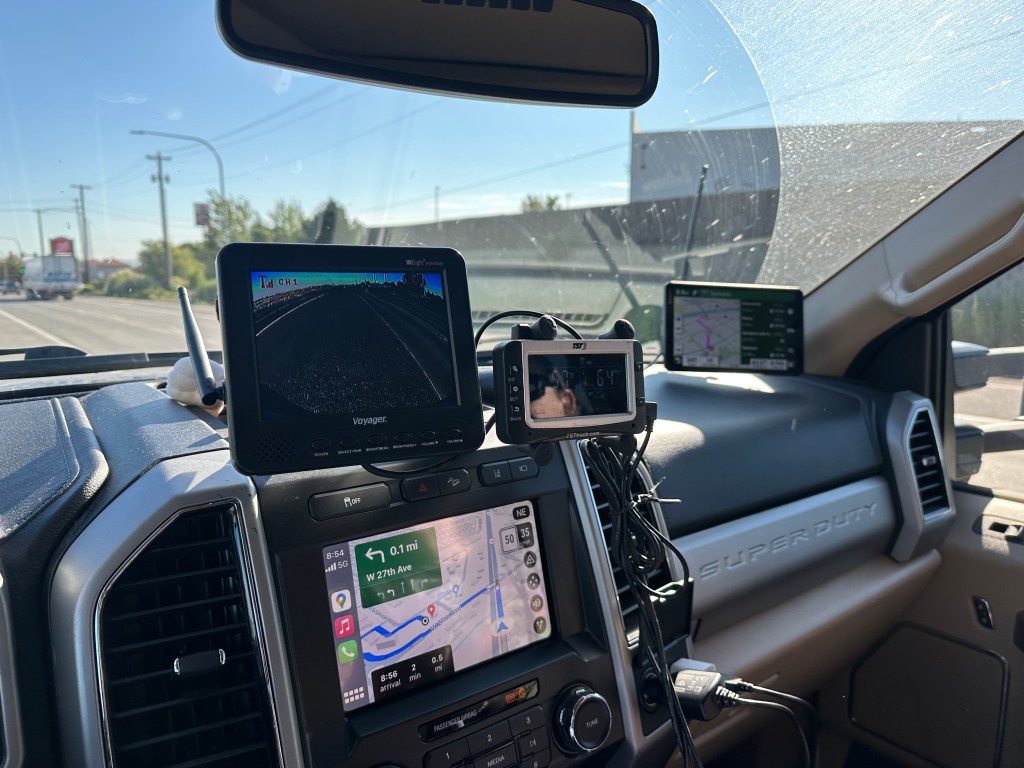
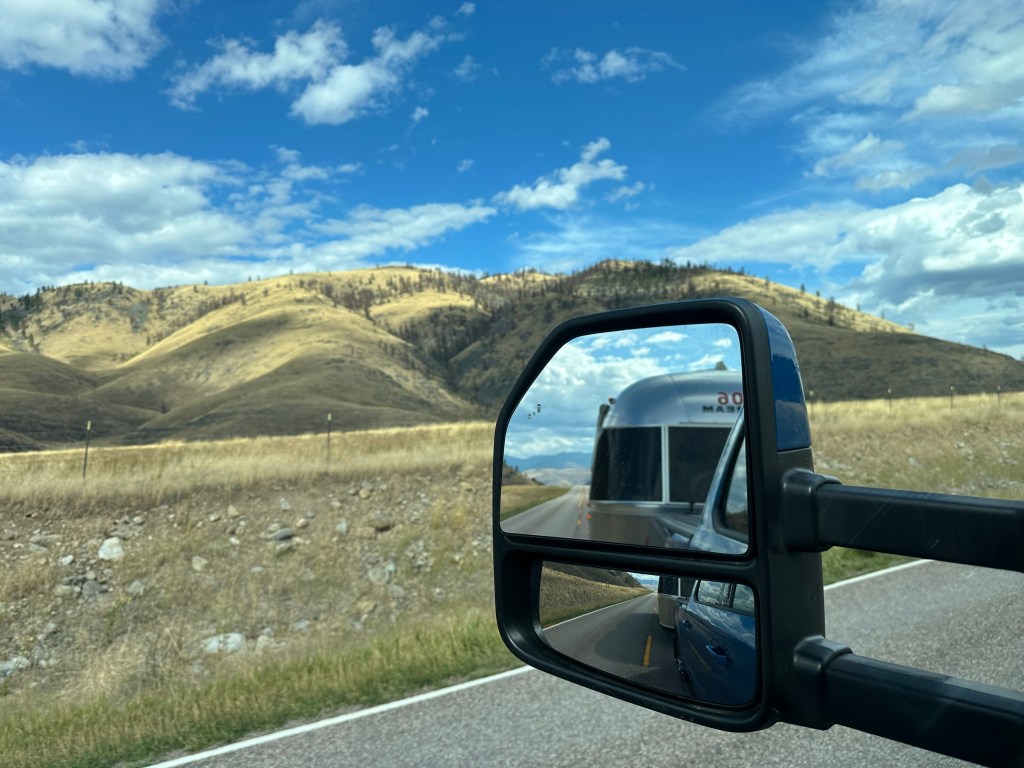
Saturday’s travel took us from Tri-Cities all the way to the West entrance of Glacier National Park, and the drive through northwest Montana was beautiful as expected. Of course we set up all the goofy travel tech in the truck – the rear-view camera monitor, the TPMS monitor, and the Garmin for RVs – each of which adds comfort in its own way.
We’ve driven through Montana and Wyoming many times, and have come to expect the amazing scenery, but it is still very impressive.
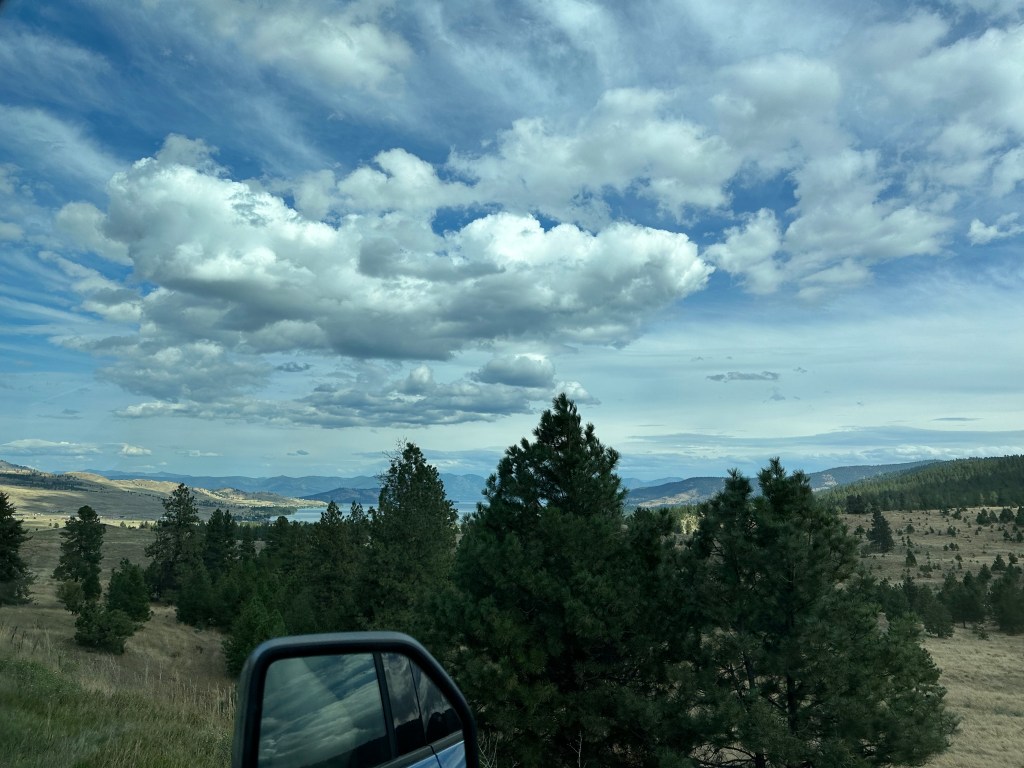
We were not prepared for the sheer size of Flathead Lake, and the road circling the lake offered incredible panoramas.
Now we find ourselves set up at a quaint wooded campground near West Glacier, ready to take in Glacier National Park over the next five days.
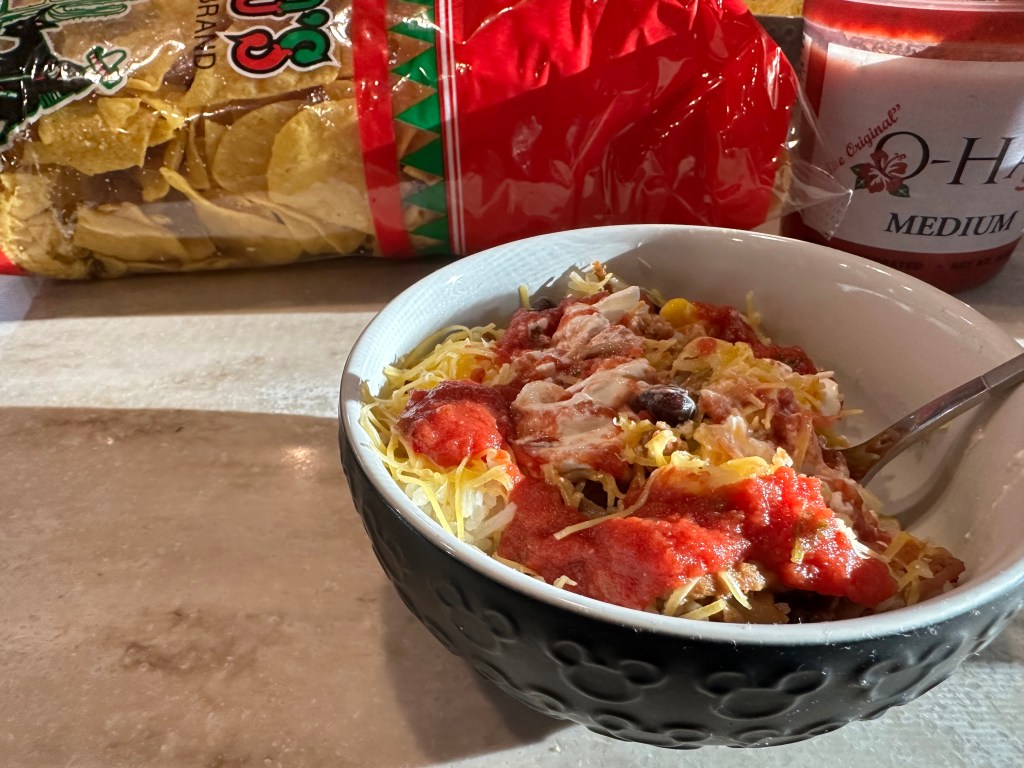
Micki made pulled pork rice bowls for dinner, and of course we brought some special ingredients that can only be had in the Northwest.
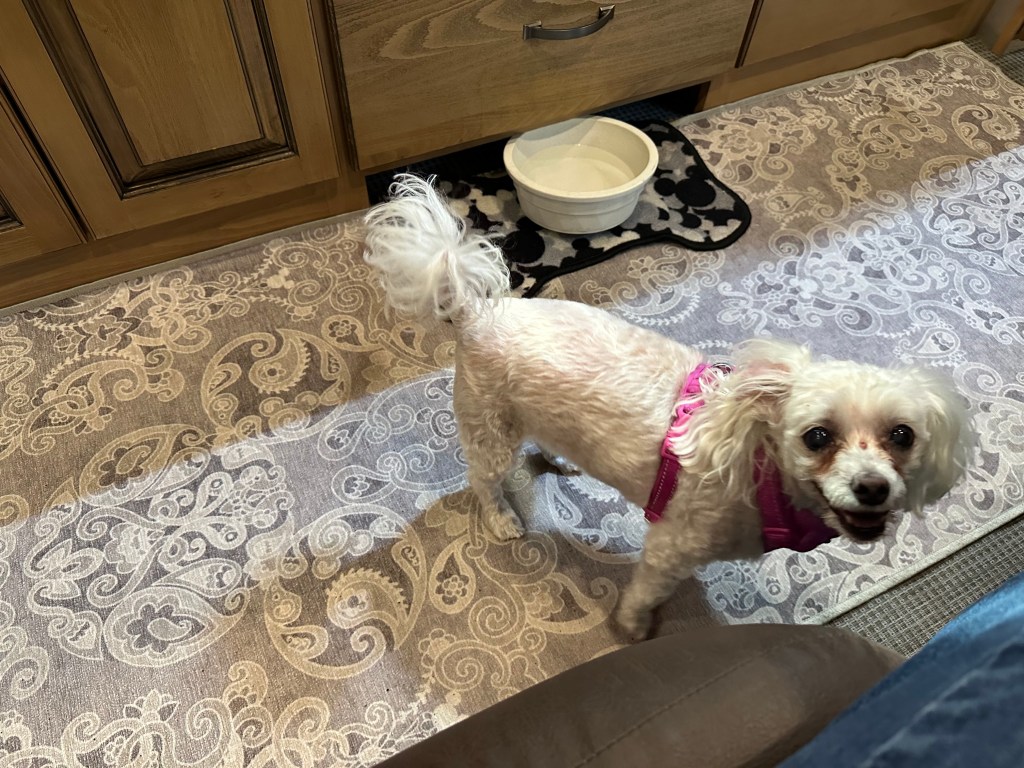
Bella expressed a bit of jealousy, but we can tell she’s excited for the travel. So are we!
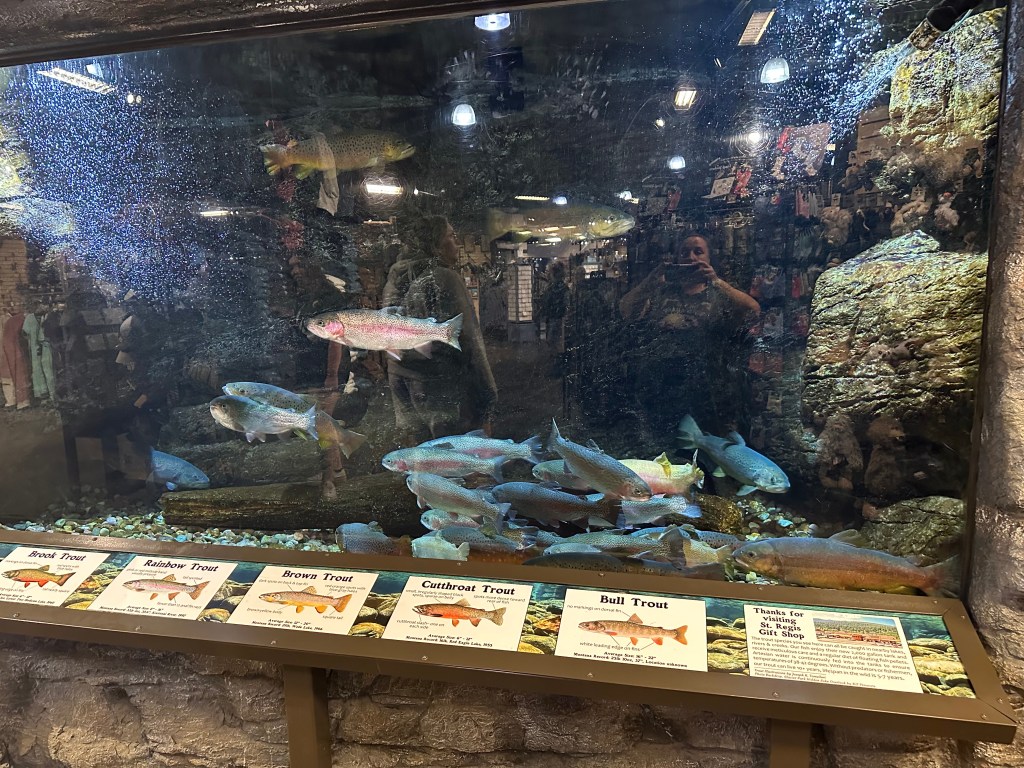
The Fish Place
IYKYK
-
Cultists Unite! Seaperch Airstream Rally 2024
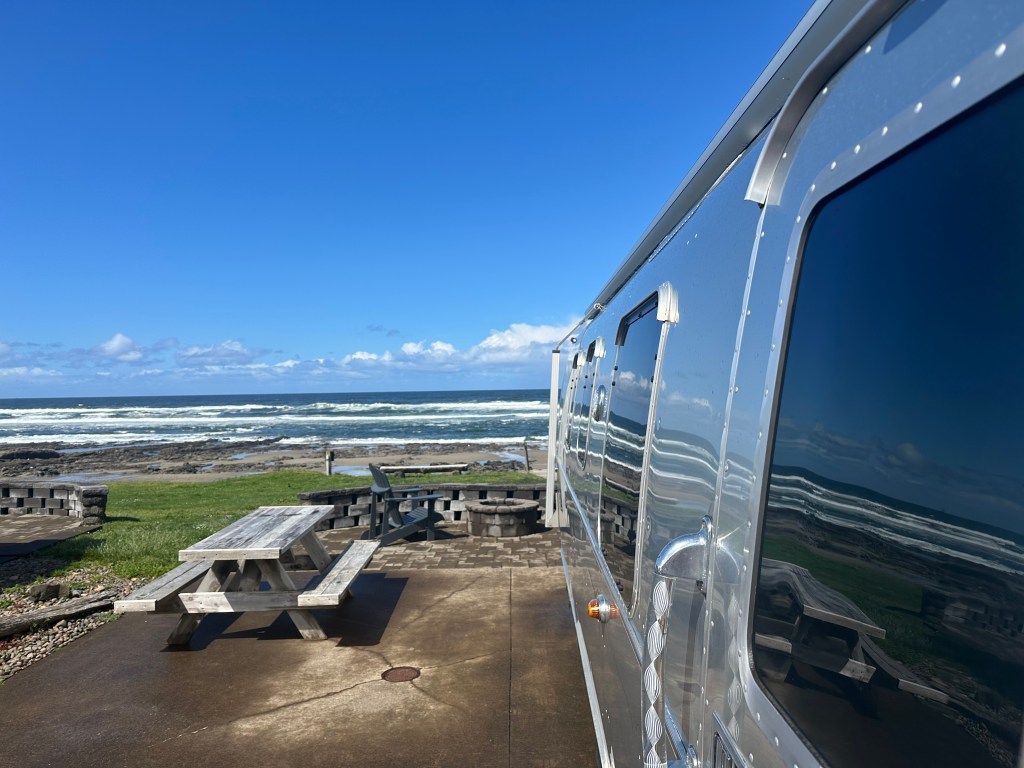
It’s not a cult, but it’s not entirely not a cult.
We are members of the Oregon chapter of the Airstream Club International, which means we hang out with plenty of other Airstream owners who are equally as proud of their travel trailers, sometimes more. At the member breakfasts we share travel stories, tips, warnings, cautionary tales, and future plans. We also conspire toward camping trips together, wherein half the campground is occupied by those pretentious silver tubes.
Most of us are aware of the objectively self-congratulatory nature of such a club, and this cultish kitsch represents much of the charm for us. We chide ourselves the way others chide vegans: “How do you know someone’s an Airstreamer? Don’t worry, they’ll tell you.” This phenomenon is made worse by the club’s focus on gathering ourselves and our trailers publicly. Indeed, the club motto is “We Rally Together,” which is a battle cry for Airstreamers to reinforce amongst ourselves with joy of ownership (lest any members forget momentarily). The Oregon chapter has 40 formal rally events planned across Oregon and SW Washington planned for 2024. Yes 40.
When speaking to our kids and other family members, we have stopped referring to the Airstream club by any of its proper names. Rather, we use the shorthand reference word “cult.” The monthly Saturday morning gatherings are “cult breakfasts,” the group camping events are “cult rallies,” and other club members are “fellow cultists.” No need for a wink or a chuckle or a clarification; we all know what we mean. It’s not so much humor as it is diffusive euphemism. By explicitly calling it a cult, we affirm that it’s not actually a cult but we know how it looks. Perhaps this is self-delusion. Either way, that’s where we stand.
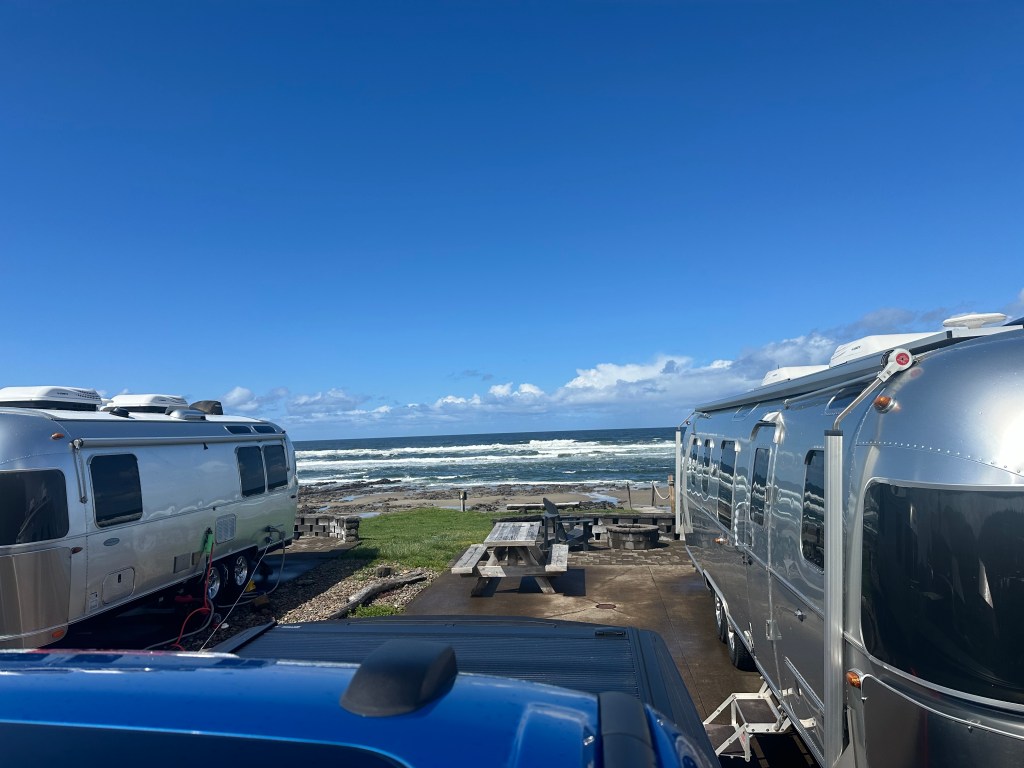
We have signed up for six cult rallies for 2024, so brace yourselves for pictures of Airstreams gathered in flocks. Our first cult rally was spent backed up directly to the Pacific Ocean. That’s us in the middle.
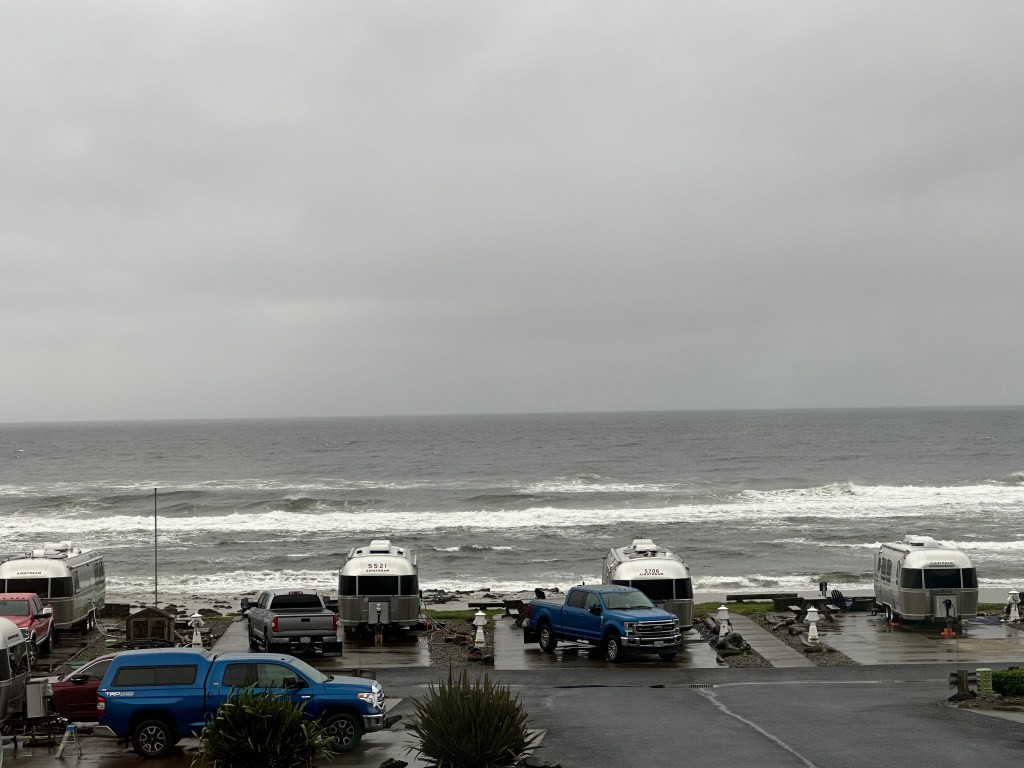
The Seaperch Rally is so named because it occurs at the Seaperch RV Resort just south of Yachats, Oregon. This particular rally has been occurring annually for several decades and is typically one of the most difficult to secure a spot to attend. There’s actually some cult drama on this point that I won’t explain here, but it’s sufficient to note we were happy to secure a spot for this year.
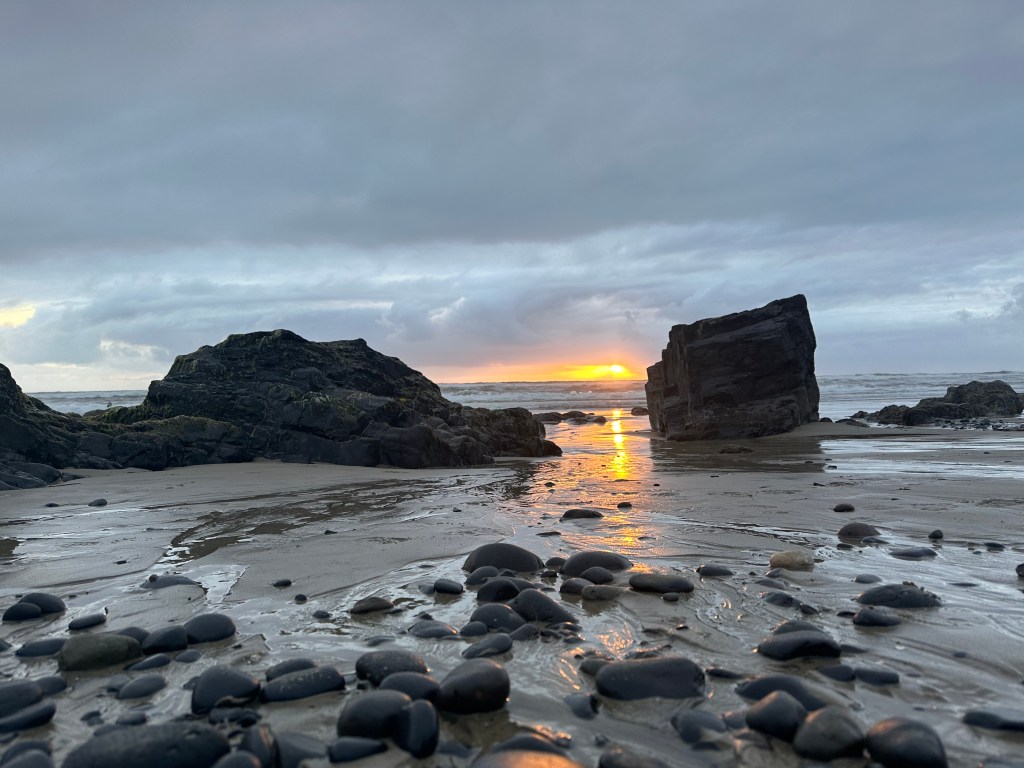
The ten best spots all back up directly to the beach, which make for a spectacular setting despite stormy weather. Forced time indoors waiting out rainstorms is always better when the view from inside the trailer is so engrossing.
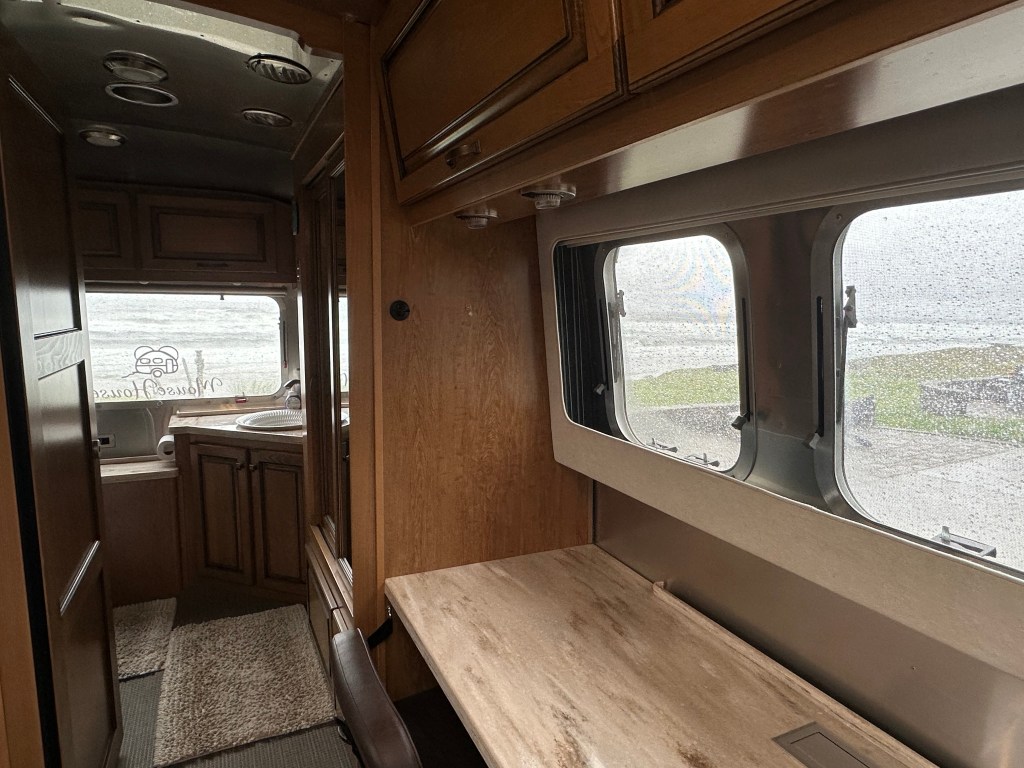
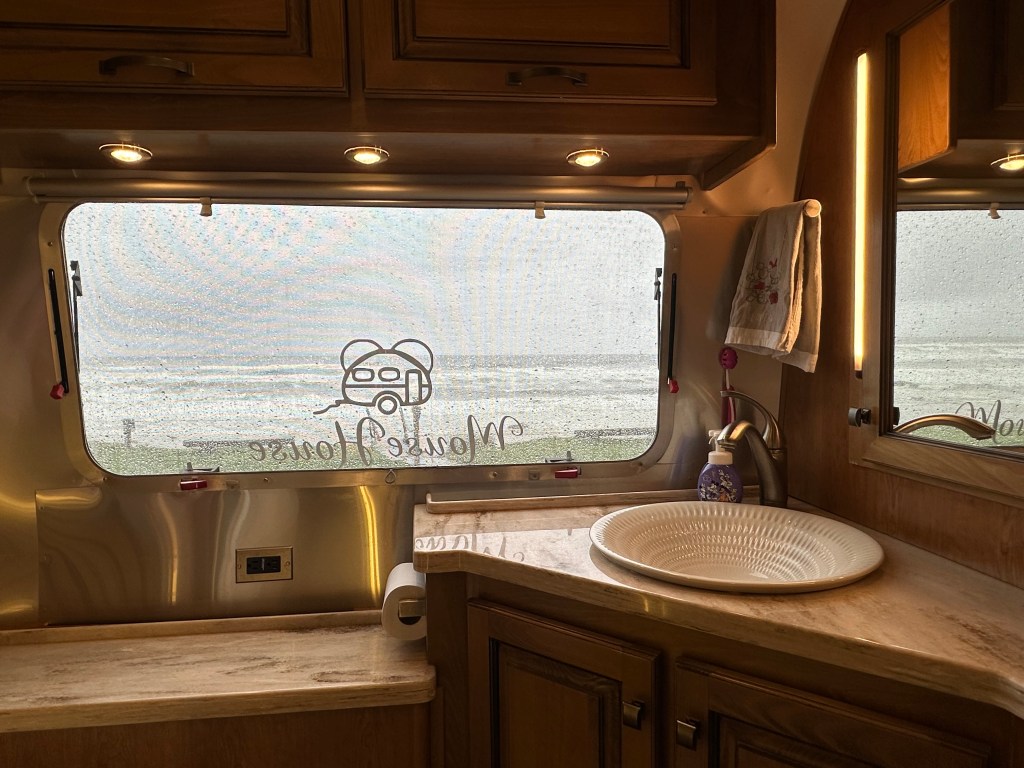
And during those time when the sun snuck through the wandering cloudlets, the effect was truly memorable. If life is an assemblage of moments on a playlist favoring the strongest and most recent, this will get some playtime for the foreseeable future.
The RV park itself is quite well done. The sites are all paved and mostly level – sloped just enough to drain – with full hookups and enough space to enjoy the setting. The sites along the ocean include Adirondack chairs and gas fire pits for easy relaxation.
This location also worked well for group gatherings because the clubhouse is comfortable, with a pool table, foosball table, a view loft, a gym area, and space to gather for dinner together. The beach also presented a nice space to build a fire near the ocean and enjoy the sunset.
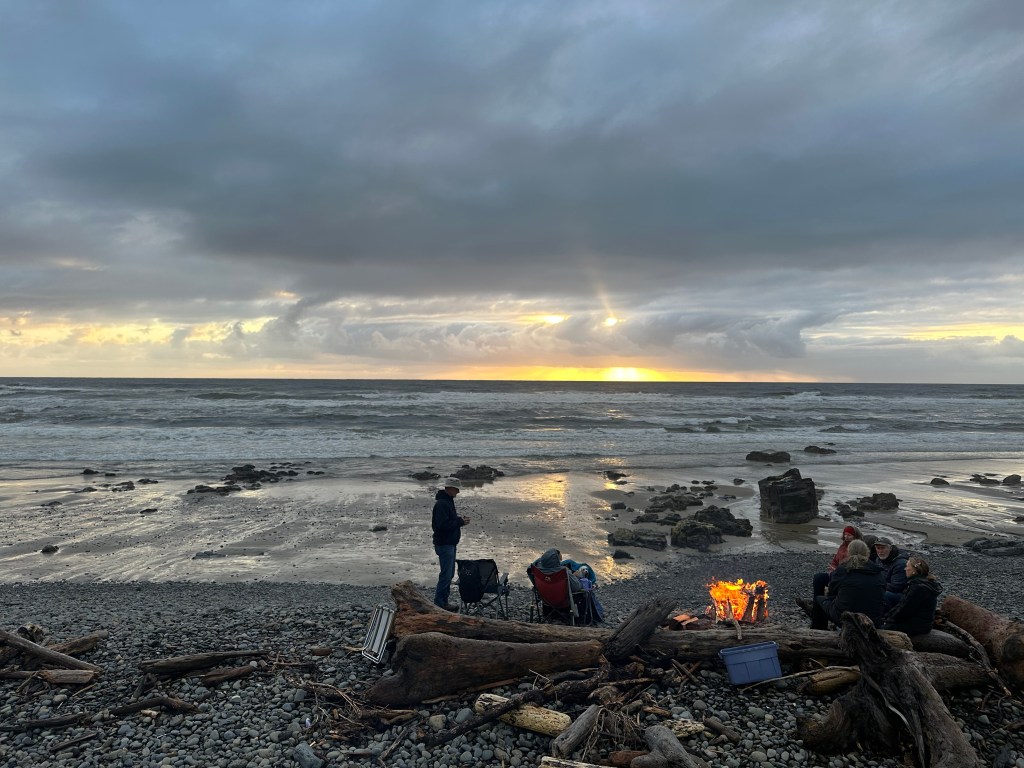
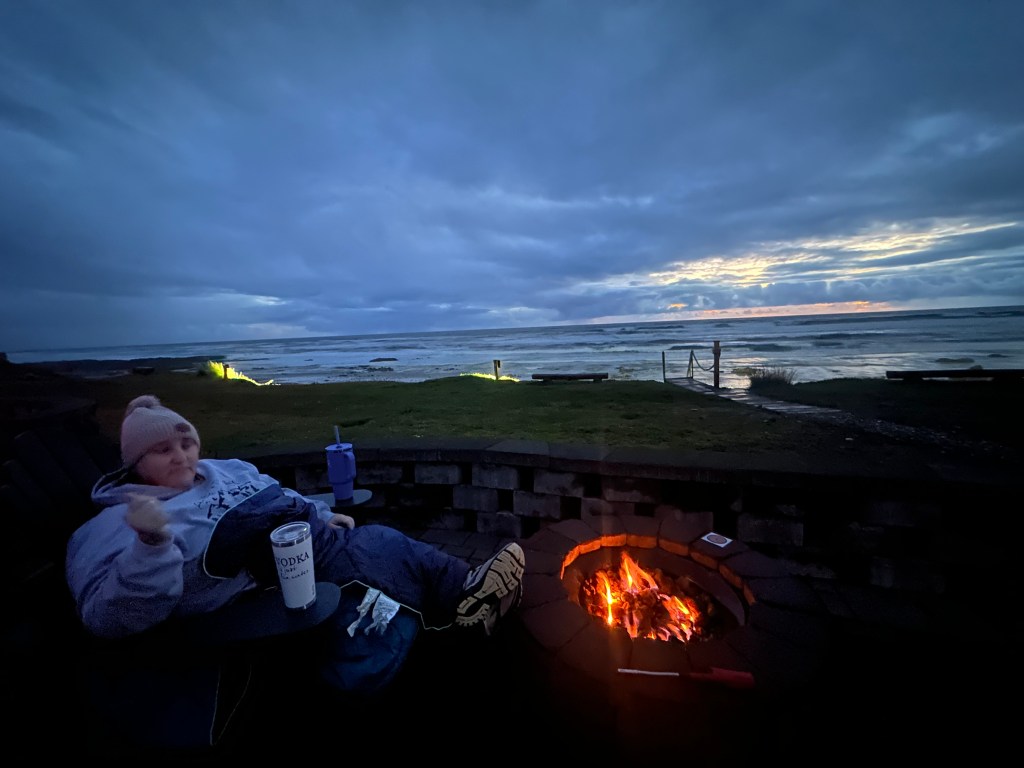
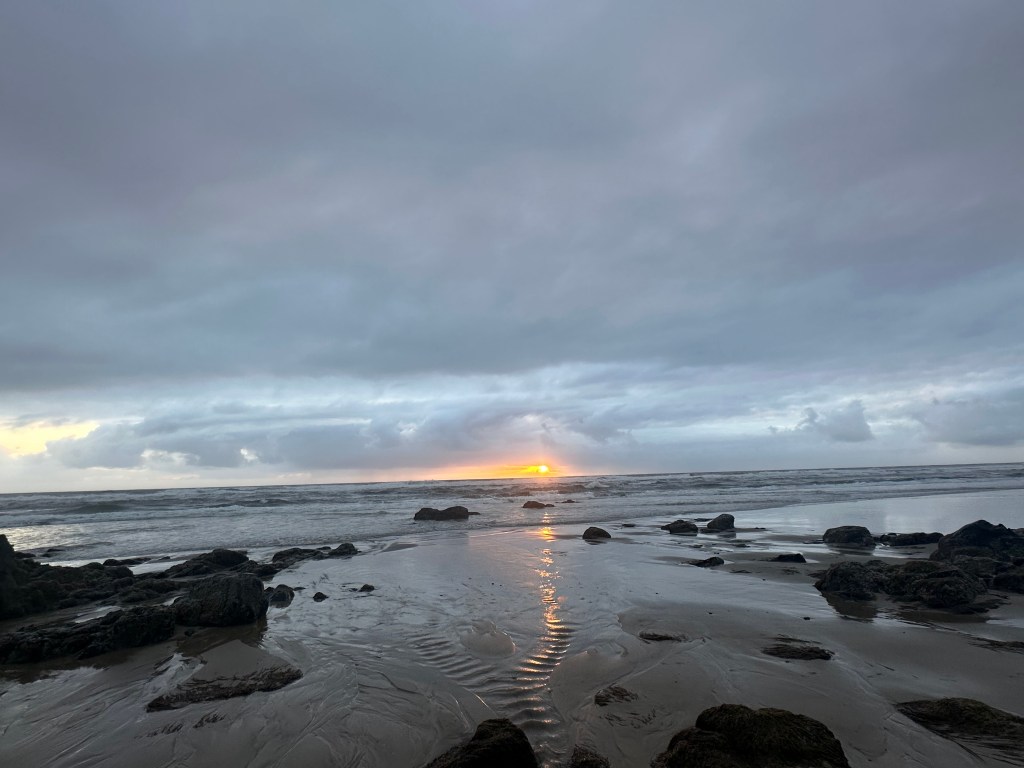
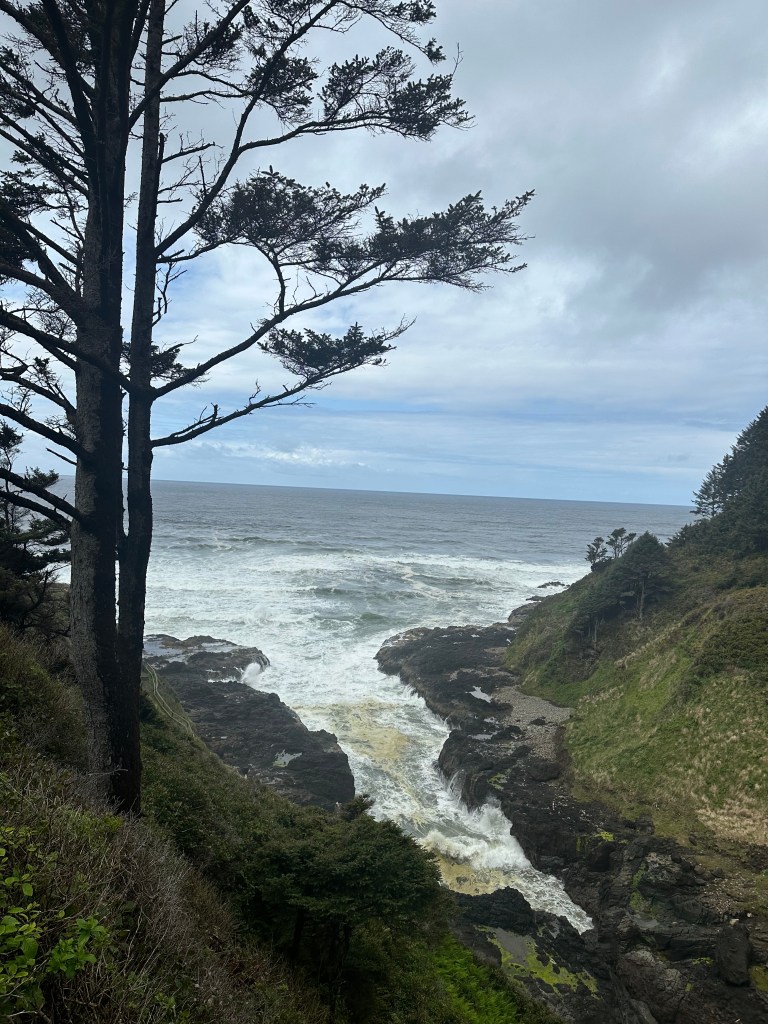
While in the vicinity, we visited Yachats for lunch and some grocery shopping, and on the way back we visited “Devils Churn,” a nearby wayside where the waves have cut deep into the cliffs, leaving an opportunity to see waves crashing up close but still safely above any danger.
All-in-all, it was a great weekend. If you had to pick a cult, you could do worse than the Airstreamers.
-
2024 Adventures
First an apology because I’ve slacked on these posts. The reasons are several, as are the motivations to write these entries, both of which will likely be the subject of a future post. But I do have partial entries for several of the adventures last year that followed our big Florida trip, so I’ll try to post those with appropriate dates when they occurred last year. So look for those in the near future, but I’ll set that aside for, and give you a preview of this year’s adventures.
Route 66!
Our big trip this year centers on the old Route 66 from Chicago to Los Angeles, and we’re pretty excited. This trip is classic Americana, and is littered with stereotypical and random roadside attractions. Not much of the original roadway exists, but there are many areas where the random trinketry has been preserved for the sake of nostalgia. We’re happy to have the opportunity take in as many of these little attractions as possible.
The entire trip will take us north across I-90 to Chicago, then down Route 66 to Los Angeles, then north up I-5 back home. However, much will happen along that big loop. First, along the northern portion, we plan to visit Glacier National Park in Montana as well as the various national parks within South Dakota. Also, when we hit Los Angeles we’ll be spending some time in Disneyland the last few days of October and first few days of November, which is planned to coincide with the decorative shift from Halloween to Christmas, so we will get to experience that transition in the parks.
There will be many other lesser excursions along the way, including adventures in Chicago, St. Louis, Flagstaff, and more. In contrast to the big trip to Florida last year, we’re planning to build in much more flexibility about where we stay and how long. Particularly as we make our way down Route 66 itself, we want to retain the ability to adapt based upon the individual daily experiences. So in many places we are not booking sites or excursions in advance, which will itself be something of a new experience. We’ll make sure to post pictures along the way.
Rallies
In addition to the big Route 66 loop trip, we’re planning many other rallies with our fellow Airstreamers, including two oceanfront rallies here in Oregon, the Region 10 rally in Coeur D’Alene, and the International Rally in Sedalia, which is conveniently just off Route 66. Micki has learned a great deal about towing and parking the trailer, so it’s possible she’ll be handling portions of these individual rallies as solo. She did that a couple times in the fall last year so it won’t be new to her, but she’s becoming more and more confident with each adventure.
Family Camping Trips
In addition to the bit trip and the Airstream rallies, we’ll be taking other more ordinary camping trips with family and friends. We had a week long trip to Pacific City planned for Spring Break but as of now it appears that’ll be cancelled, but we also have a week long trip planned for Wallowa Lake in July. That’s one of our favorite places to camp, so I’m glad we could keep it on the agenda despite the larger trip down Route 66.
Preparation
Fortunately we’ve now worked out many of the kinks in the Mouse House, so the list of planned work items is modest. I’m still struggling with the DC Power Converter, so I’ll probably swap that out again this year (see my prior posts on that issue….). Other than that, we’ll probably leave our set-up as is.
One sad bit of preparation is that we don’t expect our little Sophie to be with us much longer. She’s on the precipice of 16 years, which is a good long run for any pup, so we feel good that she’s had a a good life. Nonetheless, we’ll be sad to have any adventures without her. Bella will still be with us for at least a while longer, so she’ll probably be extra spoiled.
I’ll start rolling out those other posts soon hopefully past-dated to when they happened, and we’ll see you down the road!

Mouse House Adventures
Dan and Micki travel the U.S. in their Airstream, dubbed the "Mouse House," blogging periodically to preserve memories and to share the adventures with friends and family.

 Mouse House Adventures